
Mavic 3T on Coastal Power-Line Vegetation Jobs
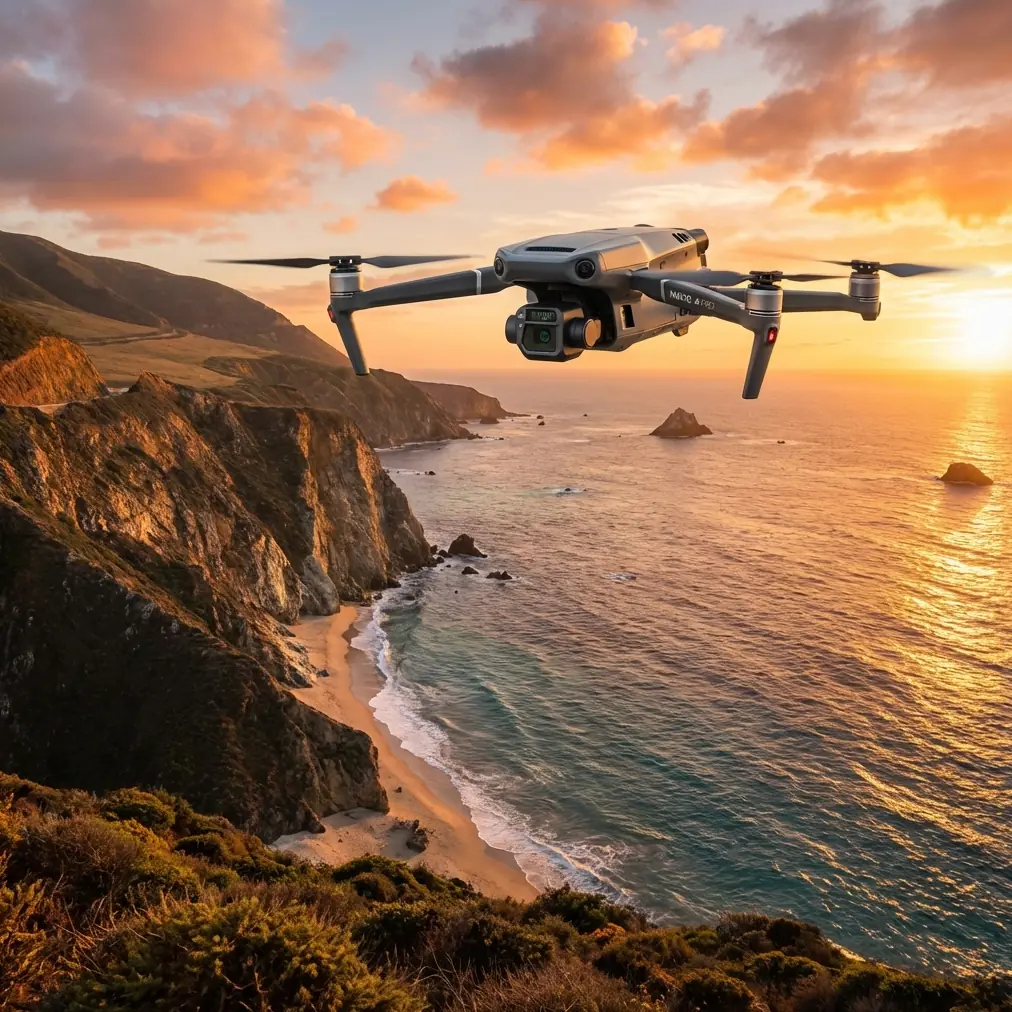
Mavic 3T on Coastal Power-Line Vegetation Jobs: A Field Case Study in Risk Control, Battery Discipline, and Thermal Decision-Making
META: A field-based Mavic 3T case study for coastal power-line vegetation and spraying support, covering thermal workflow, battery management, risk control, and operational reliability.
Coastal utility corridors punish weak operating habits.
Salt in the air creeps into connectors. Wind direction shifts faster than inland crews expect. Moisture hangs on poles and insulators before sunrise, then burns off unevenly. Add vegetation pressure near distribution lines and you get a job environment where aircraft capability matters, but process matters more. That is exactly where the DJI Mavic 3T earns its place—not as a blunt replacement for every field tool, but as a fast, disciplined intelligence platform that helps crews make better spraying and vegetation-management decisions around energized infrastructure.
I’ve seen too many teams talk about sensors first and workflow second. That is backwards. On coastal power-line work, the real value of the Mavic 3T comes from how its thermal signature data, visual zoom context, and transmission stability fit into a risk-controlled operating model.
That point stood out again on May 22, when the 2026 10th World Drone Congress and International Low-Altitude Economy and Unmanned Systems Expo moved into its second day at the Shenzhen Convention and Exhibition Center. At booth 1D114, 航影飞保 was not simply presenting drone activity in the abstract. The discussions centered on flight support, risk-control services, operational support, and service systems. For anyone running Mavic 3T missions in demanding utility environments, that emphasis is the real story. Hardware gets attention. Support systems prevent small issues from turning into operational failure.
Why the Mavic 3T fits the coastal corridor problem
A coastal power-line spraying or vegetation-control mission is rarely just one task. It is usually a chain of tasks:
- identify encroachment risk
- verify access conditions
- check for abnormal heat signatures around equipment or surrounding surfaces
- document pole-line spans for work planning
- guide ground teams to the right intervention area
- reduce unnecessary repeat entries into difficult terrain
The Mavic 3T is strong because it compresses those steps into a single field asset. Thermal helps crews identify temperature anomalies and moisture-retaining vegetation zones that can change treatment timing. The visual camera supports close verification without pushing personnel into unstable ground or restricted access paths. If the team also needs mapping-grade context for repeat visits, photogrammetry can be added to create a consistent corridor record, especially when tied to GCPs for more reliable positional control.
That last point matters more than many operators admit. In a coastal environment, vegetation grows back unevenly and terrain edges shift with drainage and erosion. If you are comparing month-to-month conditions, casual screenshots are not enough. A repeatable mapping layer gives you operational memory.
The hidden lesson from the Shenzhen expo: support is part of the aircraft
The expo coverage around booth 1D114 highlighted something experienced operators already know: field success depends on the service system behind the drone. Staff were reportedly answering questions one-on-one about drone flight support and risk-control services, as well as work-support arrangements. That sounds simple. It is not.
For Mavic 3T teams working utility corridors, “support” means:
- pre-mission risk review
- battery rotation discipline
- communications planning
- weather thresholds that reflect local conditions, not generic handbook assumptions
- contingency landing logic
- maintenance inspection cadence
- data handling protocol
These are not side issues. They are the structure that keeps a thermal mission useful under pressure.
There is a useful parallel in civil aviation reliability language. In the helicopter design reference, the terms malfunction, failure, and fault are treated as closely defined concepts in safety evaluation. The same source also distinguishes between a failure and a failure state, where the state is the consequence created by one or more failures, human errors, or external events. Operationally, that distinction is gold for drone crews.
A corroded connector, delayed battery swap, mistimed return-to-home decision, or poor launch-site choice may each look minor on their own. But on a coastal line inspection or spraying-support job, those inputs can combine into a larger failure state: lost time over an active corridor, incomplete data collection, unstable recovery, or a forced reflight at the worst time of day. The aircraft may still be flyable, yet the mission has already degraded.
That is exactly why risk control should be treated as part of Mavic 3T deployment rather than an administrative layer added after the fact.
A real field habit: battery management is where many teams quietly lose performance
Here is the battery tip I give crews after years of practical work: on coastal morning jobs, do not treat all charged batteries as equal just because the app says they are ready.
I separate packs by recent thermal history and expected wind segment. One battery may have spent the drive in a warmer case pocket, another in a cooler compartment. One may be fresh off balancing, another may have sat longer. In clean conditions, the difference might be small. In salt-heavy coastal air with stop-start operations, it becomes visible in flight consistency.
My rule is simple:
- Use the most thermally stable pack for the longest outbound leg.
- Reserve the next-best pack for the mission segment most likely to involve hover-heavy verification.
- Keep one pack intentionally untouched as the recovery margin battery, not the “leftover.”
This sounds conservative until the sea breeze rises and the return leg suddenly costs more than the outbound leg did.
For Mavic 3T operators, the practical mistake is stacking too many short flights on the same “good” battery because it feels predictable. Over the day, that habit can narrow your margin just when the corridor needs one more pass to verify a hotspot or vegetation pocket. Better rotation beats emotional battery choice every time.
If your team is building a battery SOP for utility work, I usually recommend documenting pack use by wind exposure, mission type, and recovery percentage—not just cycle count. That produces much better field forecasting than charging data alone. If you need a second set of eyes on that workflow, I’ve found it useful to compare notes with specialist support teams through this field coordination channel.
Thermal signature is not just for hotspots
Many people reduce the Mavic 3T thermal payload to “finding heat.” That misses the broader value on coastal vegetation jobs.
Thermal can help identify:
- moisture-retaining brush zones that may affect spray timing
- sheltered vegetation pockets that are visually understated
- ground condition differences near access tracks
- unusual heat patterns around utility components that justify a closer visual check
- post-treatment contrast in certain surface conditions
On coastal routes, dawn and late afternoon often produce the cleanest thermal separation for practical decision-making, but timing depends on the vegetation type, recent weather, and the surrounding material surfaces. A wet corridor edge can distort interpretation. So can reflective structures. Good crews do not read thermal in isolation; they compare it against visual context, prior imagery, and the day’s environmental conditions.
This is where the Mavic 3T’s multi-sensor setup saves time. You are not trying to explain a thermal anomaly from memory after landing. You can cross-check in the same mission and decide whether the area needs treatment, deferred action, or a non-spraying maintenance response.
O3 transmission matters more on coastal infrastructure than on open farmland
People often associate robust transmission with distance alone. On utility work, that is too simplistic.
Along coastal power lines, you may deal with irregular terrain, service roads, vegetation walls, reflective structures, and atmospheric interference that changes by the hour. In those settings, stable O3 transmission is not just a convenience. It protects decision quality. A choppy downlink can make a thermal edge look uncertain. A clean feed helps the pilot and visual observer agree on what is actually happening in real time.
The same goes for secure data handling. If the mission involves critical infrastructure records, AES-256 level protection is not just a checkbox for procurement documents. It affects whether the operator can move imagery through the workflow with confidence, especially when documentation is being shared across contractors, vegetation teams, and asset managers.
Again, the aircraft matters. But the process around the aircraft matters just as much.
Mapping and GCPs: the overlooked multiplier
If your Mavic 3T operation supports repeated coastal spraying decisions, there is a strong case for building a corridor baseline using photogrammetry. Even if thermal is the immediate draw, a mapped record creates continuity across crews and seasons.
Why bother with GCPs in a corridor job? Because repeatability beats approximation when multiple teams are involved. A utility manager comparing three vegetation cycles does not just want pictures. They want consistent reference. GCP-supported mapping helps reduce argument over whether vegetation growth is truly changing near a pole group or whether the apparent shift is just a data alignment issue.
This is one of the most underused ways to get more value from the Mavic 3T ecosystem. The aircraft is often deployed for rapid thermal checks, but the real long-term gain comes when those checks are tied to structured site records.
Reliability thinking from aviation applies directly to drone operations
The helicopter design reference included another point that deserves attention: latent failures can remain hidden until discovered by crew or maintenance personnel. That concept maps neatly onto small-UAV operations.
A latent issue in Mavic 3T work might be:
- contamination at a charging interface
- a battery with subtle imbalance trends
- a worn storage habit that exposes gear to salt moisture
- a mission template copied from inland work without adjusting for marine wind behavior
- a checklist item treated as routine rather than conditional
None of these necessarily stops the next takeoff. That is what makes them dangerous. They sit quietly until combined with environmental stress and operational hurry.
For coastal line-support jobs, the strongest teams act like reliability engineers in the field. They assume that hidden weakness exists somewhere in the chain and design procedures to reveal it before launch. That is not bureaucracy. It is operational maturity.
What this means for crews using the Mavic 3T around spraying operations
A final clarification: the Mavic 3T is not a dedicated spraying platform. In coastal power-line vegetation programs, its role is usually upstream and adjacent to treatment—surveying, identifying thermal and visual anomalies, documenting vegetation encroachment, improving route planning, and reducing unnecessary exposure for field crews.
Used that way, it becomes highly effective.
A disciplined Mavic 3T workflow can help teams:
- verify where intervention is actually needed
- prioritize segments before sending treatment crews
- avoid repeat site entries caused by incomplete first-pass data
- build a defensible record of corridor conditions
- catch operational drift before it turns into a missed hazard
That is why the conversation at Shenzhen’s booth 1D114 feels relevant beyond the exhibition floor. The visible aircraft may draw people in, but the deeper value is the integration of flight support, risk control, and service structure. In coastal utility work, that integration is what separates neat demo footage from dependable field performance.
The Mavic 3T is a capable aircraft. But on power-line vegetation jobs near the sea, capability alone is not enough. Read thermal carefully. Map with intent. Rotate batteries like they matter—because they do. And treat reliability not as an engineering word from a manual, but as a daily operating discipline.
Ready for your own Mavic 3T? Contact our team for expert consultation.