
How I’d Use the Mavic 3T Around Complex Venues Before Any Sp
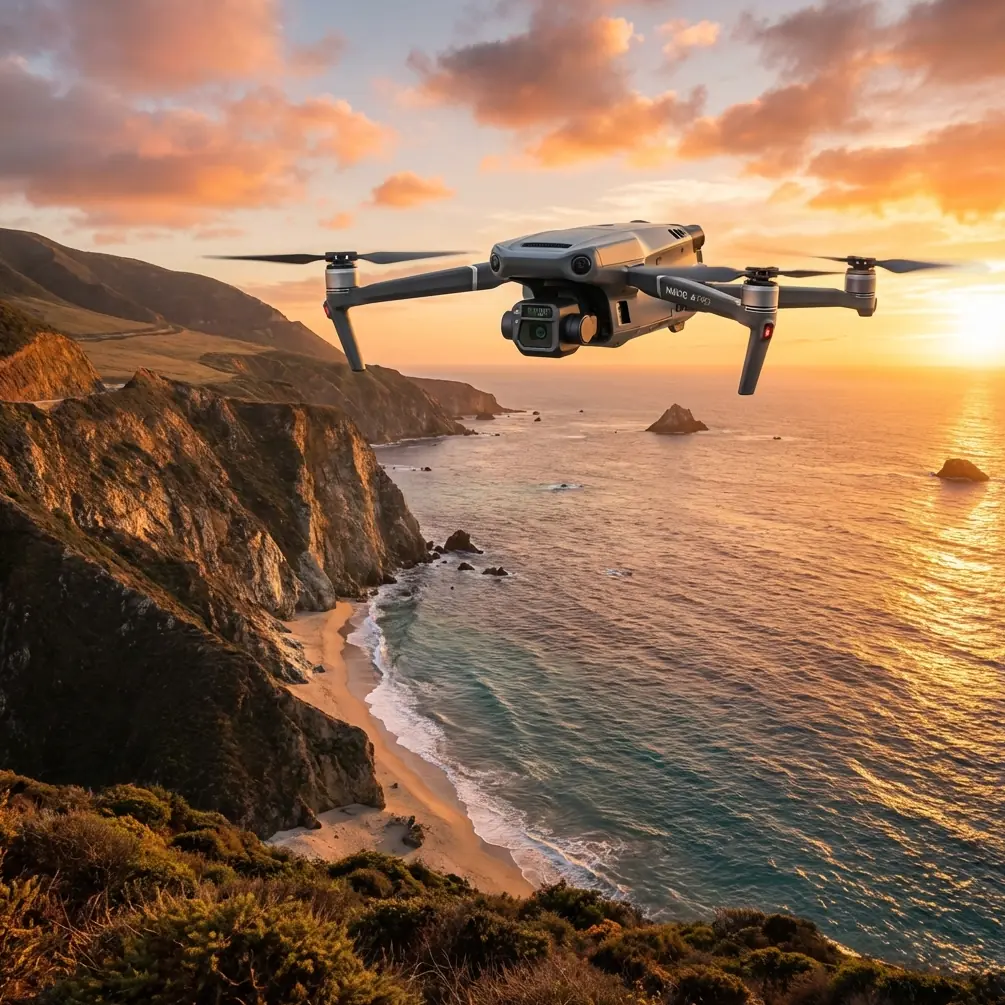
How I’d Use the Mavic 3T Around Complex Venues Before Any Spraying Mission
META: Expert how-to on using the DJI Mavic 3T for complex venue spraying support, including thermal checks, pre-flight cleaning, O3 transmission, AES-256 security, and terrain-aware workflow planning.
When people talk about the Mavic 3T, they often jump straight to thermal imaging or zoom capability. For venue spraying work in difficult terrain, that misses the point. The aircraft is most valuable before liquid ever leaves a nozzle.
The Mavic 3T is not a sprayer. It is a decision tool. Used properly, it helps you determine whether a venue can be sprayed safely, how a crew should move through uneven ground, where heat stress or hidden occupancy may affect operations, and which approach creates fewer surprises once the actual application platform goes to work.
That distinction matters most in complex venues: hillside resorts, stepped outdoor amphitheaters, terraced estates, golf-adjacent event spaces, vineyard hospitality properties, and multi-level sports facilities with service roads, retaining walls, drainage cuts, tree cover, and pedestrian blind spots. In those settings, a clean map is not enough. You need to understand shape, slope, access, thermal behavior, and communication reliability at the same time.
This is where I start with the Mavic 3T.
Step 1: Clean the aircraft before you trust its safety systems
My pre-flight begins with a cleaning step, and not a cosmetic one.
Before every mission around a spraying venue, I wipe the vision sensors, inspect the thermal lens, clean the wide camera glass, and check the upper fuselage for residue, dust, pollen film, mist drift, and oily contamination. If the Mavic 3T has been operating near previous spray activity, this step becomes non-negotiable. Fine residue can reduce obstacle sensing confidence, soften image quality, and distort thermal interpretation in subtle ways that are easy to overlook when a team is rushing.
A dirty lens does more than degrade the picture. It weakens decisions. If you are reading thermal signature differences along retaining walls, utility housings, drainage routes, or roof edges, even minor contamination can make hot spots look broader or cooler zones look less defined. The same goes for the aircraft’s situational awareness features. Safety systems are only as good as the surfaces they rely on.
I also inspect propellers for edge damage, check arm locks, verify battery contacts are clean, and confirm the gimbal moves freely without resistance. On venue jobs in mixed terrain, you are often launching from improvised points rather than ideal pads. Dust and moisture show up fast.
This is one of those habits that saves real time later. Ten minutes on the ground is better than one uncertain thermal pass over a crowded service corridor.
Step 2: Define the mission as a spraying support task, not a flying exercise
The question is not “Can the Mavic 3T fly this venue?” The question is “What must the spray crew know before operations begin?”
That shift changes the flight plan.
For a venue in broken terrain, I divide the mission into four layers:
- terrain and elevation transitions
- access routes and vehicle staging
- thermal anomalies and occupancy risk
- communications reliability across the property
The Mavic 3T is particularly strong here because it lets you move between visual interpretation and thermal assessment in one platform. You can inspect stair-step gradients, berms, ditches, decorative stonework, irrigation channels, and service tracks in the visible view, then switch to thermal to see whether there are unexpected heat sources, active mechanical units, recently occupied structures, or animal presence near spray boundaries.
Operationally, that matters because spraying around venues is rarely limited by application capability alone. It is limited by what you cannot clearly see from ground level.
Step 3: Use thermal first where line of sight lies to you
Complex venues create visual deception. A path that looks empty from one angle may hide staff movement behind hedges or walls. A shaded seating zone may appear inactive while still holding residual heat from recent occupancy. Mechanical rooms, portable generators, transformer boxes, irrigation pumps, and kitchen exhaust points can all influence where crews should avoid staging or drifting application.
This is where thermal signature becomes more than a nice feature.
On the Mavic 3T, I use thermal passes early to identify areas that deserve closer visual inspection. I am not looking for abstract “hot spots.” I am looking for things that could change the spraying plan: people, animals, equipment under load, recently used structures, heat-retaining surfaces, or drainage features that may alter chemical behavior after application.
For example, stone terraces and concrete seating retain heat differently than adjacent turf. That can reveal usage patterns or surface transitions that affect crew movement. A warm maintenance corridor beside a cooler public zone can tell you where activity is still happening, even before vehicles appear. If you are planning treatment near service infrastructure, that early thermal pass helps you establish cleaner exclusion zones.
The key is interpretation discipline. Thermal is excellent at drawing attention, but poor judgment turns it into noise. Every anomaly should be cross-checked in the visual feed before it changes the operational plan.
Step 4: Build a terrain model that actually helps the spray crew
Photogrammetry is often treated as a mapping deliverable. For spraying support, it should be a movement and risk document.
If the venue has irregular elevation, I capture overlapping imagery suitable for a terrain model and orthomosaic, then tie the result to GCP where accuracy matters. Ground control points become especially useful when the property includes narrow access lanes, retaining structures, segmented lawns, water features, and variable grade that can distort assumptions from a simple overhead image.
Why does that matter for spraying? Because a good model answers practical questions:
- where support vehicles can safely stop without blocking escape routes
- which slopes create runoff concerns
- where rotor wash from an application platform may interact with walls or tree lines
- how crews should divide zones to avoid repeated passes through unstable footing
Even a few well-placed GCPs can make the final map more trustworthy when teams need to measure offsets from buildings, spectator areas, or utility corridors. If the venue owner later asks why a section was excluded or treated in phases, a georeferenced deliverable gives you a defensible record rather than a rough screenshot from the field.
This is also where the Mavic 3T earns respect beyond inspection. It helps convert a complicated property into something operationally legible.
Step 5: Pressure-test your link before you rely on it
Venue terrain is not just a physical problem. It is a signal problem.
Multi-level structures, stone facades, trees, utility sheds, and service tunnels can all interrupt control and video reliability. DJI’s O3 transmission is a serious advantage in these environments because it supports stable, high-quality feed performance over demanding sites, but no transmission system should be treated as magic. You still need to test the venue.
I run a communications check at the same time as the initial recon. I want to know where the link weakens, where image latency increases, and where the venue geometry begins to interfere with command confidence. If the spraying support mission depends on repeated passes behind structures or along folded terrain, these dead zones need to be discovered before the aircraft is in a critical inspection segment.
For facilities handling sensitive operations, AES-256 transmission security also matters. Not every venue thinks about that upfront, but they should. If you are surveying infrastructure, crowd routes, private event areas, or service compounds, encrypted transmission is not a luxury feature. It is part of operational hygiene. Security teams and venue managers are much more comfortable approving UAV activity when they understand that image and control links are protected with AES-256 rather than floating loosely across an exposed workflow.
That security detail has practical significance. It supports client trust, especially on properties where logistics, VIP movement, or restricted-access zones are involved.
Step 6: Use battery strategy as an operational pacing tool
The Mavic 3T is efficient, but venue work in complex terrain can expand quickly. One stair-stepped property becomes six sub-sites. One thermal anomaly becomes three verification passes. One access road inspection leads to a full drainage review.
That is why I treat battery planning as part of the mission design, not a postscript. Hot-swap batteries on the support side keep the ground workflow moving even when the aircraft itself needs a standard battery exchange cycle. The point is continuity. Keep charging organized, label packs by cycle condition, and align sortie objectives so each battery change ends at a logical decision point rather than in the middle of an unresolved inspection.
This sounds basic until you are working around a venue where weather windows are tight and staff access is temporary. Then battery discipline becomes the difference between a coherent survey and a pile of partial data.
Step 7: Plan for BVLOS constraints without pretending they do not exist
Some venue layouts tempt operators to stretch their position. Long ridgelines, service roads behind structures, and folded terrain all create moments where the aircraft could collect useful data beyond easy visual tracking. That is where BVLOS enters the discussion.
The professional answer is simple: acknowledge the operational desire, then plan within the regulatory reality that applies to your area. If the mission cannot be executed legally or safely under your current authorization, redesign it. Move launch points, split the site into sectors, use visual observers, or stage the survey in phases.
The Mavic 3T can support highly capable industrial workflows, but capability is not permission. Around venues, especially those with staff, visitors, contractors, or public adjacency, disciplined airspace and line-of-sight management matters as much as image quality.
Step 8: Turn reconnaissance into a spray-ready decision brief
The final output should not be “here are the images.” It should be a concise operational brief that answers the questions a spraying team actually has.
I recommend delivering:
- a marked orthomosaic with treatment zones and no-go areas
- a terrain note identifying slope, runoff, and access concerns
- thermal snapshots of any relevant anomalies
- communications notes on weak-control sections
- recommended launch, staging, and crew movement points
- weather-sensitive surfaces or structures that may alter drift behavior
If you are coordinating with a venue manager or operations lead, this is also the right point to share a field contact path for quick clarifications, such as message the operations desk here. Keep it practical. Venue work moves quickly, and delays usually come from unanswered site questions rather than missing flight data.
What makes the Mavic 3T especially useful for this job
For complex venue spraying support, the Mavic 3T stands out because it compresses several tasks into one aircraft: visual inspection, thermal reconnaissance, terrain capture, and secure site awareness. That combination reduces handoff friction. Crews do not need separate systems just to understand occupancy risk, topography, and hidden infrastructure.
Two details are especially significant in the field.
First, O3 transmission helps maintain usable situational awareness around difficult structures and terrain folds, which directly affects pilot confidence and the quality of reconnaissance over awkward parts of the property. Second, AES-256 encryption gives venue operators a credible answer when privacy and operational security concerns come up during planning. Those are not brochure details. They change how smoothly missions get approved and executed.
Add thermal signature analysis and photogrammetry with GCP-backed accuracy, and the aircraft becomes more than an inspection drone. It becomes a planning instrument for safer spraying operations.
My field rule for Mavic 3T venue missions
If I had to reduce the whole workflow to one rule, it would be this: never start with the assumption that the venue is understood just because it looks simple from the parking lot.
Walk the launch area. Clean the aircraft. Check the sensors. Fly thermal with intent. Build a useful map. Test the link where terrain tries to break it. Then produce a brief the spray crew can act on without guessing.
That is where the Mavic 3T earns its keep around complex venues. Not by replacing the spray platform, and not by collecting pretty overhead images, but by stripping uncertainty out of a job where terrain, structures, heat, movement, and communications all compete for attention at once.
Ready for your own Mavic 3T? Contact our team for expert consultation.