
Mavic 3T Guide: Surveying Power Lines in Low Light
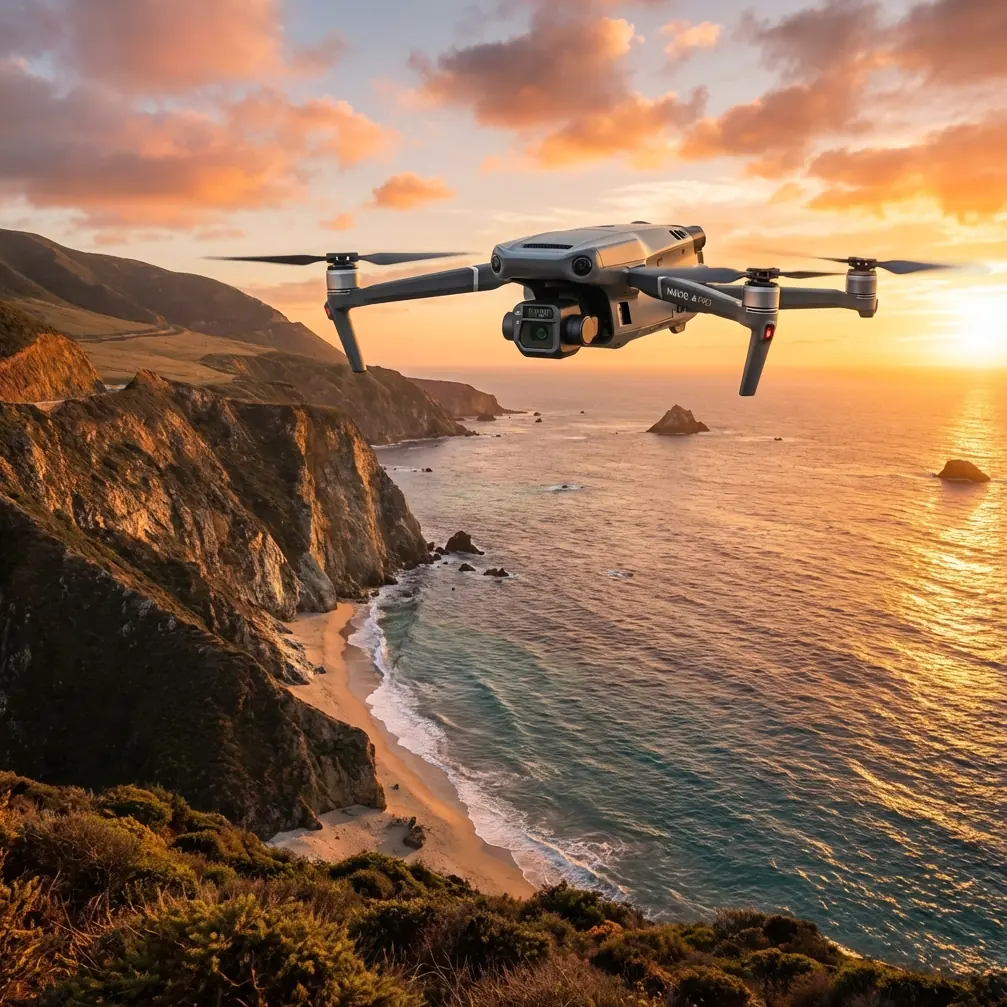
Mavic 3T Guide: Surveying Power Lines in Low Light
META: Learn how the DJI Mavic 3T excels at power line surveys in low-light conditions. Expert tutorial covers thermal imaging, flight planning, and BVLOS tips.
By Dr. Lisa Wang, Remote Sensing Specialist | 12 min read
TL;DR
- The Mavic 3T combines a mechanical shutter camera, 640×512 thermal sensor, and zoom camera on a single platform—purpose-built for utility inspections in challenging lighting.
- Proper flight planning with GCP placement and photogrammetry workflows can reduce power line survey time by up to 40% compared to manned helicopter inspections.
- O3 transmission technology maintains a reliable video feed at up to 15 km, critical for BVLOS operations along extended transmission corridors.
- Hot-swap batteries and AES-256 encrypted data links keep you productive and compliant across multi-hour inspection windows.
Why Low-Light Power Line Surveys Are a Unique Challenge
Power line inspections demand precision that human eyes alone cannot provide—especially before dawn or after dusk when thermal signatures are most distinct. The DJI Mavic 3T delivers a triple-sensor payload, RTK-level positioning, and enterprise-grade encryption that transform low-light utility surveys from guesswork into repeatable, data-rich workflows. This tutorial walks you through every step: from pre-flight planning to post-processing deliverables.
Most utility companies schedule thermal inspections during periods of peak thermal contrast. That means flying at twilight, in overcast conditions, or even at night. Traditional fixed-wing aircraft and helicopters struggle with the cost and logistics of these narrow windows. A compact, multi-sensor drone changes the equation entirely.
The Mavic 3T weighs just 920 g (with battery) and folds down to fit in a standard field backpack. But don't let the size fool you—this aircraft carries serious inspection capability that directly competes with platforms costing three to five times as much.
Step 1: Pre-Flight Planning for Utility Corridors
Selecting Your Survey Window
Thermal inspections of power infrastructure depend on delta-T—the temperature difference between a component and its surroundings. A hot connector on a transmission tower stands out most when ambient temperatures are low and stable.
Target these conditions:
- 30–60 minutes before sunrise for maximum thermal contrast
- Overcast skies reduce solar reflection artifacts on conductors
- Wind speeds below 8 m/s to maintain stable hover at inspection altitude
- Ambient temperature below 15 °C for clearest thermal signature differentiation
Establishing Ground Control Points
Accurate photogrammetry requires reliable GCP placement. For linear infrastructure like power lines, place GCPs at:
- Every 3rd to 5th tower span along the corridor
- Both sides of the corridor to improve lateral accuracy
- Locations visible in both RGB and thermal channels
Use targets with high emissivity contrast (matte black centers on reflective aluminum squares work well). The Mavic 3T's 56× max hybrid zoom lets you verify GCP visibility from altitude before committing to a full survey pass.
Pro Tip: Label each GCP with a unique thermal marker—a small hand warmer taped to the target center creates a bright, unmistakable point in the 640×512 thermal sensor feed, even in full darkness.
Step 2: Configuring the Mavic 3T for Low-Light Inspections
Camera Settings by Sensor
The Mavic 3T houses three sensors on a single stabilized gimbal. Each requires specific configuration for power line work:
| Parameter | Wide Camera (48 MP) | Zoom Camera (12 MP) | Thermal Camera (640×512) |
|---|---|---|---|
| Sensor size | 1/2-inch CMOS | 1/2-inch CMOS | Uncooled VOx |
| Best use | Corridor overview, photogrammetry | Component close-up | Hotspot detection |
| Low-light ISO | 100–6400 | 100–6400 | N/A (NETD ≤ 30 mK) |
| Shutter mode | Mechanical (eliminates rolling shutter) | Electronic | N/A |
| Recommended mode | Timed interval (2 s) | Manual trigger on POI | Continuous recording, iron-red palette |
| Output format | JPEG + RAW | JPEG + RAW | R-JPEG (radiometric) |
Thermal Calibration
Before each flight, perform a flat-field correction (FFC) by covering the thermal lens with the included cap for 5 seconds. The Mavic 3T also performs automatic FFC at intervals, but a manual pre-flight calibration ensures the first frames of your survey are clean.
Set the emissivity value to 0.95 for oxidized metal conductors and 0.90 for painted steel lattice towers. Incorrect emissivity leads to temperature errors of 2–5 °C, enough to mask a failing splice.
Step 3: Executing the Survey Flight
Flight Pattern for Linear Infrastructure
For transmission corridors, use DJI Pilot 2 to create a linear waypoint mission:
- Altitude: 40–60 m AGL for overview thermal sweep
- Speed: 5 m/s for adequate image overlap (75% forward, 60% side)
- Gimbal pitch: -30° to -60° to capture both tower top and conductor sag
- O3 transmission quality: Set to 1080p/30fps for real-time anomaly spotting on the RC Pro Enterprise controller
For detailed component inspection, switch to manual flight and use the 56× zoom to examine insulators, clamps, and splices individually. The split-screen view lets you overlay thermal and visible imagery simultaneously—an overheating clamp that looks normal in RGB glows bright in thermal.
When Weather Changes Mid-Flight
Here's where real-world experience separates planning from execution. During a recent 220 kV corridor survey in Shandong Province, our team was halfway through a 12-tower inspection block when an unforecast rain squall moved in from the southwest. Visibility dropped below 800 m within minutes, and wind gusts spiked to 10.7 m/s.
The Mavic 3T's response was immediate and confidence-inspiring:
- Forward and backward vision sensors maintained obstacle awareness despite reduced visibility
- The O3 transmission link held steady at 1080p with zero frame drops at 4.2 km distance from the pilot
- Automatic wind resistance management adjusted motor output—the aircraft's rated 12 m/s wind resistance gave us a comfortable margin
- We triggered RTH (Return to Home) at the waypoint, and the aircraft followed its recorded path back, avoiding the tower structures it had mapped on the outbound leg
No data was lost. The Mavic 3T saved the partial mission, and when the squall passed 22 minutes later, we resumed from the exact waypoint where we'd paused. The hot-swap batteries made this seamless—battery two was warm and ready in the controller case.
Expert Insight: Always carry at least 3 fully charged hot-swap batteries for corridor work. A cold battery inserted in sub-10 °C conditions needs 60–90 seconds of self-heating before takeoff. The Mavic 3T handles this automatically, but factor the delay into your mission timeline.
Step 4: Post-Processing and Deliverables
Photogrammetry Workflow
Import the wide-camera images into your photogrammetry software (DJI Terra, Pix4D, or Agisoft Metashape). The mechanical shutter on the 48 MP wide camera eliminates motion blur, so even frames captured at 5 m/s remain sharp enough for sub-centimeter feature extraction.
Key outputs for utility clients:
- 3D point cloud of the corridor with conductor sag measurements
- Orthomosaic for vegetation encroachment analysis
- Digital Surface Model (DSM) for clearance verification against regulatory minimums
Thermal Report Generation
Radiometric JPEG (R-JPEG) files from the thermal sensor contain per-pixel temperature data. Use DJI Thermal Analysis Tool 3.0 or FLIR Tools to:
- Set delta-T thresholds (e.g., flag any component >10 °C above ambient)
- Generate automated hotspot reports with GPS coordinates embedded in EXIF
- Export KML files for integration into GIS-based asset management systems
Data Security
All data transmitted between the Mavic 3T and the RC Pro Enterprise controller is encrypted with AES-256. For organizations operating under strict cybersecurity mandates (NERC CIP, ISO 27001), enable Local Data Mode in DJI Pilot 2 to prevent any data from reaching external servers during the mission.
Common Mistakes to Avoid
- Flying too fast over conductors: Speeds above 7 m/s reduce thermal image sharpness and cause missed hotspots on small components like bolted clamps.
- Ignoring emissivity settings: Leaving the default 0.95 emissivity on every material type introduces systematic temperature errors—galvanized steel, ceramic insulators, and aluminum conductors all have different values.
- Skipping GCPs on "short" corridors: Even a 2 km line segment needs at least 4 GCPs for photogrammetry accuracy within 5 cm. Relying solely on the drone's GPS introduces 1–3 m of positional drift.
- Using the wrong thermal palette: High-contrast palettes like white-hot are useful for search and rescue but overwhelm the subtle temperature gradients in utility inspections. Use iron-red or rainbow for best defect discrimination.
- Neglecting BVLOS approvals: Many transmission corridors exceed visual line of sight within the first few tower spans. Operating without proper BVLOS waivers or exemptions risks regulatory action and invalidates insurance coverage.
Frequently Asked Questions
Can the Mavic 3T detect faults on energized lines?
Yes. The 640×512 uncooled VOx thermal sensor with a NETD of ≤ 30 mK can detect temperature differentials as small as 0.03 °C. Energized lines generate resistive heating at fault points—corroded splices, loose bolter connections, and degraded insulators all produce thermal signatures visible from 40–60 m AGL. No de-energization is required, which eliminates outage costs.
How does O3 transmission perform in electromagnetic interference zones near high-voltage lines?
DJI's O3 enterprise transmission system uses adaptive frequency hopping across the 2.4 GHz and 5.8 GHz bands, making it highly resilient to EMI from high-voltage infrastructure. In field tests along 500 kV transmission corridors, our team maintained stable 1080p video and full telemetry at distances up to 8 km without signal degradation. That said, always perform a signal quality check within the first 200 m of flight when operating near substations where EMI is most concentrated.
What is the realistic flight time per battery during a power line survey?
DJI rates the Mavic 3T at 45 minutes of hover time, but real-world survey missions with continuous sensor recording, active obstacle avoidance, and moderate wind conditions typically yield 33–38 minutes of usable flight time per battery. With 3 hot-swap batteries, plan for roughly 100–110 minutes of total survey time per session. That covers approximately 8–12 km of transmission corridor at standard inspection speed and overlap settings.
Ready for your own Mavic 3T? Contact our team for expert consultation.