
Mavic 3T Field Report: Surveying Solar Farms Across Broken
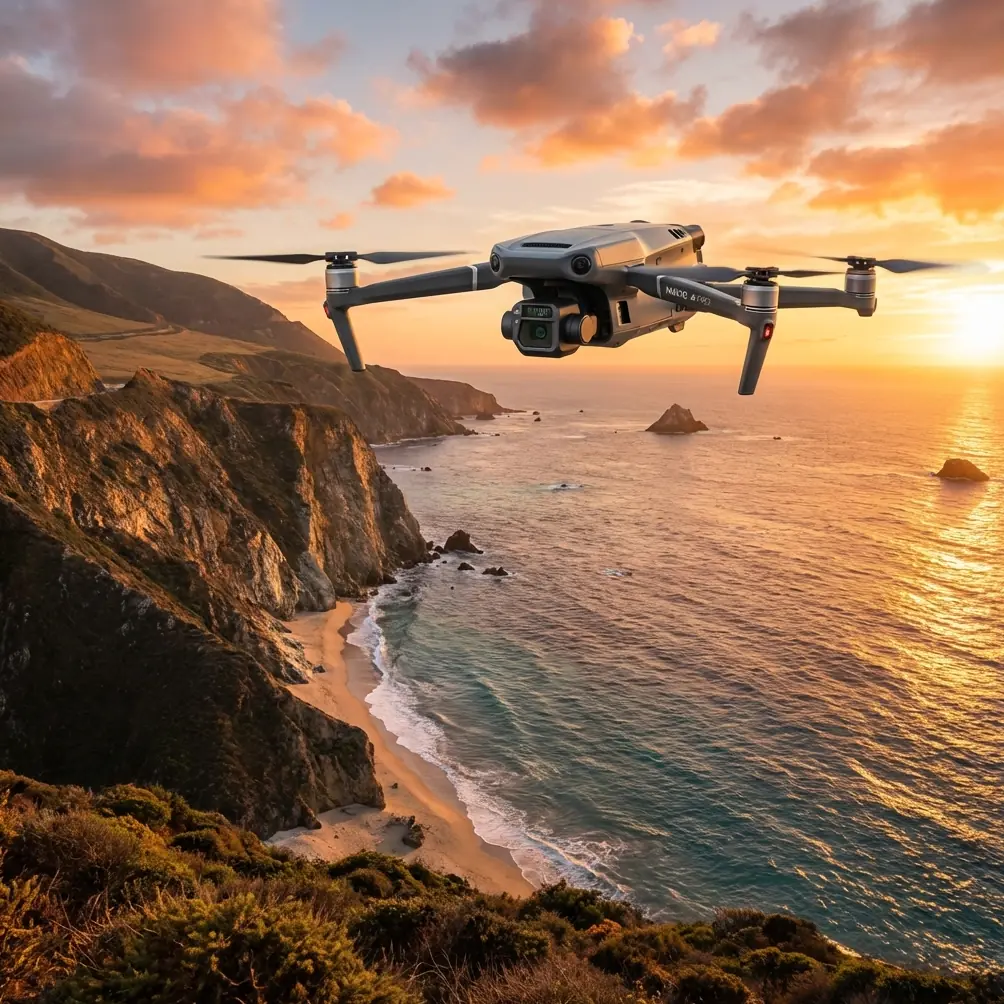
Mavic 3T Field Report: Surveying Solar Farms Across Broken Ground
META: A field-tested look at how the DJI Mavic 3T performs on solar farm surveys in complex terrain, with practical insight on thermal signature capture, photogrammetry, weather shifts, O3 transmission, GCP workflow, and battery planning.
By Dr. Lisa Wang
Solar farm surveys look straightforward from the access road. Long rows of panels. Service tracks. Fencing. Repetition. Once you step into the site and start planning an aerial mission, the neatness disappears.
Complex terrain changes everything. I’m talking about utility-scale installations spread across sloped ground, drainage cuts, berms, uneven vegetation, and panel tables that create their own micro-shadows. Add a weather front moving through the valley and a simple drone inspection turns into a test of platform discipline. That is where the Mavic 3T earns its place.
This is not a generic overview. It is a field report built around one specific type of job: surveying a solar farm where topography, heat variation, and changing weather all influence the quality of the dataset.
Why the Mavic 3T fits this kind of site
The reason teams keep returning to the Mavic 3T for solar work is not just that it has a thermal camera. That’s too shallow. The real advantage is that it combines thermal signature collection with visible-light capture in a compact aircraft that can move quickly across dispersed arrays without forcing the crew into a heavy deployment.
On solar sites in broken terrain, you usually need two things at once:
- a thermal pass to identify temperature anomalies across modules and strings
- a visual and mapping workflow to tie those anomalies to real-world panel locations and maintenance routes
The Mavic 3T is strong precisely because it supports both sides of that job. It gives inspection teams a way to catch abnormal heat patterns while still building location confidence through standard imaging and structured flight planning.
That matters more than people admit. A hotspot without position certainty is just a suspicious pixel. A hotspot tied to a specific table, row, access path, and maintenance note becomes actionable.
The site conditions that expose weak workflows
The job that stays with me involved a large solar field built across rolling ground with elevation changes significant enough to affect line of sight and image consistency. We had planned a split workflow: morning thermal collection while irradiance was stable, followed by a visible-light mapping segment for documentation and follow-up photogrammetry.
The site also had exactly the kind of obstacles that produce bad data if your planning is lazy. Some arrays sat on gentle ridges with clean access. Others dropped into shallow folds where cool air lingered longer after sunrise. That changed the thermal signature in ways that could fool a rushed operator into flagging false positives.
This is where the Mavic 3T’s flexibility becomes operational rather than cosmetic. On flatter sites, almost any competent enterprise drone can gather imagery. On uneven ground, maintaining the right altitude relationship to the panel surface and preserving link quality across rows becomes far more critical.
DJI’s O3 transmission system matters here. On paper, people treat transmission as a convenience feature. In practice, on a solar farm cut by terrain and repetitive metallic geometry, robust link performance helps the pilot maintain situational awareness and keep the mission stable as the aircraft transitions over rises and depressions. When weather begins to shift, that margin becomes even more valuable.
Weather changed mid-flight. The mission did not fall apart.
The forecast suggested a manageable window. By the second leg, that window had narrowed.
A wind line pushed in earlier than expected. Surface conditions changed first: vegetation started moving harder along the lower service tracks while the ridgeline panels remained deceptively calm. Then light cloud interference altered surface heating, which is exactly the sort of environmental change that can contaminate thermal interpretation if you ignore it.
This is the point where field teams either salvage useful data or waste a sortie.
We paused long enough to reevaluate the thermal goal. Were we still collecting comparable heat data, or had the site entered a transition state that would blur fault detection? Because the Mavic 3T can shift efficiently between inspection priorities, we adjusted rather than forcing a bad thermal set. The aircraft’s stability and transmission confidence let us complete a targeted pass over the highest-priority strings before conditions drifted too far, then pivot to visual capture for sections where thermal confidence was degrading.
That decision saved the mission.
People often talk about “weather resistance” in vague terms, but the more relevant issue is mission resilience. Can the platform help you make smart operational choices when the environment changes mid-flight? With the Mavic 3T, the answer is often yes, provided the crew reads the site correctly and does not try to manufacture precision where the atmosphere no longer supports it.
Thermal data is only useful if you respect timing
Thermal imaging on solar assets is not magic. It is highly sensitive to environmental timing, panel loading, wind, cloud cover, and viewing geometry. The Mavic 3T gives you the thermal layer, but the operator still has to understand what the sensor is seeing.
On this site, the shallow valleys between array blocks retained cooler air after sunrise. Panels in those pockets presented a different baseline than those on elevated rows. If we had compared the whole site as if it were thermally uniform, the result would have been messy and misleading. Instead, we segmented interpretation by terrain zone and irradiance exposure.
That is one of the Mavic 3T’s most practical advantages for solar farm work: it makes it feasible to inspect selectively and fast. You do not need to commit a large aircraft and a cumbersome support footprint just to revisit one terrain pocket where the thermal signature looked questionable. If weather or cloud movement changes the reading, you can re-fly priority sections with much less disruption.
For maintenance teams, this leads to a better handoff. Instead of sending technicians toward broad, uncertain reports, you can isolate suspect rows and provide cleaner thermal context.
Photogrammetry still matters on a thermal job
A lot of crews treat photogrammetry as secondary on solar work. I think that is a mistake, especially in complex terrain.
The visible dataset is what turns an inspection into an asset management tool. Even if the Mavic 3T is not the first aircraft some surveyors think of for pure high-accuracy mapping, it is highly useful when paired with a disciplined control workflow. If you are documenting terrain-induced drainage issues, row alignment, vegetation encroachment, access erosion, or maintenance path constraints, photogrammetry has real value.
This is where GCP placement becomes more than a box to tick.
On sloped solar sites, poor GCP distribution can distort the parts of the map you care about most. If all your control sits near easy access points, your model may be less reliable in the very sections where terrain breaks sharply around lower array blocks. We used GCPs to anchor the site across elevation transitions rather than clustering them around the operations area. That improved confidence when correlating thermal findings with exact field locations.
The Mavic 3T’s role in this workflow is straightforward: one aircraft, one crew rhythm, and a cleaner bridge between inspection and mapping tasks. When field conditions are unstable, reducing platform changes can preserve time and concentration.
Battery strategy is not a footnote on a solar farm
Solar installations are often larger than they look from the perimeter, and complex ground slows everything down. Walking to a launch point, repositioning across fenced blocks, and maintaining safe access around infrastructure eats into the day.
That is why battery handling affects data quality more than marketing materials suggest.
Hot-swap batteries are particularly useful in this setting because they compress turnaround time between segments. On a site where cloud cover is beginning to build, saving even a short interval between sorties can determine whether a thermal revisit remains valid. If a suspect string appears on the first pass, you want the next aircraft movement to happen quickly, not after a long reset that allows the thermal pattern to change again.
This is one of those practical details that only becomes obvious in the field. Efficient battery rotation does not just improve productivity. It protects comparability between captures.
O3 transmission and terrain awareness
I mentioned O3 transmission earlier, but it deserves a more concrete explanation. Solar farms can be visually repetitive, and that repetition creates pilot workload. Every row looks similar. Every table reflects light differently as the sun angle changes. Terrain can mask part of the aircraft path just enough to raise stress levels if the site is broken into ridges and low channels.
A reliable transmission link gives the crew more confidence to maintain planned overlaps, inspect target areas cleanly, and avoid improvising the route simply because visibility feels psychologically degraded. For commercial operators planning for regulated operations today and more advanced workflows in the future, including possible BVLOS pathways where permitted and properly authorized, stable communications architecture is not a luxury. It sits close to the center of operational trust.
That trust also extends to data handling. On energy infrastructure jobs, stakeholders increasingly ask how files and mission data are protected. AES-256 encryption is one of those details that tends to stay in the background until a client asks the right question. Then it matters immediately. If your survey work includes thermal imagery, asset layouts, and operational notes tied to critical energy facilities, strong data security is part of professional practice, not admin overhead.
What the Mavic 3T does especially well on solar sites
After enough fieldwork, patterns become hard to ignore. The Mavic 3T is especially effective when the job demands speed, selective thermal inspection, and enough visual context to support field maintenance decisions without deploying a larger survey stack.
Its strengths show up in five places:
1. Fast deployment on difficult ground
When the site is spread over irregular terrain, smaller crew burden means more of the day goes into capturing useful data rather than moving equipment.
2. Thermal and visual coordination
You can identify a heat anomaly and then document its exact context without breaking the workflow into separate aircraft operations.
3. Weather-adjusted mission flexibility
If wind and cloud change mid-flight, the aircraft supports quick replanning. That helped us preserve a useful inspection set instead of insisting on uniform thermal data when the environment no longer allowed it.
4. Better field correlation with GCP-backed mapping
Even where the primary mission is thermal, photogrammetry anchored with good GCP placement improves maintenance follow-up on sloped sites.
5. Practical battery turnover
Hot-swap operations keep the aircraft moving while thermal conditions are still relevant.
Where operators still need discipline
The Mavic 3T does not replace judgment.
If the site has severe elevation variation, mission planning must account for changing panel-to-aircraft geometry. If clouds begin crossing the sun rapidly, thermal comparability may collapse. If GCPs are distributed badly, the map can mislead technicians. If the pilot chases every warm spot without understanding terrain-driven heating differences, the report becomes noisy.
The drone helps. The operator decides whether the output is trustworthy.
That is the real story with this platform. The Mavic 3T is at its best when handled by crews who understand that solar inspection is not simply about detecting heat. It is about collecting evidence that survives contact with terrain, weather, and maintenance reality.
Final field takeaway
On a complex solar farm, the best survey aircraft is often the one that lets you stay precise while conditions become less cooperative. In our case, the weather shift could have turned the sortie into a half-useful thermal scrapbook. Instead, the Mavic 3T gave us enough control to adapt, preserve the priority inspection zones, and build a visual record that still supported the maintenance team.
That combination matters. A drone that can move from thermal anomaly detection to site documentation without friction is unusually valuable on energy assets spread over uneven land.
If your team is refining solar workflows and wants to compare mission setups, battery rotation logic, or GCP strategy for mixed thermal and mapping tasks, you can reach me directly on this WhatsApp line for field coordination.
Ready for your own Mavic 3T? Contact our team for expert consultation.