
How I’d Use the Mavic 3T to Survey a Windy Solar Farm Withou
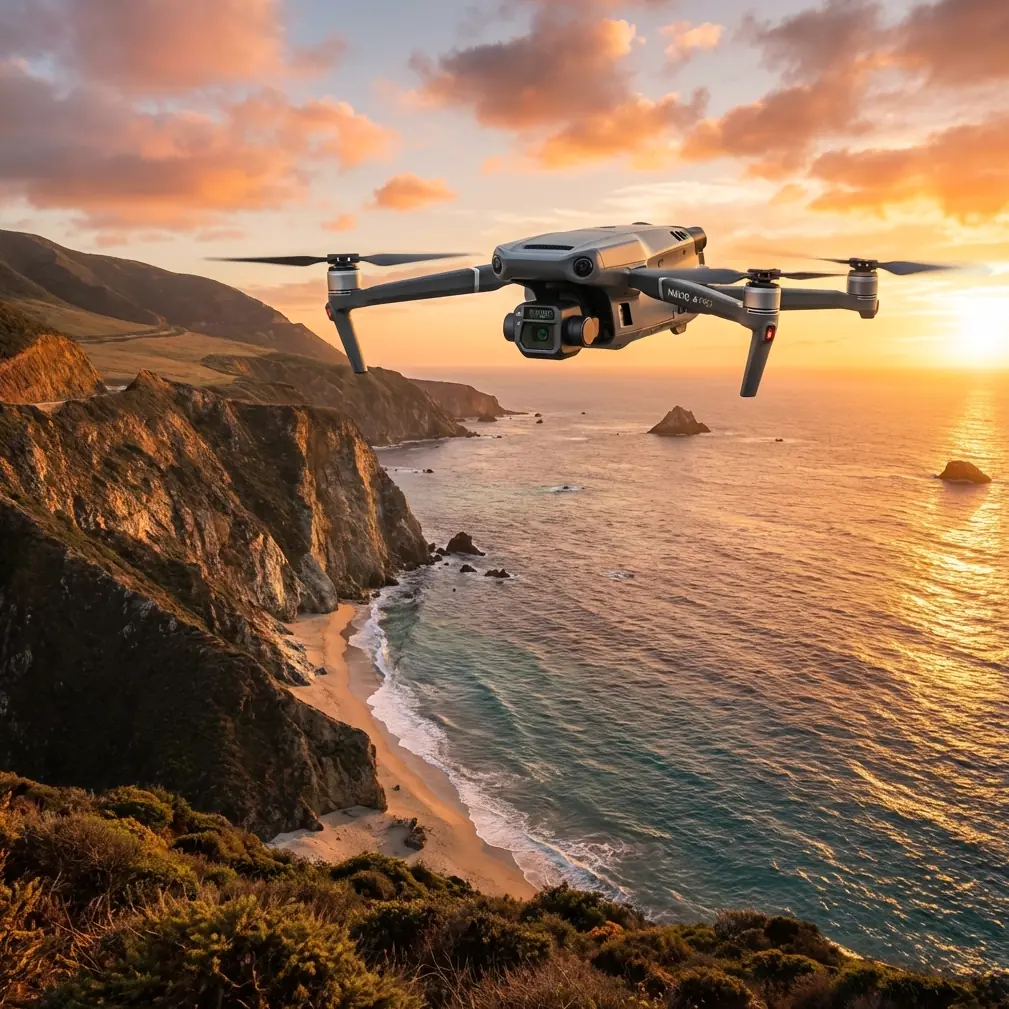
How I’d Use the Mavic 3T to Survey a Windy Solar Farm Without Losing Thermal Accuracy
META: Practical Mavic 3T workflow for surveying solar farms in windy conditions, including flight altitude, thermal signature capture, control stability, transmission reliability, and data quality tips.
Wind changes everything on a solar site.
A calm-day flight plan that looks perfect on paper can fall apart once the drone starts fighting gusts over long rows of panels. Thermal data gets less consistent. Overlap suffers. Tiny alignment errors become expensive when you are trying to compare strings, identify hot modules, or build a usable inspection record for maintenance teams.
That is why surveying a solar farm with the Mavic 3T is less about “can it fly the mission” and more about whether the mission profile respects what stable control, image geometry, and repeatable data collection actually require.
If I were planning this job, I would not start with the camera. I would start with control discipline.
Why windy solar inspections are really a flight-control problem first
A solar farm is a deceptively hard environment for small UAVs. The site is open, exposed, and often built where wind has very little to slow it down. Add heat shimmer from dark panel surfaces and long repetitive geometry, and the aircraft has to work harder than many operators expect.
That is where old-school rotorcraft design logic still matters, even when you are flying a modern compact platform like the Mavic 3T.
One of the reference materials points to combined longitudinal, lateral, and collective control and to the interaction with automatic flight control systems in helicopter design. Even though the Mavic 3T is not a helicopter, the operational lesson is directly relevant: when an aircraft is being disturbed in multiple axes at once, good data depends on how well the control system blends those corrections without creating a messy flight path.
That matters on a solar survey because your thermal signature readings are only as trustworthy as the consistency of your pass-to-pass geometry. If gusts push the aircraft sideways while the autopilot is trying to maintain track and altitude, you can end up with uneven viewing angles and inconsistent heat readings across rows that should be compared directly.
The same source also references control-law design on page 930 and actuator design on page 935. For an operator, those aren’t abstract engineering topics. They translate into a practical field truth: in wind, the quality of your dataset depends on whether the aircraft can make fast, smooth corrections without overreacting. The Mavic 3T performs well here, but only if you avoid planning missions that force the aircraft into unnecessary control stress.
So the first rule is simple:
Don’t build a flight plan that assumes perfect still-air tracking.
Build one that gives the aircraft room to stay stable.
The altitude I recommend for windy solar-farm work
If the goal is solar-farm fault detection with the Mavic 3T in windy conditions, my starting point is usually:
- Thermal inspection passes: around 35 to 50 meters AGL
- Visual mapping or contextual orthomosaic passes: around 50 to 70 meters AGL
That is the operational sweet spot I would test first, then refine based on panel size, row spacing, wind speed, and the level of defect detail required.
Why not lower?
Flying too low in wind can make the aircraft work harder through repeated micro-corrections. Every gust causes a proportionally bigger framing disturbance when your field of view is tighter and your pass spacing is more sensitive. You also cover less area per line, which means more turns, more time in the air, and more opportunities for wind to compound the error.
Why not much higher?
Because thermal work on solar modules is not just about spotting “something warm.” It is about seeing meaningful heat contrast at a useful scale. If you climb too high, the image may still look clean, but small hotspot signatures become harder to isolate at the module or cell level, especially once wind adds slight obliquity and motion variation.
For most commercial solar inspection jobs, about 40 meters AGL is a strong first-pass altitude for the thermal mission in wind. It often balances three things well:
- Safer image stability
- Adequate thermal detail
- Efficient area coverage
If the wind is moderate and the objective is broad screening rather than pinpointing very small anomalies, I would lean toward the upper part of that range. If the site owner needs tighter fault localization and the wind allows stable tracking, I would move lower carefully.
The key is not choosing an altitude in isolation. It is choosing one that the aircraft can hold consistently across the full site.
Why control blending matters to thermal accuracy
Another useful clue from the reference set is the emphasis on cross-linking with the automatic flight control system. That matters more than many inspection teams admit.
On a windy solar farm, the aircraft is never just “moving forward.” It is constantly balancing:
- forward progress along a mission line,
- lateral correction from crosswind,
- attitude stabilization for imaging,
- and altitude maintenance over terrain variation or turbulence pockets.
If those corrections fight each other, the result is small but meaningful distortions in your capture geometry. Thermal analysis can tolerate some variation. It cannot tolerate chaos.
This is one reason I prefer mission plans with longer, cleaner lines and fewer aggressive turns at exposed sites. Each turn is a control event. Each control event is another chance for the aircraft to yaw, pitch, and drift in a way that changes how panel surfaces are viewed. A stable oblique error repeated across a site is manageable. Random changes are not.
My practical workflow for a windy solar-farm survey with Mavic 3T
Here’s how I would structure the mission.
1. Split the job into thermal detection and visual context
Do not try to make one flight do everything perfectly.
Use one mission profile optimized for thermal fault finding, then a second profile for broader photogrammetry or visual documentation if required. The Mavic 3T can support both roles, but the wind penalty becomes worse when you force one compromise flight plan to serve two different data objectives.
Thermal wants consistency and fault visibility.
Photogrammetry wants overlap, geometry, and cleaner reconstruction inputs.
Those are related, but not identical.
2. Fly the thermal pass with the wind in mind, not against it
On a solar farm, crosswind is usually worse for line discipline than a headwind or tailwind. If possible, orient the mission so the aircraft minimizes broadside exposure during the longest legs.
That reduces the amount of lateral correction the flight controller has to apply. Less correction usually means more consistent imagery and cleaner thermal comparisons row to row.
This connects back to the control-system reference: when multiple control axes are being blended, reducing the disturbance load improves the quality of the output. In field terms, fewer abrupt corrections mean less chance of skewed thermal interpretation.
3. Use conservative overlap if you also need map products
If the site owner wants a stitched visual deliverable alongside thermal findings, increase your overlap beyond what you’d use on a calm day.
Long repetitive panel patterns are already difficult for reconstruction. Wind adds frame-to-frame inconsistency. The mathematical table in the second reference may look far removed from drone operations, but its significance is still real: precise mapping depends on numerical consistency. Small deviations propagate. A line in that table shows values such as 0.47, -1686, -4434, -2399, 1534, and 3321, reminding us that computed outputs change materially with small input shifts. In drone mapping, that same principle shows up when modest positional or angular variation creates visible mosaic or model errors.
That is why in windy conditions I would rather oversupply overlap than discover later that the software struggled to lock onto repeating panel textures.
And if the deliverable has to tie into engineering-grade measurements, use GCPs. Wind exposes weak georeferencing fast.
4. Don’t chase maximum speed
A fast flight looks productive until you review the thermal set and realize the aircraft spent half the mission correcting itself.
For a windy solar site, I would slow the thermal mission enough to let the Mavic 3T stabilize through gusts rather than outrun them. A controlled, repeatable pass beats a quick one every time. The win is not flight speed. The win is usable defect evidence.
5. Manage link reliability as part of data quality
Large solar farms can stretch far enough that signal discipline matters. The Mavic 3T’s O3 transmission capability is a real operational advantage here because maintaining a solid live view helps the pilot catch drift, glare issues, or unstable sections before they contaminate the whole mission.
A strong link also supports better decision-making when wind changes mid-flight. If you need secure handling for client-sensitive infrastructure imagery, AES-256 is also relevant. That won’t make the drone fly better, but it can matter for utility clients who care about how inspection data moves and is protected.
6. Plan battery swaps around row blocks, not percentages alone
On a large farm, battery strategy should match site layout. Finish logical blocks rather than pushing deep into the site and returning with an awkward partial section left behind.
If your operation uses hot-swap batteries elsewhere in the workflow, that mindset still applies even though what matters most here is minimizing downtime and keeping mission segments clean and repeatable. Consistency of execution helps as much as consistency of imaging.
7. Flag thermal anomalies, then verify before escalating
A hotspot pass is not a final diagnosis. Wind, reflections, angle, and transient heating effects can all create misleading signatures.
Use the thermal mission to identify suspect strings, modules, or connectors. Then verify with closer visual review, electrical follow-up, or a second targeted pass under controlled conditions if needed.
What operators get wrong about flight height on solar farms
The most common mistake is treating altitude as a fixed “best practice.”
There is no universal best altitude for Mavic 3T solar work. There is only the best altitude for the data objective under that day’s wind and site geometry.
Here is the simple framework I use:
- If wind is stronger than expected, move slightly higher to reduce oversensitivity and improve coverage efficiency.
- If defect resolution is more important than coverage speed, move slightly lower only if the aircraft can still hold a disciplined track.
- If the visual map matters as much as the thermal results, separate the missions rather than forcing one compromised altitude.
For many windy solar farms, 40 meters AGL remains the most practical starting point for thermal screening. Not because it is magical. Because it often gives the Mavic 3T enough room to remain stable while preserving enough detail to make the thermal imagery operationally useful.
BVLOS, site scale, and real-world constraints
Some solar assets are large enough that operators naturally ask about BVLOS workflows. Whether that is feasible depends on local regulation, operational approvals, risk controls, and the site’s communication environment. The aircraft capability discussion is only one part of that picture.
What matters here is that large-site efficiency should never come at the cost of degraded inspection trustworthiness. If a longer-range workflow reduces line monitoring, anomaly verification, or capture consistency in gusty conditions, then the extra reach is not actually helping the job.
For utility-scale portfolios, I would rather see disciplined section-based missions with repeatable quality than ambitious coverage claims attached to uneven data.
The bottom line for windy Mavic 3T solar surveys
The Mavic 3T is well suited to solar-farm inspection, but windy conditions expose whether the operator understands the relationship between flight control stability and data quality.
That is the real lesson hidden inside the technical references.
One source highlights the blending of longitudinal and lateral control with collective input, plus the role of the automatic flight control system. Another points us toward the unforgiving nature of mathematical sensitivity, where small changes in inputs lead to meaningful output differences. On a solar survey, those ideas show up as drift, angle inconsistency, overlap weakness, and thermal uncertainty.
So if you want a usable workflow, keep it grounded:
- Start around 40 meters AGL for thermal screening.
- Adjust within a 35 to 50 meter range based on wind and required detail.
- Reduce crosswind penalties where possible.
- Separate thermal and photogrammetry objectives when needed.
- Use GCPs for dependable mapping control.
- Treat stable control as part of measurement accuracy, not just piloting comfort.
If you are planning a difficult solar inspection and want to compare mission setups, you can message James directly here to sanity-check the workflow before you fly.
Ready for your own Mavic 3T? Contact our team for expert consultation.