
How I’d Survey a Solar Farm in Complex Terrain with the Mavi
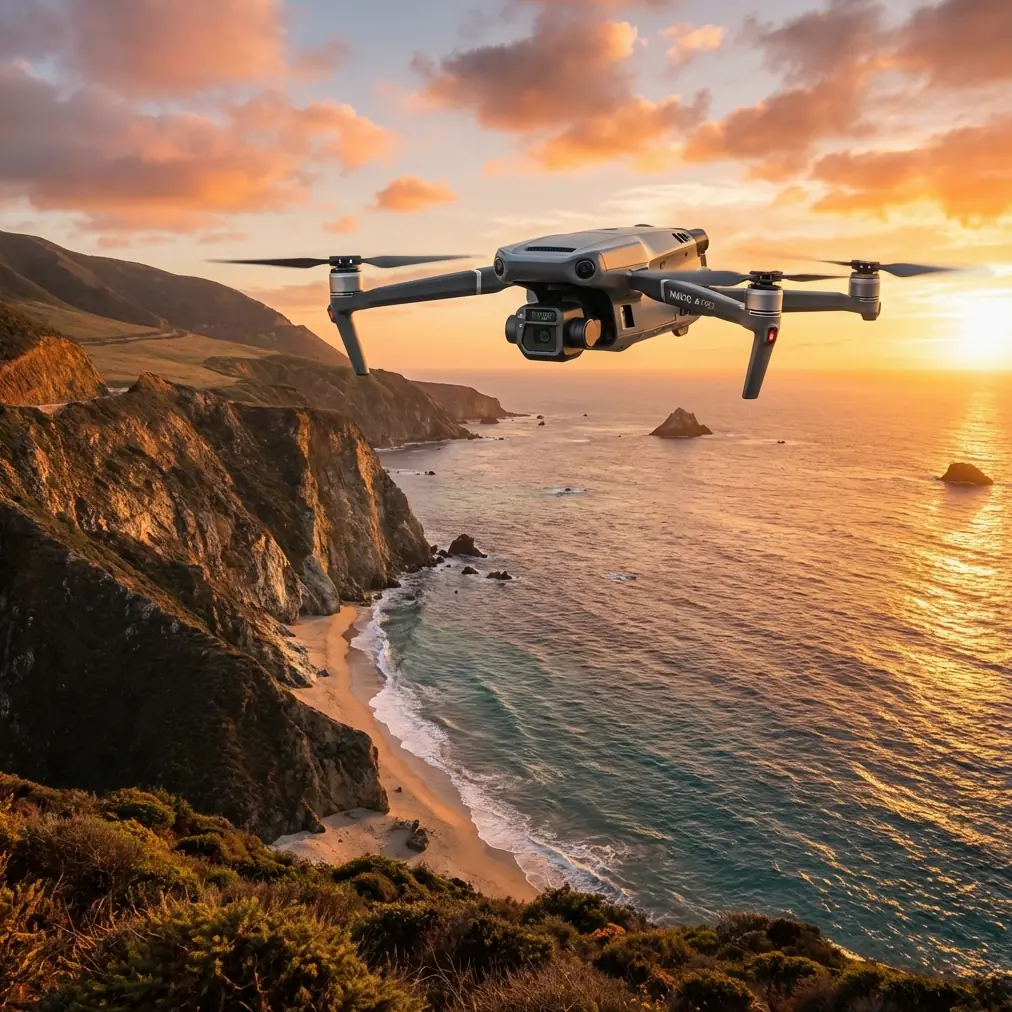
How I’d Survey a Solar Farm in Complex Terrain with the Mavic 3T
META: A field-focused Mavic 3T workflow for surveying solar farms in complex terrain, covering thermal signature capture, photogrammetry, EMI handling, GCP strategy, battery planning, and reliable data collection.
By Dr. Lisa Wang, Specialist
Solar farm surveys look simple from a distance. Long rows. Repeating geometry. Predictable assets. Then you arrive on site and the easy picture falls apart.
Hills break line of sight. Tracker tables tilt at different angles. Inverter stations create local electromagnetic noise. Access roads force awkward takeoff positions. Midday heat distorts thermal contrast. Even the data itself becomes harder than expected, because a useful inspection dataset is not just a collection of images. It has to be spatially consistent, thermally meaningful, and repeatable enough to compare one campaign against the next.
That is where the Mavic 3T becomes interesting. Not because it is a magic tool, but because it can combine thermal signature capture, visual documentation, and fast deployment into one aircraft that a field team can actually move across a large solar site without turning the day into a logistics problem.
This is the workflow I would use for surveying a solar farm in complex terrain with the Mavic 3T, with special attention to the messy parts that usually decide whether the data is usable.
Start with the mission question, not the aircraft
On a solar farm, “survey” can mean very different things:
- finding hot modules or strings
- documenting slope stability and drainage around arrays
- building an orthomosaic for maintenance planning
- checking vegetation encroachment
- verifying construction progress
- comparing recurring fault patterns near inverters or combiner boxes
If the objective is mixed, and it often is, I split the job into two datasets:
- Thermal inspection flights for anomaly detection
- Photogrammetry flights for mapping and asset context
Trying to optimize one flight for both jobs usually leaves you with a compromise. Thermal work wants timing and angle discipline. Photogrammetry wants overlap discipline and stable geometry. The Mavic 3T can support both, but the operator still needs to decide which dataset matters most on each sortie.
Why complex terrain changes the flight design
Flat ground lets you think in clean rectangles. Solar farms in rolling terrain punish that habit.
If one ridge blocks your path, the aircraft may maintain altitude relative to takeoff point while losing consistency relative to the panels below. That creates two problems. First, your thermal signature changes because distance and viewing angle change. Second, your photogrammetry can lose uniform ground sampling distance, which complicates reconstruction and measurement.
So I break the site into terrain-based sectors rather than panel-based sectors. Each sector gets its own takeoff point, its own planned altitude, and often its own antenna orientation check before launch. That sounds conservative, but it is what preserves data quality.
This is also where O3 transmission matters in a practical sense. On paper, transmission specs are easy to admire and easy to forget. In the field, robust video and telemetry link quality lets you reposition safely and maintain confidence when a ridge or equipment cluster starts to interfere with the clean path between pilot and aircraft. For solar work, that translates to fewer aborted lines, fewer manual recoveries, and less inconsistency across the dataset.
The overlooked issue: electromagnetic interference near solar infrastructure
A lot of operators blame “signal problems” on the site being large. Often the real issue is local electromagnetic interference.
Inverter pads, transformers, buried electrical runs, substations, and even metal-dense structures can produce enough interference to degrade your control experience or at least make it noisy. With the Mavic 3T, I do not assume the first takeoff point is good just because it is convenient.
My field routine is simple:
- stand clear of inverter stations and major electrical equipment where possible
- watch link quality before liftoff, not after
- adjust the controller antenna orientation deliberately rather than casually
- avoid pointing the broad side of your body or vehicle into the signal path
- relocate 20 to 50 meters if the local environment feels “dirty”
That last point sounds minor, but it is often the difference between a stable run and repeated dropouts. Antenna adjustment is not a cosmetic step. In complex terrain, especially around high-density energy infrastructure, small changes in orientation can noticeably improve the link. If I see unstable transmission while the aircraft is still nearby, I fix the geometry first before assuming the problem is software or weather.
For teams planning larger-area corridor-style site work, this is also part of the larger BVLOS conversation. Even when operations remain within current visual and regulatory boundaries, your planning should be BVLOS-minded: stable communication path, segmented terrain logic, recovery options, and a realistic understanding of where the site itself interferes with control quality.
Thermal timing matters more than most people admit
You can collect thermal images at almost any time. You can collect good thermal inspection data only at the right times.
For solar modules, the inspection window should be chosen to create useful contrast without saturating the scene or introducing unnecessary ambiguity. The exact timing depends on irradiance, panel technology, weather, and what defect classes you are looking for. But the principle is always the same: thermal anomalies need context.
A hotspot without a good visible reference is annoying.
A visible defect without thermal confirmation is incomplete.
The Mavic 3T is valuable because it lets you pair the two efficiently.
On sloped sites, I pay attention to row orientation and sun angle. Some arrays will show cleaner thermal differences when flown from one side rather than the other. This is not just about glare. It affects the interpretability of the thermal signature across rows that are already sitting at slightly different angles due to terrain and tracker behavior.
Separate inspection lines from mapping lines
When people rush, they often run a single generic grid and expect it to solve everything. For a solar farm, I would not.
For thermal inspection
I prefer flight lines that prioritize consistent viewing conditions over textbook map aesthetics. That usually means:
- maintaining a repeatable height above the array surface as closely as terrain allows
- avoiding excessive speed that reduces interpretability
- structuring passes to preserve clear panel-to-panel comparison
- keeping line spacing tight enough to avoid missing string-level anomalies
For photogrammetry
I switch mindset completely:
- plan for proper forward and side overlap
- keep camera geometry consistent
- use GCPs where measurement confidence actually matters
- sector the terrain so the model is not forced across large elevation changes from one launch logic
This is where GCP deployment still earns its place. The Mavic 3T can capture useful mapping context quickly, but if the survey has engineering consequences, drainage verification, or repeatable maintenance baselines, GCPs help anchor the dataset. On a complex solar site, I place them where terrain transitions and infrastructure density are most likely to expose geometric weakness, not just where it is easy to walk.
A note on tolerances, because precision is never abstract
Drone operators sometimes talk about precision as if it begins and ends inside mission planning software. It does not. Precision is a system habit.
One reason engineering references remain useful is that they remind us that physical systems live inside tolerances. In the source material behind this article, one table of braided rubber hose specifications lists dimensional allowances such as 10 ± 0.5 mm internal diameter and 20 ± 1.0 mm external diameter, with unit weights like 0.11 kg/m for smaller hose classes. Another engineering table presents gear-related tolerance values in micrometers, including figures such as 39, 63, and 98 µm across graded conditions.
Those are not drone specs, but the lesson transfers directly to Mavic 3T fieldwork. Real-world performance depends on respecting variance. When you fly a solar farm survey, every source of drift matters: altitude inconsistency, overlap inconsistency, panel viewing angle, RTK or GCP discipline, thermal timing, and signal quality. If a mechanical design handbook treats fractions of a millimeter and tens of micrometers as operationally meaningful, we should not pretend that casual flight execution still produces reliable inspection evidence.
That matters on solar sites because defect confirmation often lives in the margins. A weak hotspot trend, a subtle geometric shift in a drainage swale, or a recurring anomaly near the same combiner corridor can disappear if the survey method is not repeatable.
Battery strategy: think in sectors, not percentages
Hot-swap batteries change the rhythm of the day. They do not change the need for planning.
On a solar farm in uneven terrain, I assign one battery set to one sector target, not “as much area as possible.” That keeps each sortie logically complete. If wind picks up or the terrain forces more repositioning than expected, you still come home with a finished block of data rather than half of three different blocks.
The Mavic 3T is especially useful here because fast deployment encourages short, intentional flights. That is a good habit for thermal work. It helps you preserve consistency in lighting and module conditions instead of dragging a mission across a shifting environmental window.
I also leave room for one reflight segment in the battery plan. There is almost always a reason: glare on a western slope, an interrupted pass near an inverter station, or a suspicious thermal pattern worth confirming from a slightly different angle.
Data security is part of utility, not an afterthought
Solar farm datasets can reveal asset layout, maintenance status, equipment locations, and operational conditions. That is why secure handling matters.
If your team is moving imagery and mission files between field devices, remote stakeholders, and analysis platforms, encrypted workflows are worth treating as standard procedure. AES-256 support is not an abstract specification; it is part of maintaining control over inspection records, especially for operators working across multiple contracted sites where asset owners expect disciplined handling of infrastructure data.
A strong field workflow is not only about what the aircraft captures. It is also about who can access it, how it is transferred, and whether chain-of-custody makes sense when anomalies trigger follow-up maintenance decisions.
How I handle a typical anomaly workflow on site
Let’s say the thermal pass shows a recurring hot pattern near a string in a sloped section below an inverter corridor.
I do not immediately label it as a panel failure. I would:
- mark the exact row and relative position from the thermal frame
- cross-check the visible image for physical context
- verify whether the anomaly repeats across adjacent frames
- review whether angle, reflection, or altitude shift could have caused the appearance
- capture a confirmation pass if needed
- tie the anomaly to the mapping layer so the maintenance team can find it fast
This is why pairing thermal signature work with photogrammetry context is so effective. The maintenance crew does not just get “a hotspot exists.” They get location confidence, row context, terrain awareness, and a much cleaner path to inspection on foot.
Practical antenna adjustment in the field
Since the brief specifically calls out electromagnetic interference, here is the direct advice I give teams using the Mavic 3T on energy sites:
If the video feed looks unstable near metallic infrastructure or electrical equipment, stop and check your antenna geometry before changing the mission. Point the controller antennas to optimize the signal path to the aircraft, keep your body from blocking the link, and if needed move your launch point rather than forcing the flight from a bad RF pocket. On solar farms, that simple correction often solves more than software troubleshooting does.
If you want a field checklist for that specific issue, I usually share it directly with site teams here: message me on WhatsApp
What makes the Mavic 3T genuinely suited to this job
The Mavic 3T is not the largest platform you could use on a solar farm. That is part of the appeal.
For complex terrain, it sits in a productive middle ground:
- portable enough to relocate between terrain sectors quickly
- capable of thermal and visible capture in the same operational package
- strong enough in transmission performance to handle realistic site complexity when flown intelligently
- practical for repeat inspection cycles where consistency matters more than brute scale
That last point is the real one. Solar farm surveying is not a one-time cinematic event. It is a recurring asset management activity. The aircraft that wins is the one that helps teams return, repeat, compare, and act.
My final recommendation
If your site has elevation changes, dense electrical infrastructure, and a need for both inspection and mapping context, the Mavic 3T should be flown with two separate mindsets: thermal discipline and photogrammetry discipline. Keep the missions distinct. Use GCPs where the output will support measurement or engineering decisions. Respect interference zones instead of fighting them. Treat antenna adjustment as a real operational control. Build battery plans around terrain sectors. And make the dataset secure enough that it remains useful after the flight is over.
That is how the aircraft stops being a gadget and becomes part of a dependable solar survey workflow.
Ready for your own Mavic 3T? Contact our team for expert consultation.