
Mavic 3T for Low-Light Venue Surveys: Practical Field
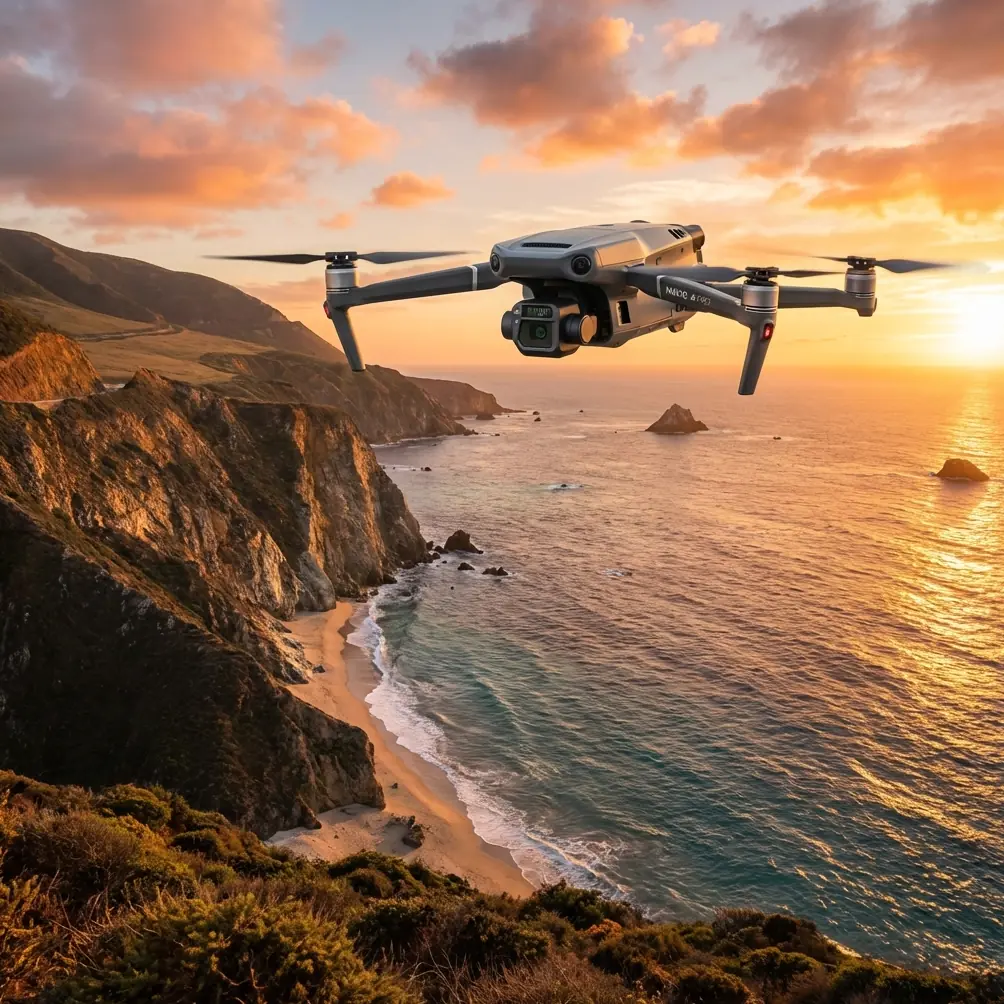
Mavic 3T for Low-Light Venue Surveys: Practical Field Methods That Actually Hold Up
META: A field-focused Mavic 3T guide for surveying venues in low light, covering thermal use, photogrammetry workflow, antenna positioning under interference, flight mode discipline, and mission planning.
Low-light venue surveying exposes weak points fast. Not just in the aircraft, but in the workflow around it.
A drone can have a strong thermal payload, stable O3 transmission, and enough battery endurance to finish a perimeter run, yet still produce messy data if the operator treats the mission like a daylight photo flight. With the Mavic 3T, the real advantage is not that it “can see at night.” The advantage is that it lets you combine thermal signature detection, visible-light documentation, and disciplined mission setup into one compact platform that can move through a venue survey without turning the operation into a gear-heavy production.
I approach the Mavic 3T as a systems tool, not a camera with propellers. That matters most when the site is dim, cluttered, and full of signal reflections from lighting rigs, steel structures, temporary towers, or rooftop plant equipment. In those conditions, the aircraft itself is only one variable. Mode management, battery planning, payload expectations, and radio behavior all decide whether your survey is useful by morning.
This guide focuses on how to use the Mavic 3T for low-light venue work in a way that produces reliable outputs for inspection, planning, and site documentation.
Start with the mission, not the aircraft menu
A useful principle from rotorcraft design still applies to modern UAV operations: define the mission first, then determine the payload and performance envelope needed to complete it. In helicopter design, engineers begin by fixing the mission requirement and effective payload, then use weight efficiency assumptions to arrive at takeoff mass. That logic is just as valuable for Mavic 3T survey work.
For a low-light venue mission, your “payload” is not just the sensor. It is the data you must bring home:
- thermal views of occupied or energized areas
- RGB context for mapping and reporting
- enough overlap for photogrammetry where the light permits
- reference points tied to GCPs if the site needs measurable outputs
- clean logs and timestamps for later interpretation
This sounds obvious, but many crews still launch first and improvise later. That usually leads to one of two failures. Either the team flies too much thermal without enough visible context, or they try to force a standard mapping pattern in conditions where the visible camera cannot support strong feature matching.
When the venue is dark, define the output by zone. Parking surfaces may support photogrammetry with supplemental lighting or nearby ambient illumination. Roof sections may be better captured as thermal inspection corridors with selected RGB obliques. Entry routes, generator placements, temporary structures, and HVAC clusters often benefit from paired thermal and visible passes rather than one single “master” map.
Respect the hidden losses in your flight plan
Another design lesson from traditional rotorcraft engineering is that not all rated power reaches useful work. The reference material notes that installed engine losses can consume around 3% to 6% of nominal power, and transmission losses add another portion depending on design and friction. The numbers come from helicopters, not the Mavic 3T specifically, but the operational lesson is directly relevant: published capability is never field capability.
In drone work, the equivalent losses come from real conditions:
- cold or aging batteries
- wind shear around grandstands or roof edges
- repeated climbs over structures
- hovering in unstable air
- signal management near dense metal frameworks
- stop-start flying while chasing thermal anomalies
So if your planning assumes brochure performance, your margins are already gone.
For low-light venue surveys, I recommend treating battery endurance conservatively whenever the mission includes prolonged hover verification of thermal signatures. Hovering to confirm a hot electrical box, duct leak, or crowd-flow lighting issue burns mission time quickly. If the site also requires return legs over a signal-noisy area, hold more reserve than you would for a simple daylight orthomosaic.
Hot-swap batteries are not just a convenience in this kind of work. They are a sequencing tool. Use them to break the mission into logical blocks: perimeter thermal sweep, structural review, roof services pass, and any photogrammetry segment that needs the most stable light and strongest GNSS geometry. Segmenting the task keeps your data sets cleaner and makes anomaly review easier later.
Low light changes what “survey quality” means
The biggest mistake I see is trying to judge a night or dusk venue survey by daylight mapping standards alone.
With the Mavic 3T, low-light quality is often about layered evidence rather than one perfect deliverable. Thermal signature helps you identify heat differentials, occupancy clues, moisture-related effects, and electrical stress points. RGB imagery provides physical context, material boundaries, and report-ready visuals. Together they are far more useful than either stream alone.
That means the workflow should be intentional:
Use thermal first to detect what deserves attention.
Scan for abnormal heat patterns around power distribution, rooftop equipment, temporary infrastructure, or high-footfall service zones.Follow with RGB context.
Even if the visible imagery is not ideal for full photogrammetry, it can explain what the thermal image is actually showing.Apply GCPs where precision matters.
If the venue owner needs measurable layout outputs, place GCPs in illuminated or clearly visible areas before launch. In low light, a few well-planned control points are worth more than a large number of weakly visible markers.Do not force every zone into one mapping recipe.
Some sections should be modeled. Others should be inspected. The Mavic 3T earns its value when you let each sensor do the job it is best suited to.
This is also where expectations with stakeholders matter. If the assignment is framed as “photogrammetry at night,” you may spend too much energy chasing an output that the scene cannot support. If the assignment is framed as “venue condition assessment in low light with measurable reference zones,” the Mavic 3T fits naturally.
Flight mode discipline matters more than most operators admit
One of the more interesting details in the reference material comes from radio control workflow rather than aircraft design: some transmitter systems support up to five flight modes, allow copy functions, priority changes, and even delay between mode transitions to reduce abrupt control effects. That may sound old-school, but the operational significance is very current.
Mode switching discipline prevents bad decisions at night.
In a low-light venue survey, pilots often jump too quickly between task behaviors: broad transit, slow inspection hover, oblique capture, automated route, manual correction. Each shift changes aircraft attitude, pilot attention, and camera intent. If those changes are abrupt or poorly rehearsed, image consistency drops and situational awareness slips.
The lesson is not that you need five complicated profiles. The lesson is that your mission should have clearly defined operating states, and transitions between them should be deliberate.
For the Mavic 3T, I suggest establishing at least these operational states before takeoff:
- Transit state: moving between survey zones efficiently, with attention on obstacle environment and link quality
- Thermal inspection state: slower speed, steadier headings, repeatable altitude, screen attention on heat patterns
- Capture state: optimized for RGB documentation or mapping overlap
- Recovery state: route home with conservative line choice and reserve battery margin
Why does this matter? Because low light increases the cost of every sloppy switch. A sudden change in speed or orientation can blur a capture sequence, skew overlap, or cause the operator to misread a thermal hotspot. If your controller and software environment allow custom setups, make them serve this state-based logic.
The reference also mentions mode delay as a way to reduce unwanted airframe movement during transitions. For drone operators, the practical takeaway is simple: avoid abrupt command changes when entering a precise capture segment. Give the aircraft a moment to settle before collecting the imagery you intend to keep.
Managing electromagnetic interference: antenna adjustment is not optional
Venue environments are famous for ugly RF behavior. Temporary broadcast gear, Wi-Fi saturation, LED infrastructure, steel trusses, rooftop mechanical systems, and reflective surfaces all complicate the link.
The Mavic 3T’s O3 transmission system is robust, but robust does not mean careless. In interference-prone areas, antenna handling becomes part of the survey method.
Here is the field approach I teach:
1. Build the route around line quality, not just geometry
A short path behind a metal grandstand may be worse than a longer path with cleaner visibility. If your venue has dense structural elements, scout likely dead zones before the main mission.
2. Adjust antenna orientation to the aircraft’s actual position
Do not point the tips directly at the drone. Align the antenna faces so the aircraft sits in the strongest radiation pattern. Small adjustments matter when you are working along roof edges or behind mixed structures.
3. Change your body position if needed
Sometimes the controller location is the problem. Move a few meters. Get above rail level. Step clear of vehicles or fencing. Pilots often blame interference when they are standing in a self-created shadow.
4. Watch for link degradation during yaw-heavy inspection work
A venue survey often involves orbiting equipment or panning across service infrastructure. As the aircraft changes orientation, reflected signal paths can shift. If transmission quality degrades, pause the capture task, re-establish cleaner antenna alignment, then continue.
5. Separate data ambition from link reality
If one section of the venue repeatedly degrades the link, do not force a long manual hover there. Re-fly it from a different angle, a different pilot position, or a different altitude.
Where confidentiality matters, AES-256 protection is a relevant part of the conversation. It will not fix interference, but it does support secure handling of sensitive venue imagery, especially for corporate campuses, utilities, or pre-event infrastructure assessments.
If your team needs a field checklist for low-light venue setup and interference handling, I usually suggest sharing a simple preflight brief in advance; you can send it directly through this coordination link.
Thermal is not a shortcut; it is a filter
The Mavic 3T’s thermal capability is often misunderstood. People either overestimate it and expect instant answers, or underestimate it and use it only for obvious hotspots.
For venue surveys, thermal is best used as a decision filter.
A low-light site gives thermal contrast that daylight can hide. That can help reveal:
- overloaded or imbalanced electrical components
- HVAC irregularities
- heat leakage around enclosed service rooms
- occupancy traces in recently used areas
- moisture-related thermal differences on some surfaces
- temporary power routing that deserves closer inspection
But thermal imagery on its own can also mislead. Material emissivity, reflections, and residual heat can distort the story. That is why the RGB follow-up matters. Your report should not just say, “hot area detected.” It should show what the area is, why it matters operationally, and whether the pattern was isolated or repeated across the venue.
This is particularly useful in pre-event readiness surveys. Instead of walking every rooftop and service corridor at night, the Mavic 3T can narrow the list of places that truly need closer physical inspection.
Can you do photogrammetry in low light with the Mavic 3T?
Yes, but not everywhere, and not carelessly.
Photogrammetry depends on identifiable features, stable exposure, and sufficient overlap. Low-light venue scenes often break one or more of those requirements. Smooth asphalt, dark roofs, temporary flooring, and shadow-heavy structures can all reduce feature matching quality.
The answer is to be selective.
- Map the areas with usable ambient or supplemental illumination.
- Use GCPs to anchor the deliverable where precision matters most.
- Favor repeatable flight lines over improvised wandering capture.
- Keep altitude and speed conservative enough to preserve detail.
- Pair the orthographic work with targeted obliques for interpretation.
For many venues, the best output is a hybrid package: partial photogrammetry where conditions allow it, thermal inspection layers for critical service zones, and RGB obliques for areas where a full model is not realistic.
That is not a compromise. It is good survey design.
BVLOS discussions should stay practical
Some operators immediately ask whether a larger venue justifies BVLOS. In most civilian commercial settings, that question should be answered by regulation, site risk, observer structure, and communications architecture, not by convenience. For low-light venue work, most teams will get better results by maintaining disciplined visual operations, smart pilot positioning, and segmented mission blocks rather than stretching the envelope.
The Mavic 3T is efficient, but efficiency is not a reason to outrun your control environment.
A final field method that saves rework
Before leaving the site, review the mission in three layers:
- Thermal anomalies captured?
- Visible context for each anomaly secured?
- Any zones needing measurable mapping tied to GCPs and adequate overlap?
If one of those layers is missing, fly the short corrective segment while the aircraft, team, and site conditions are still in place. Reconstructing intent from incomplete low-light data back at the office is a poor use of anyone’s time.
The Mavic 3T performs best in venue surveys when the operator thinks like a planner, not a gadget user. Mission-first logic, conservative endurance assumptions, structured mode transitions, and active antenna management under interference all matter more than marketing language ever will. Low light does not reduce the value of aerial survey. It simply exposes whether the workflow is mature enough to deserve the aircraft.
Ready for your own Mavic 3T? Contact our team for expert consultation.