
Mavic 3T for Coastline Tracking: An Expert Field Tutorial
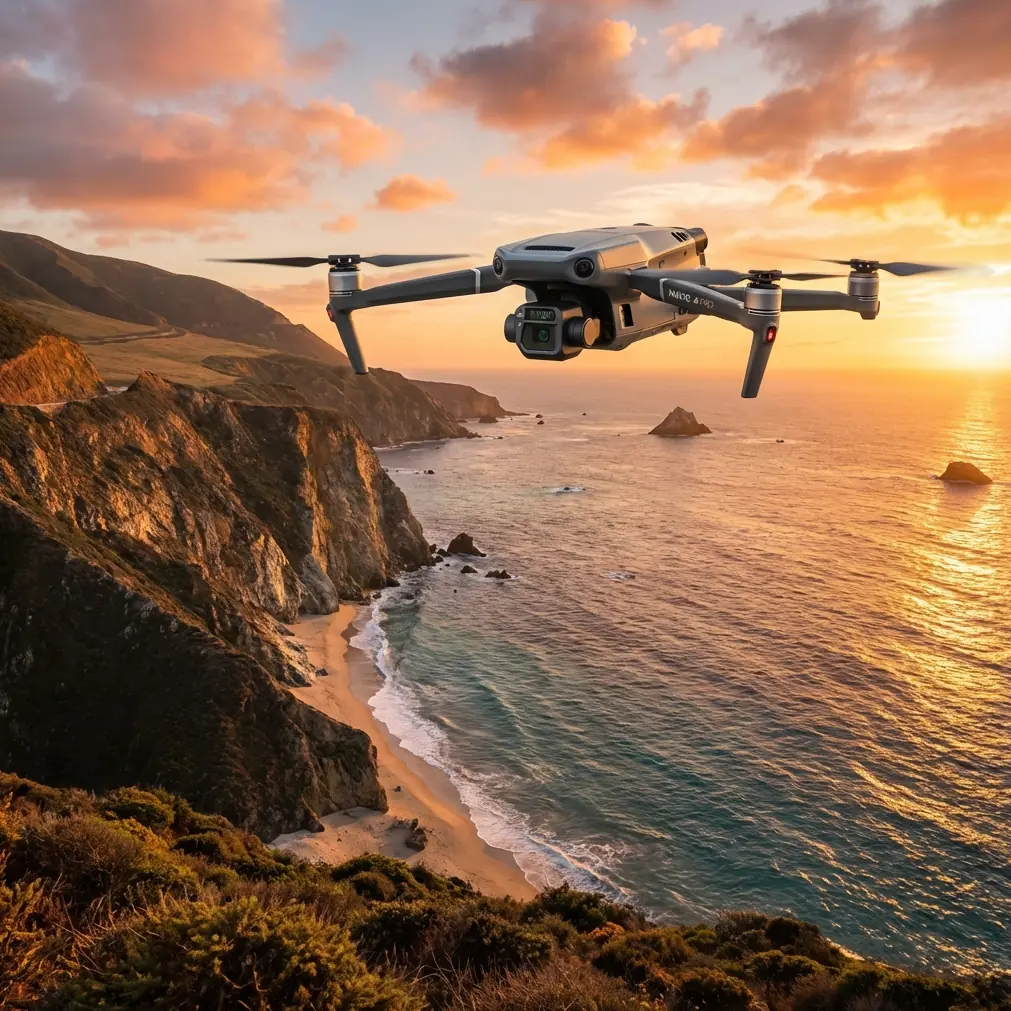
Mavic 3T for Coastline Tracking: An Expert Field Tutorial
META: Learn how to use the DJI Mavic 3T for coastline tracking in complex terrain, from thermal signature management and O3 transmission planning to photogrammetry, GCP workflows, and safe mission execution.
Coastline work looks simple on a map. In the field, it rarely is.
You are dealing with glare off the water, cliffs that block signal, wind shear near headlands, tidal movement that changes the scene by the hour, and targets that can disappear into rock, surf, or vegetation with almost no warning. That is exactly why the Mavic 3T has become such a practical aircraft for coastal tracking missions. Not because it is flashy, but because its mix of thermal sensing, stable flight behavior, and field efficiency solves real operational problems that lighter consumer platforms often struggle to manage.
I have used a range of UAVs around shorelines, estuaries, and broken coastal terrain, and the biggest separator is rarely raw image quality alone. It is whether the aircraft can maintain situational awareness while the environment keeps degrading your margins. The Mavic 3T is strong here because it combines a thermal payload for detection, a zoom-capable visual workflow for confirmation, and a compact airframe that can be deployed quickly from uneven launch points. In coastline operations, that combination matters more than spec-sheet bragging.
This guide is built around one question: how do you get reliable coastal tracking results from the Mavic 3T when the terrain is working against you?
Why the Mavic 3T stands out on the coast
The first reason is thermal signature management. On a shoreline, standard RGB imagery can fail fast. Wet rock, sea foam, reflective water, shadowed coves, and low-angle sunlight all reduce visual contrast. A thermal camera changes the search logic. Instead of hunting for shape or color first, you can detect heat separation between a person, animal, vessel component, or recently used object and the surrounding terrain.
That sounds straightforward until you fly over a beach at midday and discover that sun-heated stone can mask a target surprisingly well. The Mavic 3T still helps because it lets you cross-check thermal anomalies with visual framing without changing aircraft. That shortens the time between detection and verification, which is critical when tracking movement along a coastline where subjects can disappear behind outcrops or descend below line of sight.
Compared with many competing compact drones that are either strong in mapping or strong in imaging, but not especially balanced for mixed-response work, the Mavic 3T is unusually complete. It is not just a thermal drone. It is a field-ready decision-making tool. That distinction becomes obvious when a possible target appears as a weak thermal hotspot near a rock shelf and you need to validate it immediately before wave action or terrain occlusion removes the opportunity.
The second reason is link resilience. DJI’s O3 transmission system is a practical advantage in coastal terrain because cliffs, sea walls, and dense elevation changes can interrupt clean signal paths. No wireless system can ignore topography, but O3 gives the operator more room to work before video quality and control confidence begin to drop. Around coastlines, that buffer is valuable. You are often flying laterally along irregular landforms, not out over open farmland with a perfect horizon.
The third reason is deployment speed. Coastal incidents rarely wait for a full-size aircraft team to set up. The Mavic 3T can be launched from compact staging areas, footpaths, access roads, harbor edges, and rocky clearings that would be awkward for larger systems. If your task is to track erosion lines, monitor wildlife movement, locate a stranded subject, or document an unstable cliff section before the tide changes, every minute counts.
Start with the mission profile, not the drone settings
Too many pilots begin by tweaking the camera before they define the mission. On the coast, the order should be reversed.
Ask four things first:
- What are you tracking?
- How fast can it move?
- What terrain will interrupt visibility?
- How long do you have before tide, light, or weather changes the answer?
If you are tracking a person moving along broken shoreline trails, your priority is persistent reacquisition. If you are monitoring marine debris or erosion features, your priority may be repeatable geospatial capture. If you are looking for a vessel or engine heat source near an inlet at dawn, thermal detection may dominate the opening phase. The Mavic 3T can handle all three, but your flight geometry should change for each one.
For mobile subjects, fly offset from the shoreline rather than directly overhead whenever safe and legal. That gives you better perspective into crevices, ledges, and narrow cuts in the terrain. For static documentation, especially where photogrammetry matters, more structured overlapping passes are better. The Mavic 3T can support both styles, but trying to force one flight pattern to do everything usually produces weak data.
Thermal use on the coast: what actually works
Thermal is often oversold by people who have not spent enough time near water.
Here is the reality. Water itself often appears thermally uniform relative to land, but the coastal edge is full of confusing transitions. Sun-warmed rocks, wet sand, tidal pools, concrete sea defenses, and vegetation each retain or release heat differently. A target can stand out strongly one minute and flatten into the background later.
That does not reduce the value of the Mavic 3T. It means you need timing discipline.
Early morning and late evening often create cleaner thermal separation than midday. If you are tracking a human subject, vehicle traces, equipment, or recently occupied positions, lower ambient heating can make anomalies easier to read. The Mavic 3T is especially effective when you use thermal not as a final answer, but as an alerting layer. Detect first, then verify visually and geographically.
A practical workflow looks like this:
- Run a broad thermal sweep along likely movement corridors.
- Mark anomalies near cliff bases, access cuts, dune edges, or harbor structures.
- Revisit each anomaly with visual zoom and a tighter orbit or offset pass.
- Record location and movement direction immediately.
- Recheck after a short interval to separate live movement from static heated surfaces.
This method matters because false positives are common near coastlines. The Mavic 3T helps reduce wasted time by keeping both detection and confirmation inside the same aircraft workflow.
O3 transmission planning in broken terrain
One of the biggest mistakes in coastal flying is assuming the sea gives you a clean RF environment. It often does not.
Cliffs, concrete, metal infrastructure, moored vessels, and rapidly changing elevation create awkward signal conditions. O3 transmission is one of the reasons the Mavic 3T performs well here, but operators still need to fly intelligently. If the aircraft drops behind a headland, no marketing term will rescue a blocked path.
Plan your position like a surveyor, not like a hobby pilot.
Set up where you can keep the broadest line of sight to both the shoreline and the likely movement route. Higher is usually better for the pilot position, provided it remains safe and authorized. If you expect the subject to pass behind terrain, reposition early instead of waiting for video degradation. That sounds obvious, but it is one of the most common reasons coastal tracking missions lose continuity.
If you work with a team, designate one person to monitor route geometry while the pilot focuses on aircraft control. That division of labor is especially useful when the Mavic 3T is being used near steep cliffs or irregular coves where a few seconds of delay can mean losing visual context.
Battery discipline and hot-swap thinking
Coastline operations punish poor battery planning.
Wind pushes harder near exposed ridges, return routes may be less direct than outbound legs, and the temptation to extend “just one more minute” is strong when you are close to a useful detection. Resist that instinct. The Mavic 3T is a capable aircraft, but coastal reserve margins should be conservative.
Hot-swap battery workflows matter here, even if your field procedure is informal rather than built around a larger enterprise platform. The point is not merely speed. It is continuity. If you are tracking a changing shoreline event or recurring movement pattern, the transition between flights should be short enough that you do not lose the operational picture.
Set batteries in a rotation order before the mission starts. Note ambient temperature, wind trend, and flight duration patterns after the first sortie. Coastline work is not the place to improvise energy management.
When to use photogrammetry and GCPs
Not every coastal mission is a search task. Some are measurement tasks wearing search language.
If your real objective is to document erosion, storm damage, landslip progression, intertidal infrastructure exposure, or shoreline encroachment, then photogrammetry becomes central. The Mavic 3T is not the first aircraft some people name for mapping, but in many coastline projects it is more useful than a single-purpose mapper because it can collect actionable situational data while still producing georeferenced visual records.
Ground control points, or GCPs, matter when the shoreline itself is changing and you need defensible alignment between surveys. On beaches, cliffs, and tidal margins, small spatial errors can distort the story. A photogrammetric model without good control can look convincing while being operationally weak.
Use GCPs on stable, clearly visible surfaces above the active tidal zone whenever possible. Avoid placing them where surf, glare, or shadow will reduce visibility in the dataset. The Mavic 3T then becomes more than a tracking platform. It becomes a repeatable coastal documentation tool that can show whether a crack widened, a slope shifted, or a dune line migrated over time.
That is one area where many competing compact drones fall short in practice. They may capture attractive imagery, but they are less efficient when the same mission demands thermal inspection, visual validation, and spatially useful documentation in one deployment window.
Security and data handling in sensitive operations
Coastline tracking is not always routine environmental work. It can involve critical infrastructure, protected habitats, restricted access areas, or active emergency response. That is where data handling becomes part of the aircraft choice.
AES-256 encryption support is not an abstract feature. In sensitive operations, it matters because imagery, coordinates, and route history may involve people, assets, or sites that should not be casually exposed. If your mission includes port perimeters, utility corridors near the shore, or law-enforcement-adjacent support, secure handling is part of operational professionalism, not an afterthought.
The same logic applies when teams are planning for BVLOS-adjacent workflows in the future. Regulations vary by jurisdiction, and most operators will still be working within standard visual constraints unless specifically authorized. Even so, the Mavic 3T fits that conversation because it gives teams a compact platform to refine tracking logic, route discipline, and sensor use before moving into more complex approvals or larger aircraft ecosystems.
A practical coastal workflow for the Mavic 3T
If I were setting up a standard Mavic 3T coastline tracking mission in complex terrain, I would use this sequence:
First, establish an elevated pilot position with the widest possible view of the shoreline segment. Confirm launch and recovery options before takeoff, not after the wind shifts.
Second, run a fast thermal reconnaissance pass to identify anomalies and movement zones. Keep the altitude high enough to maintain context, but low enough that small heat signatures are still meaningful.
Third, use the visual system to confirm whether each anomaly is human activity, wildlife, equipment, rock heating, or background clutter.
Fourth, if the mission includes documentation, transition into a structured capture pattern for photogrammetry and tie the result to GCPs where survey-grade consistency matters.
Fifth, rotate batteries quickly, log observations immediately, and relaunch before the environment changes. Tide and light are always moving. Your mission plan should assume that.
For teams that want to tighten this workflow further, it helps to coordinate field planning in advance through a simple channel like message us on WhatsApp so launch points, terrain notes, and sensor priorities are already aligned before the aircraft comes out of the case.
The real advantage of the Mavic 3T
The Mavic 3T excels on coastlines because it reduces compromise.
You do not need one aircraft for thermal awareness and another for practical visual confirmation. You do not need a large deployment footprint to work in difficult access areas. You do not need to choose between response speed and data value as often as you do with simpler platforms.
That does not mean it is perfect. No compact drone eliminates the need for disciplined pilot positioning, conservative battery management, or careful interpretation of thermal data near water. But when the task is tracking coastlines in complex terrain, the Mavic 3T is one of the few aircraft in its size class that consistently feels built for the realities of the job rather than for the showroom.
That is the difference professionals notice first. Not the headline feature. The way the system holds together when the landscape becomes complicated.
Ready for your own Mavic 3T? Contact our team for expert consultation.