
Tracking Construction Sites in Low Light with the Mavic 3T
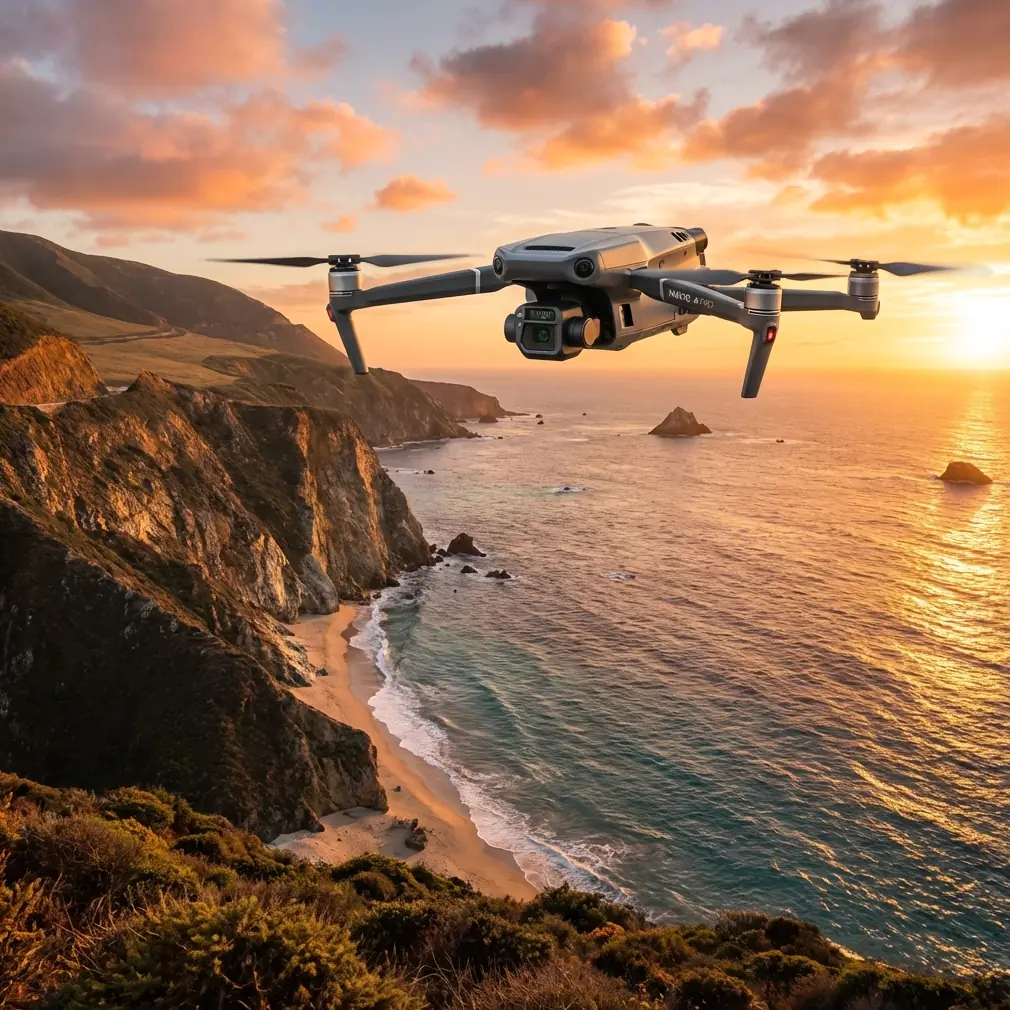
Tracking Construction Sites in Low Light with the Mavic 3T: What Actually Matters on Real Projects
META: Practical expert guide to using the Mavic 3T for low-light construction site tracking, with thermal workflow tips, EMI handling, antenna adjustment, and operational insights that improve data quality.
Construction sites do not become simple when the sun drops. They become harder to read.
Concrete still holds heat from the day. Temporary power lines and machinery clutter the scene. Dust, fencing, reflective surfaces, and uneven lighting create a patchwork of false visual cues. If your job is to track progress, verify activity zones, check stockpiles, or confirm whether work completed at dusk matches the daily report, low light changes everything.
This is where the Mavic 3T starts to make sense—not as a generic drone with a thermal camera, but as a tool that can separate heat, shape, and location fast enough to keep a project team informed without waiting for daylight.
I have seen many teams buy into the idea of “night operations” before they understand the actual bottleneck. It usually is not flight time. It is not even the thermal sensor on its own. The real issue is whether the aircraft can produce stable, interpretable data in a visually messy, electromagnetically noisy jobsite environment.
That distinction matters.
The construction problem after dark
A daytime site walk gives you texture, color, and context. At night, those cues collapse. Earthworks blend into access roads. Fresh trench lines disappear into shadow. Vehicles parked near active equipment look identical on a standard camera feed. Workers may leave behind hot tools, running generators, or recently used asphalt patches that can confuse a quick visual check.
For construction managers, the usual questions remain the same:
- Which zones were active?
- Did the material move?
- Is there unexpected heat near temporary utilities or equipment?
- Are haul routes clear?
- Does the actual site condition match the marked plan?
But low-light tracking introduces a second layer: can the drone reveal differences that the eye misses without creating a stream of misleading hotspots?
The Mavic 3T is useful here because it lets you compare thermal signature and visible imagery in one compact platform. That sounds obvious until you work a real project where you need to verify whether a warm patch is a recently poured surface, a vehicle engine, a generator enclosure, or just residual heat stored in a steel plate.
Thermal on its own is not the answer. Thermal with positional discipline is.
Why thermal signature matters more than “night vision”
Construction people often ask for “night vision” when what they really need is heat contrast.
That is a different operational mindset. A thermal signature tells you where energy is behaving differently from the surrounding environment. On a site, that can help reveal:
- recently used machinery
- active electrical equipment
- heat retained in curing materials
- occupancy patterns around work zones
- thermal contrast between compacted and disturbed surfaces
This is one reason the Mavic 3T works well for tracking construction activity rather than simply filming it. If a staging area was active within the last hour, thermal can often show you that before a standard RGB image tells the same story. If a trench backfill area is blending into the terrain visually, temperature variation may still draw the boundary.
That said, low-light thermal interpretation requires restraint. Freshly heated metal, generator housings, and even sun-loaded surfaces can keep emitting long after the operational event that caused them. A good pilot does not chase every hotspot. A good pilot compares thermal behavior with site layout, time of day, and the known work sequence.
The hidden enemy on construction sites: electromagnetic interference
Most discussions around drone operations on building sites focus on obstacles and airspace. Fair enough. But on dense projects, especially those with tower cranes, temporary site offices, power distribution, comms gear, reinforced concrete cores, and active machinery, electromagnetic interference can quietly degrade the flight experience before anyone notices.
The symptom is not always dramatic. Sometimes it starts as video instability, weaker transmission confidence, lag in downlink quality, or intermittent control behavior that feels “off.” If you are trying to inspect an edge beam, follow a haul route, or document phased work in low light, those subtle disruptions matter. Low-light operations already reduce your margin for error.
This is where O3 transmission earns its place in the conversation. Strong transmission architecture is not just a spec-sheet item. On a jobsite, it affects whether your live view remains reliable enough to interpret thermal and visual feeds while navigating cluttered infrastructure.
Still, even strong transmission does not exempt you from fieldcraft.
When I am working around interference-prone structures, I pay close attention to antenna adjustment rather than assuming the link will sort itself out. Pilots often leave antenna orientation as an afterthought. On a construction site, that is lazy. Small adjustments in controller-to-aircraft alignment can materially improve link stability, especially when the aircraft is moving laterally behind structural elements or operating near reflective steel and temporary electrical installations.
The practical rule is simple: if your live feed begins to degrade, do not just blame the site. Reassess your body position, line of sight, controller angle, and antenna orientation before escalating the flight path. A small change on the ground can clean up the signal enough to complete the task safely and efficiently.
Why an aircraft design detail from crewed aviation still teaches a useful lesson
One of the reference materials I was given comes from an aircraft oxygen system design handbook, which might seem far removed from a compact enterprise drone. It is not.
That source notes that under NTP conditions—101.31 kPa and 21.1°C—a cylinder volume of 2 yields 240 usable capacity units, while 4 yields 480, 8 yields 960, and 12 yields 1440. The pattern is straightforward: available capacity scales only when the storage system is chosen and installed with the mission requirement in mind. The same section also stresses that cylinders should be positioned away from heat-producing equipment and distributed properly when multiple units are used.
That has real operational significance for Mavic 3T planning, even if the hardware is completely different.
The lesson is about mission energy and placement discipline. On a low-light construction job, battery planning should not be treated as a rough estimate. If your site has multiple active zones, you do not want to discover halfway through the shift that you planned for one broad orbit when the reality demanded repeated short, precise sorties over separate work fronts. Capacity only matters when matched to the task.
And the installation logic—keeping critical systems away from heat and hazardous placement—translates into field staging. Do not stack batteries and control gear carelessly near generators, temporary lighting transformers, or hot vehicle surfaces during night work. It sounds basic, but poor staging ruins efficiency faster than people think.
If you use hot-swap batteries as part of a sustained progress-tracking workflow, the handoff process needs to be clean, protected, and organized. Low-light jobs punish sloppy ground operations.
What the landing gear handbook unexpectedly says about repeatable data capture
The second reference item is a table-of-contents extract from a landing gear design volume, but one phrase stands out: “起落架系统计算及交点载荷计算,” or landing gear system calculation and load-point calculation. Another section points to strength calculations for components.
Again, this is not directly about the Mavic 3T. But the operational idea is relevant: repeatability depends on understanding how loads and contact points behave in real conditions, not in abstract diagrams.
For construction site tracking, the drone equivalent is route consistency and takeoff/landing discipline. If you want progress comparisons that mean something—especially when mixing thermal snapshots, photogrammetry outputs, and weekly site reporting—you need consistent launch points, repeatable altitudes, and predictable camera geometry. Otherwise, small changes in perspective can look like changes in site condition.
This becomes even more valuable if you are tying imagery into photogrammetry workflows. Thermal is excellent for interpretation, but if you also need measurable progress models, visible-light capture and proper survey control still matter. That is where GCP strategy enters the discussion. Even when the mission emphasis is low-light monitoring, daytime follow-up flights with well-placed GCPs can anchor your progress record and keep your thermal observations tied to a spatially reliable baseline.
The result is a stronger workflow: thermal for fast low-light detection, photogrammetry for structured measurement, and repeatable launch/route practice to keep both datasets useful over time.
A field workflow that works
For low-light construction tracking with the Mavic 3T, I recommend a problem-solution workflow rather than a single “inspection flight.”
1. Define what changed today
Do not launch until you know what the site team actually wants verified. Material movement? Vehicle activity? Concrete placement? Temporary utility heat? Security lighting effectiveness around work zones? Thermal only helps when the question is specific.
2. Split the site into thermal logic zones
Treat the project as separate environments:
- active machinery areas
- curing or recently worked surfaces
- temporary electrical corridors
- storage and laydown zones
- perimeter access routes
Each zone produces different heat behavior. Mixing them into one generalized scan creates noise.
3. Fly the first pass for interpretation, not beauty
The first pass should answer: where are the anomalies? Keep the route efficient. Watch for thermal signatures that do not fit the known work sequence. Then validate with the visible feed.
4. Manage EMI actively
If link quality starts to dip, adjust antenna orientation before changing mission scope. Reposition yourself for better line of sight. On cluttered sites, transmission quality can improve dramatically with simple operator movement. O3 transmission gives you a strong foundation, but field handling still decides whether the data stays usable.
5. Run a second pass for evidence
Once the anomalies are identified, fly tighter and more deliberate. Capture angles that allow project managers to interpret what they are seeing without needing the pilot on a call to explain every image.
6. Build continuity into the record
If the site is being tracked across days or weeks, maintain the same key vantage points. This is where serious teams separate themselves from hobby-style operators. Decision-makers need comparable records, not a different artistic orbit every evening.
Data security is not a side issue
Construction documentation often contains sensitive information: phasing plans, site logistics, utility layouts, subcontractor sequencing, and asset placement. If imagery is being shared among stakeholders, the conversation should include data protection from day one.
AES-256 matters here because site imagery is not just a visual product; it is project intelligence. For firms operating under stricter client requirements or handling infrastructure-adjacent projects, secure transmission and disciplined file handling are part of professional drone operations, not optional extras.
This also affects how you communicate with the field team. If a project manager wants to discuss a specific deployment setup or low-light workflow, a direct channel like message our operations desk here is often more efficient than forcing fragmented site instructions through email chains.
Where BVLOS fits—and where it does not
BVLOS gets mentioned a lot in enterprise drone discussions, often too casually. For construction tracking, the concept is relevant mainly on very large linear or distributed sites, not as a default badge of sophistication. Most low-light building projects benefit more from disciplined VLOS operations, strong transmission management, and repeatable flight planning than from stretching operational range for its own sake.
If your site expands into corridor-style work or a multi-zone industrial development, BVLOS planning may become part of the long-term operating model. But for most Mavic 3T construction tracking work, the immediate gains come from clean thermal interpretation, reliable control link behavior, and structured data capture.
What separates useful Mavic 3T site tracking from wasted flights
The Mavic 3T is not valuable because it can fly at dusk. Plenty of aircraft can do that.
It becomes valuable when the pilot understands three things at once:
- Heat does not equal activity unless you interpret context correctly.
- Signal reliability on construction sites is a practical skill, not just a hardware promise.
- Repeatable documentation beats dramatic footage every time.
The reference materials behind this article may come from traditional aircraft design handbooks, but the engineering habits they reflect are still relevant: capacity should be matched to mission demand, systems should be staged thoughtfully around heat and hazards, and repeatable structural logic matters more than improvisation.
That is exactly how low-light Mavic 3T work should be approached on a construction site.
Not as a novelty flight. As an engineered information task.
Ready for your own Mavic 3T? Contact our team for expert consultation.