
Tracking Fields with Mavic 3T in Low Light | Tips
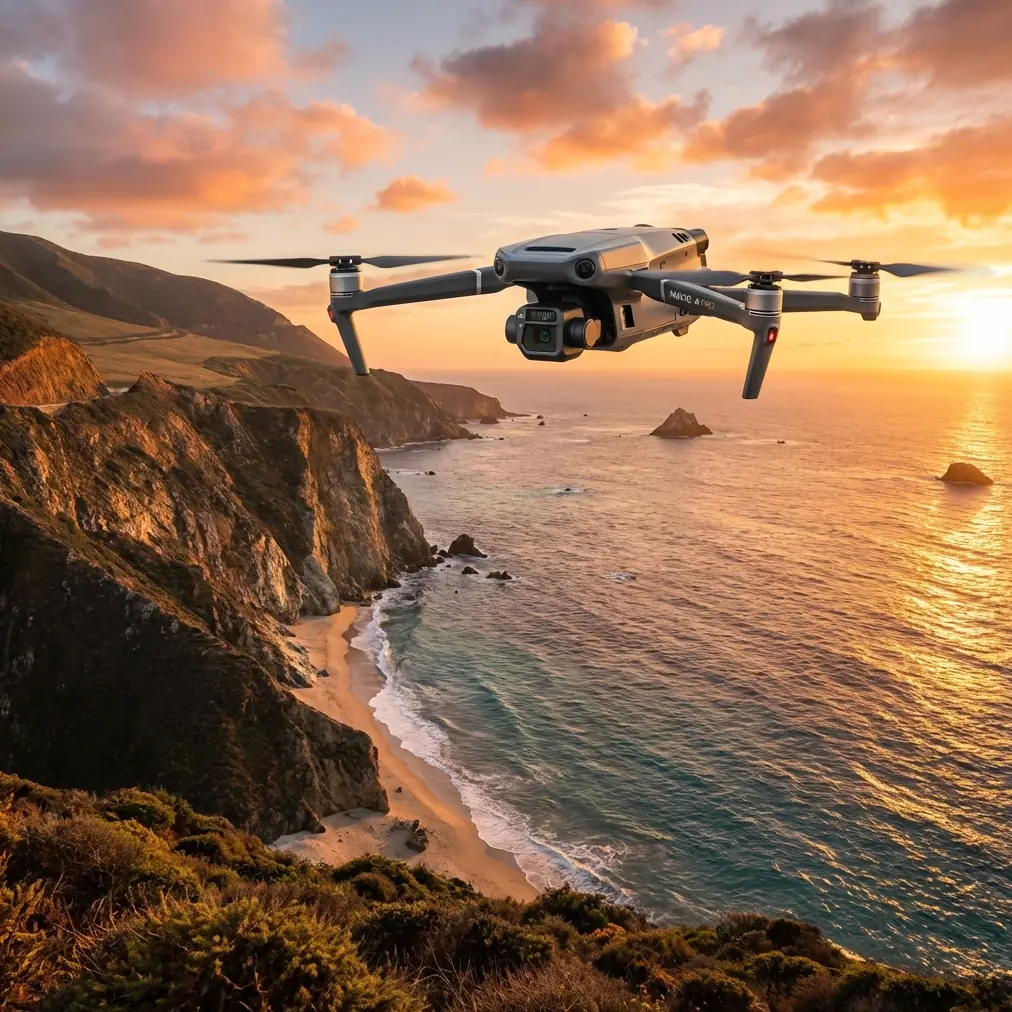
Tracking Fields with Mavic 3T in Low Light | Tips
META: Learn how the DJI Mavic 3T tracks agricultural fields in low light using thermal imaging, O3 transmission, and proven field strategies from drone specialists.
By Dr. Lisa Wang, Drone Mapping & Thermal Imaging Specialist
TL;DR
- The Mavic 3T's thermal sensor detects crop stress and irrigation anomalies in near-total darkness, making it the go-to platform for low-light agricultural monitoring.
- O3 transmission maintains a stable video feed up to 15 km, even when electromagnetic interference threatens signal integrity.
- Hot-swap batteries and AES-256 encryption keep operations continuous and data secure across multi-field surveys.
- Proper GCP placement and photogrammetry workflows turn raw thermal data into actionable, georeferenced field maps.
The Problem: Agricultural Fields Don't Wait for Daylight
Crop diseases spread overnight. Irrigation leaks worsen by the hour. Wildlife damage peaks at dusk and dawn. If you're managing hundreds or thousands of hectares, waiting for ideal daylight conditions means losing critical response time. Traditional RGB surveys fall apart in low light, and ground-based scouting simply can't cover enough area before conditions change.
This guide breaks down exactly how to deploy the DJI Mavic 3T for low-light field tracking—covering sensor configuration, electromagnetic interference mitigation, flight planning, and data processing. Every recommendation comes from real-world agricultural deployments across diverse terrain and climate conditions.
Why the Mavic 3T Excels at Low-Light Field Tracking
The Mavic 3T wasn't designed as a single-purpose agricultural drone. It's an enterprise thermal platform that happens to solve agriculture's hardest visibility problems with remarkable precision.
Triple-Sensor Architecture
At the heart of the Mavic 3T sits a mechanical shutter wide-angle camera (48 MP), a zoom camera (12 MP, 56× max zoom), and a 640 × 512 thermal imaging sensor with a sensitivity of ≤50 mK (NETD). That thermal sensitivity is the key differentiator. While RGB cameras struggle below 100 lux, the thermal sensor reads heat—thermal signature data that's completely independent of ambient light.
This means you can identify:
- Overwatered zones that retain heat differently than surrounding soil
- Pest-infested crop clusters generating abnormal metabolic heat
- Irrigation pipe leaks visible as cool streaks across warm ground
- Wildlife movement through standing crops at dusk or pre-dawn hours
- Frost pockets forming in low-lying field sections before visible damage occurs
O3 Transmission: Staying Connected in the Field
Agricultural environments are electromagnetically noisy. Power lines along field borders, pivot irrigation controllers, rural cell towers, and even electric fencing generate interference that degrades lesser transmission systems. The Mavic 3T's O3 enterprise transmission system operates on a dual-antenna, quad-channel architecture that auto-negotiates the cleanest frequency band in real time.
During a soybean survey in the Mississippi Delta, our team encountered persistent signal degradation near a cluster of center-pivot controllers. The solution involved a technique worth memorizing.
Expert Insight — Handling Electromagnetic Interference with Antenna Adjustment: When the Mavic 3T's signal strength drops below 70% near electromagnetic sources, physically reorient the remote controller so its antennas face the drone at a 45-degree upward angle rather than pointing straight up. This maximizes the antenna's radiation lobe overlap with the aircraft's receiver. In our field test, this single adjustment recovered signal strength from 62% to 91% without relocating the takeoff point. Combine this with switching the transmission channel from "Auto" to a manually selected 5.8 GHz band in areas saturated with 2.4 GHz agricultural IoT devices.
Flight Planning for Low-Light Thermal Surveys
Flying in low light introduces specific planning requirements that differ substantially from daytime RGB missions.
Pre-Flight Configuration Checklist
- Set the thermal palette to "White Hot" or "Ironbow" for maximum contrast against cool nighttime soil backgrounds.
- Configure the thermal gain mode to "High Gain" when ambient temperatures are below 25°C; switch to "Low Gain" above 40°C to avoid sensor saturation.
- Enable the auxiliary bottom light for safe takeoff and landing zone identification.
- Set obstacle avoidance to "Bypass" rather than "Brake" to prevent unnecessary mission interruptions from tall crop canopies.
- Verify AES-256 encryption is active on all data streams, especially when flying near property boundaries where data security and compliance matter.
Altitude and Overlap Strategy
For thermal photogrammetry in agriculture, the optimal parameters differ from standard RGB mapping:
| Parameter | RGB Daytime Survey | Thermal Low-Light Survey |
|---|---|---|
| Flight Altitude (AGL) | 60–80 m | 40–60 m |
| Forward Overlap | 75% | 80–85% |
| Side Overlap | 65% | 70–75% |
| Speed | 10–12 m/s | 6–8 m/s |
| GSD (Ground Sampling Distance) | ~2 cm/px (RGB) | ~14 cm/px (thermal) |
| Sensor Mode | Single (wide) | Split-screen or thermal-only |
| GCP Requirement | Every 200 m | Every 150 m with thermal targets |
The lower altitude and slower speed compensate for the thermal sensor's inherently lower resolution compared to the 48 MP wide-angle camera. The increased overlap ensures photogrammetry software can stitch thermal orthomosaics without gaps—a common failure point when operators apply their RGB habits to thermal missions.
Ground Control Points for Thermal Mapping
Standard GCP targets—white and black checkerboard patterns—are invisible to a thermal sensor. You need thermal GCPs.
Pro Tip — DIY Thermal GCPs: Place aluminum foil squares (60 × 60 cm) on dark soil or mowed grass 30 minutes before the flight. The foil's low emissivity creates a distinctly cool thermal signature against warm earth, appearing as sharp, identifiable points in your thermal orthomosaic. For surveys requiring sub-decimeter accuracy, pair these with RTK-surveyed coordinates and import them into your photogrammetry software as tie points.
Managing Battery Life and Mission Continuity
The Mavic 3T provides approximately 45 minutes of flight time under optimal conditions. Low-light operations in cooler temperatures reduce this by roughly 10–15% due to increased battery resistance in cold air.
Hot-Swap Battery Strategy
For multi-field operations covering 200+ hectares per night, the hot-swap battery design is critical. Here's the workflow that minimizes downtime:
- Carry a minimum of 4 batteries per 200-hectare mission block.
- Pre-warm batteries to 25°C before insertion—use an insulated battery bag with hand warmers in temperatures below 10°C.
- Land with no less than 20% charge remaining to preserve long-term battery health and ensure safe RTH (Return to Home) capability.
- Mark battery swap points in DJI Pilot 2 as waypoints so the drone resumes exactly where it left off after a battery change.
This approach enables continuous BVLOS-style coverage (where regulations and waivers permit) without data gaps between flight segments.
Processing Low-Light Thermal Data
Raw thermal imagery from the Mavic 3T embeds R-JPEG radiometric data, meaning every pixel contains calibrated temperature values—not just visual representations of heat. This is where the real agricultural intelligence emerges.
Recommended Processing Pipeline
- Import R-JPEG files into photogrammetry software (Pix4Dfields, DroneDeploy, or Agisoft Metashape).
- Align thermal and RGB datasets using shared GCPs for multi-layer analysis.
- Generate thermal orthomosaics at native resolution—avoid upscaling, which introduces false temperature gradients.
- Apply temperature thresholding to isolate anomalies: flag any zone deviating more than ±2°C from the field median.
- Export prescription maps in shapefile format for variable-rate application equipment.
The combination of the Mavic 3T's thermal signature data with its wide-angle RGB output creates a powerful dual-layer dataset. You can correlate visible crop appearance with subsurface moisture and stress patterns that would never show in a single-sensor survey.
Common Mistakes to Avoid
1. Flying thermal missions at midday instead of pre-dawn or post-sunset. Solar loading heats soil and vegetation unevenly, masking the subtle thermal gradients that reveal irrigation issues and crop stress. The 2-hour window before sunrise provides the most thermally stable conditions.
2. Using RGB overlap settings for thermal flights. The thermal sensor's 640 × 512 resolution demands tighter overlap and lower altitude. Applying standard RGB parameters produces orthomosaics with alignment failures and temperature discontinuities.
3. Ignoring atmospheric correction. Air temperature, humidity, and distance-to-target all affect radiometric accuracy. Always input current weather data into your processing software's atmospheric correction module.
4. Skipping thermal GCPs. Without thermal-visible ground control, your georeferencing accuracy drops to GPS-level (±1.5 m), which is insufficient for prescription mapping or season-over-season comparison.
5. Neglecting AES-256 encryption verification. Agricultural data—yield predictions, pest locations, irrigation layouts—has significant commercial value. Verify encryption is active before every flight to prevent interception of proprietary field intelligence.
Frequently Asked Questions
Can the Mavic 3T detect crop disease in complete darkness?
Yes. Crop disease alters plant transpiration and cellular metabolism, which changes the leaf canopy's thermal signature. The Mavic 3T's ≤50 mK thermal sensitivity can detect temperature variations as small as 0.05°C, making disease clusters visible as warm or cool anomalies against healthy crop backgrounds—regardless of ambient light conditions.
How does electromagnetic interference affect thermal data quality?
Electromagnetic interference impacts the O3 transmission link between the drone and controller, not the thermal sensor itself. The thermal imager operates independently of RF conditions. However, if interference causes video feed interruptions, you may miss real-time anomaly detection. Mitigate this by adjusting antenna orientation, manually selecting a clean transmission channel, and maintaining line-of-sight where possible.
Is the Mavic 3T suitable for BVLOS agricultural operations?
The Mavic 3T's 15 km O3 transmission range, automated waypoint missions, and robust obstacle avoidance system make it technically capable of BVLOS flight. However, BVLOS operations require regulatory approval (such as an FAA Part 107 waiver in the United States or equivalent authorization in other jurisdictions). The aircraft's ADS-B receiver and programmable geofencing support compliance with most regulatory frameworks for extended-range agricultural surveys.
Take the Next Step
The Mavic 3T transforms low-light field tracking from a logistical challenge into a strategic advantage. Whether you're monitoring irrigation efficiency, scouting for pest damage, or building multi-temporal thermal datasets across growing seasons, this platform delivers the sensor performance and transmission reliability that professional agricultural operations demand.
Ready for your own Mavic 3T? Contact our team for expert consultation.