
Mavic 3T Best Practices for Forest Tracking in Complex Terra
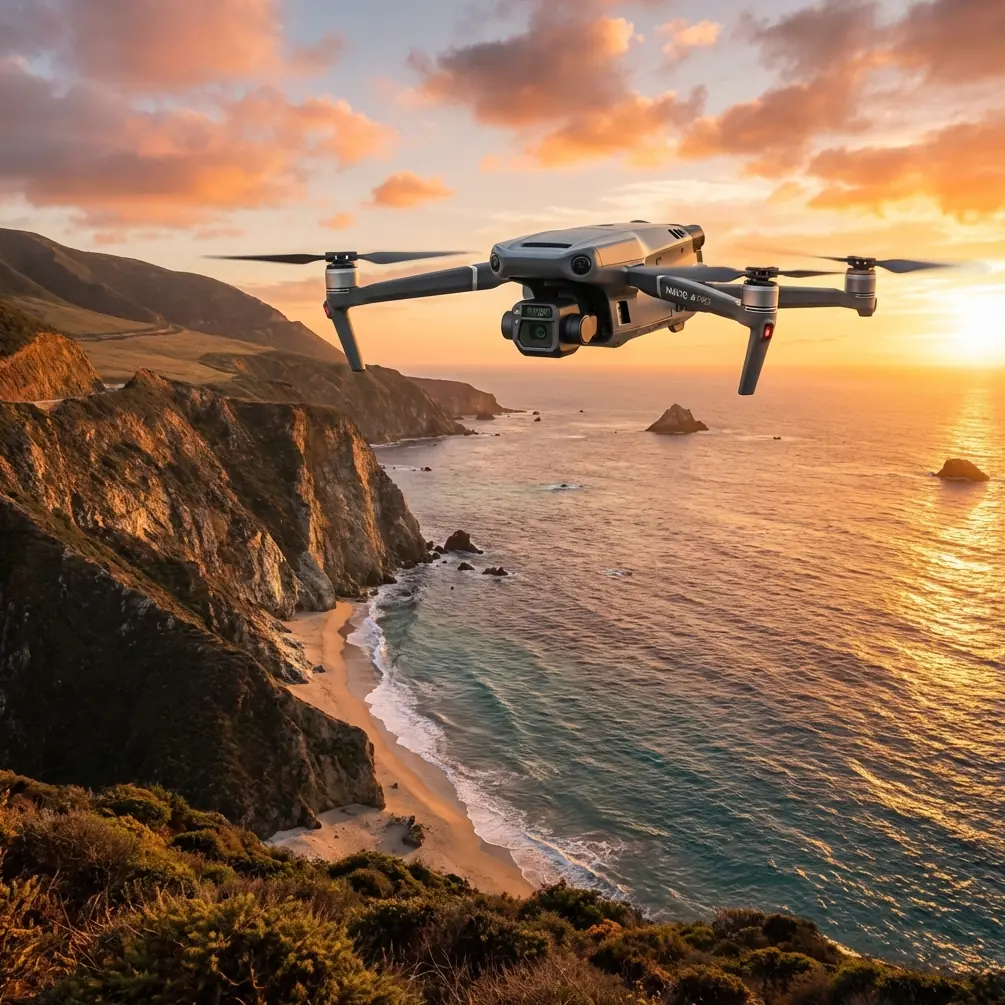
Mavic 3T Best Practices for Forest Tracking in Complex Terrain
META: Expert guide to using the DJI Mavic 3T for forest tracking in steep, obstructed terrain, with practical advice on thermal detection, antenna positioning, mapping accuracy, and field workflow.
Tracking movement in a forest is rarely a sensor problem alone. More often, it is a terrain problem that turns into a workflow problem. Dense canopy, steep slopes, broken sightlines, shifting temperatures, and the constant temptation to fly too high or too fast can make even a capable platform underperform. The Mavic 3T is one of the few compact systems that can still deliver dependable results in this environment, but only when it is used with a plan that respects how forests actually interfere with aircraft, optics, and radio links.
That distinction matters. A lot of pilots approach the Mavic 3T as a thermal drone with a zoom camera attached. In forest tracking, that mindset leaves performance on the table. The aircraft is better understood as a layered observation tool: thermal for detection, visual for confirmation, terrain-aware flight planning for continuity, and disciplined link management to keep the aircraft where it needs to be when the canopy starts swallowing signal.
The problem is familiar to anyone who has tried to track heat in mixed woodland. A thermal signature appears clean on one pass, then disappears under a cooler canopy patch. A ridgeline blocks your control link just as the aircraft moves into the drainage you actually need to inspect. The subject might not even be hidden; they may simply be thermally blended with sun-warmed rock, cut timber, or saturated soil after a weather change. In that setting, the Mavic 3T’s value comes from how well you combine its systems rather than how aggressively you push any one of them.
Start with altitude discipline. In complex terrain, pilots often climb to “see more,” but that decision can degrade both thermal usefulness and tracking continuity. Higher altitude expands coverage, yet it also shrinks small heat anomalies into less distinct clusters and makes branch gaps less readable on the visible feed. In forest operations, a lower and more deliberate search pattern usually produces stronger results. The aim is not maximum acreage per minute. The aim is to preserve enough image detail to separate an actual target from the thermal clutter created by sun exposure, deadfall, machinery residue, or warm ground pockets near rock faces.
This is where the Mavic 3T becomes especially effective. Its thermal capability helps reveal heat that the eye misses, but the visible sensor and zoom workflow are what keep you from chasing false positives. A useful pattern is simple: detect with thermal, pause, then verify with the visual payload before you commit more battery time. That sounds obvious until you are in a valley with moving shadows and a half-obscured thermal bloom near a game trail. In those moments, the platform’s strength is not just that it sees heat. It is that it lets you cross-check fast enough to hold tempo.
Forest tracking also punishes poor radio awareness. The Mavic 3T uses O3 transmission, which is one of the reasons it remains practical in broken terrain compared with many small aircraft that struggle once line of sight becomes partial instead of clear. But O3 is not magic. Trees absorb and scatter signal. Wet foliage is even worse. Terrain edges can clip your control path while the aircraft still appears visually “nearby” on the map. If you want maximum range and cleaner control response, antenna positioning is not a side issue. It is operational.
The most common mistake is pointing the controller antennas directly at the aircraft as if they were laser pointers. That is not how you get the strongest link. For the Mavic 3T, the broadside of the antennas should face the aircraft, not the tips. In plain terms, keep the flat sides oriented toward the drone’s position in the sky. If the aircraft is low and far across a slope, tilt your controller so the antenna faces stay aligned with that flight path. If it climbs above you on a ridge transition, adjust again. Small changes here can stabilize the link more than many pilots expect, especially when the aircraft is skirting tree lines and the signal is already being challenged by foliage.
Positioning your own body matters too. Do not fly from the bottom of a bowl-shaped valley unless you absolutely have to. A small move uphill, to a logging road cut, rock outcrop, or cleared shoulder, can improve both control link stability and visual awareness. Forest tracking rewards operators who think like radio planners. The aircraft may be doing the flying, but the pilot is still responsible for creating a viable geometry between controller, aircraft, and terrain.
Security is another overlooked operational factor. The Mavic 3T supports AES-256 encryption, which is not just a technical box to tick on a specification sheet. In forestry work, environmental monitoring, wildlife protection, and search-related operations, location data can be sensitive. If you are tracking in protected woodland, monitoring illegal activity, or documenting movement corridors that should not be casually exposed, encrypted transmission reduces unnecessary risk in the field workflow. That matters most when teams are moving between public trailheads, temporary command posts, and remote access routes where operational discretion is part of the job.
Battery planning is where many otherwise solid missions unravel. Forest tracking is full of small inefficiencies: extra hover time to verify heat, reroutes around ridges, repeated passes over the same drainage, and pauses to re-establish situational certainty. Those minutes accumulate. A mission that looked straightforward on the map becomes battery-expensive once the terrain starts dictating your path. If your team uses hot-swap batteries in rotation, your real advantage is not just shorter downtime. It is decision continuity. You keep crews in rhythm. You keep search sectors warm. You reduce the temptation to stretch one last pass on a battery that should already be heading home.
That rhythm becomes even more valuable when the Mavic 3T is doing double duty as both a tracking platform and a mapping asset. Forest missions often begin as detection tasks and then evolve into documentation. A heat source is found. A route must be marked. A disturbed area needs precise reconstruction. This is where photogrammetry enters the picture. While dense canopy limits what any mapping workflow can see through the trees, the Mavic 3T can still support valuable terrain-edge, clearing, access-road, and structure-adjacent capture. If you need location confidence that stands up after the flight, adding GCPs to the workflow is one of the smartest upgrades you can make.
Ground control points matter because forest environments create spatial ambiguity fast. A narrow road under partial canopy may look offset when reconstructed from imagery. A hillside landing zone can drift slightly in a model if your control is weak. A hotspot found at the edge of a stand is operationally less useful if the coordinates are only approximately right. GCP-backed photogrammetry helps tie observations to a map with a level of reliability that is difficult to achieve through onboard GNSS alone. The significance is practical: crews on the ground waste less time interpreting vague positions, and follow-on teams can return to the exact same point after conditions change.
Thermal use in forests also demands timing discipline. Early morning and late evening can produce cleaner separation between living subjects and their background, but not always. After a day of solar loading, trunks, exposed stone, and equipment left near clearings may hold heat longer than expected. That can create misleading hotspots. Midday can be worse in some mixed-terrain areas because reflective surfaces and heated ground flatten contrast. The Mavic 3T performs best when the pilot understands that thermal signature quality is a moving target shaped by weather, canopy density, moisture, and sun angle. The sensor gives you evidence. It does not remove the need for interpretation.
A practical method for complex terrain is to divide the mission into three layers. First, run broad thermal reconnaissance over likely movement corridors: stream lines, trail intersections, cut blocks, ridge saddles, and the lee side of slopes where visibility from the ground is poor. Second, use the visual payload to confirm form, movement, and context. Third, capture georeferenced imagery for anything that needs to be revisited, documented, or handed off. That three-step method keeps the Mavic 3T from becoming a single-purpose aircraft in a mission that actually requires detection, judgment, and record-keeping.
Pilots planning future operations should also think carefully about regulatory limits around BVLOS work. In forests, the temptation to let the aircraft continue beyond a ridge is strong because the target area often sits just outside practical line of sight. But terrain is exactly where that temptation becomes dangerous. The radio link may degrade quickly, obstacle awareness is less meaningful when the environment is vertically complex, and return routing can become less predictable if the aircraft has to retrace through signal-challenged space. If your operation is structured for BVLOS under the right approvals and procedures, the Mavic 3T can fit into serious fieldwork. If it is not, disciplined line-of-sight planning remains the safer and smarter choice.
There is also a human factor that should not be ignored. Forest tracking becomes inefficient when one pilot tries to do everything alone: fly, scan thermal, interpret the visible feed, monitor map position, assess battery margins, and maintain radio awareness. Even with a compact platform like the Mavic 3T, the best results often come from a two-person workflow. One person pilots and protects the aircraft. The second interprets the feed and calls decisions. This arrangement reduces tunnel vision, which is one of the main reasons targets are lost in cluttered environments.
For teams trying to build a repeatable field process, a simple discipline helps: pre-brief antenna orientation, likely signal shadows, battery swap timing, probable false-positive sources, and the exact conditions under which thermal detections must be visually confirmed. Those points sound procedural, but they directly affect outcomes. Forest tracking rewards standardization more than improvisation.
If you are refining your own deployment plan for woodland search or monitoring, it helps to compare notes with operators who have dealt with canopy, slope, and signal problems in the real world. A quick way to start that conversation is through this field support channel: message our UAV team on WhatsApp.
The Mavic 3T is not special because it can fly in a forest. Plenty of aircraft can do that. Its real value is that it gives a compact team several decision tools at once: thermal detection, visual confirmation, secure transmission with AES-256, and O3 link performance that remains genuinely useful when terrain starts working against you. Add disciplined antenna positioning, smart battery rotation, and map control with GCP-backed documentation, and the aircraft becomes much more than a thermal spotter. It becomes a reliable part of a forest tracking system.
That is the difference between owning capable hardware and producing consistent field results. In complex terrain, the Mavic 3T earns its place when the operator treats every flight as a link-management, sensor-interpretation, and terrain-reading exercise. Do that well, and the aircraft starts revealing what the forest was hiding.
Ready for your own Mavic 3T? Contact our team for expert consultation.