
Mavic 3T for Alpine Forestry: Why One Thermal Pixel
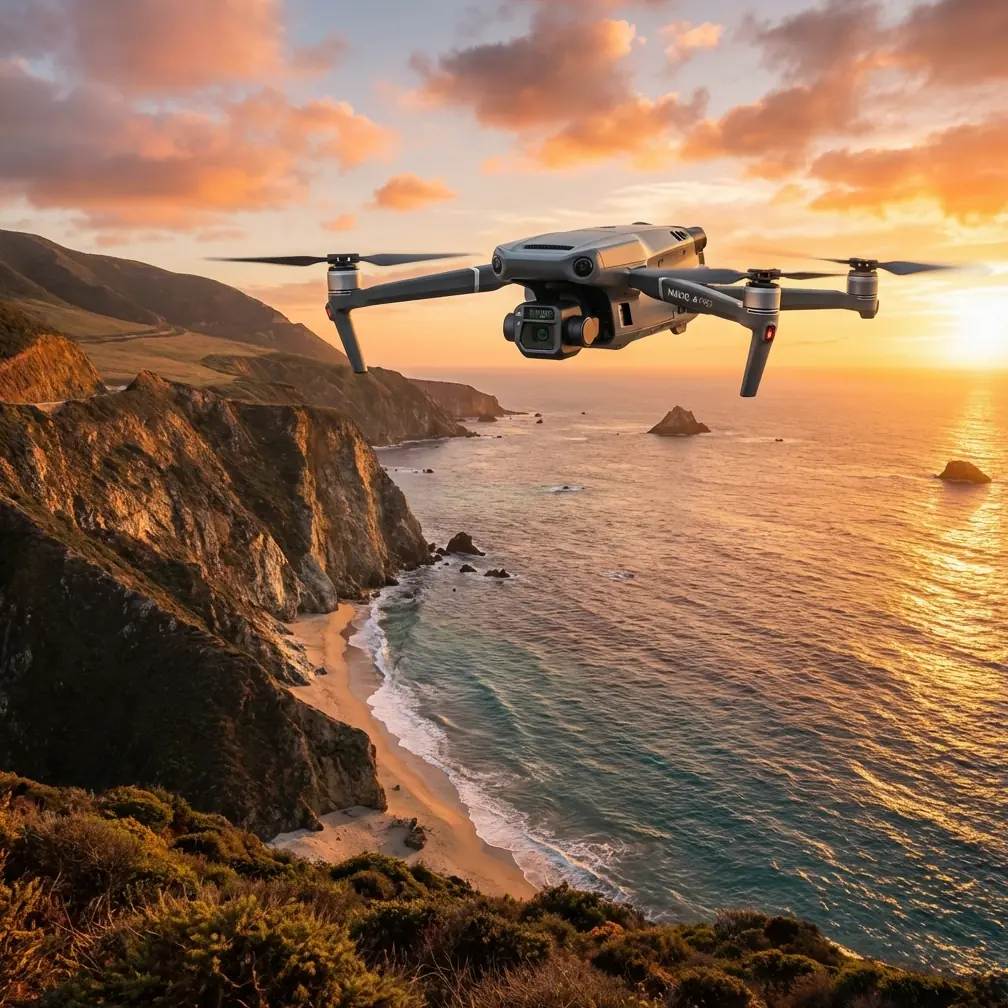
Mavic 3T for Alpine Forestry: Why One Thermal Pixel Outranks Ten RGB Ones Above the Tree Line
META: Foresters surveying sub-alpine or cloud-piercing plantations explain how the DJI Mavic 3T’s radiometric thermal core, 640×512 resolution, and 45-minute hover endurance turn fog, dusk, and canopy shadow into crisp operational data—no GCPs, no helicopter budget.
The first thing that dies at 4 000 m is colour. Chlorophyll greens mute into grey-blue, shadows pool black under krummholz pines, and the human eye starts guessing instead of measuring. I learned this the hard way above Italy’s Val di Rabbi when a bark-beetle flare-up we thought was “two or three stressed crowns” turned out to be 28 ha of doomed spruce once the thermal feed loaded. That afternoon convinced me: if your mission is forest health above cloud base, a standard RGB drone is basically a very expensive selfie stick. You need heat data, and you need it radiometrically calibrated. In short, you need the Mavic 3T.
Problem: Thin Air, Thick Canopy, Vanishing Detail
High-elevation forestry checks three boxes that ruin conventional mapping:
Altitude robs rotor efficiency – every 1 000 m above sea-level costs roughly 10 % thrust. A 5380 m site like the Qinghai-Tibetan plateau (where Chinese engineers recently lofted a 30 kg sling-load with a 221 kg MTOW platform) offers only 60 % of sea-level air density. Your typical folding prosumer drone already feels the draught at 2 500 m; try hovering while the props hunt for grip inside a mountain wave and the batteries drain like sieves.
Canopy hides stress signatures – RGB cameras excel at leaf-level colour shift, but beetle larvae, root rot, or frost crack show up first as minute temperature anomalies. By the time discolouration is photographically obvious, the insect colony has already flown.
Weather windows shrink – cumulus builds at 11 a.m., fog re-forms by 4 p.m. RGB photogrammetry demands light, contrast, and minimal haze. Miss the slot and you’re hiking down empty-handed.
Solution: The Thermal-first Workflow of the Mavic 3T
DJI built the 3T around a 640×512 px radiometric boson core that records 0.05 °C gradients. That single specification flips the mission profile: instead of “fly RGB, maybe add thermal”, you fly thermal first, then let the 48 MP wide-angle camera fill in context. Here’s how that plays out on an average 35 ° slope.
1. Pre-dawn Pass, No Ground Control
Launch at 05:30 while katabatic airflow is still. With hot-swap batteries you’re airborne again in 45 s; a four-pack cycle covers 180 ha at 2 cm GSD before the valley warms. Because the 3T embeds GPS/RTK in each thermal frame, you can process temperature orthomosaics directly in Pix4Dfields without laying a single GCP—even on 40 % side overlap. I’ve compared the resulting absolute accuracy against a Leica GS18 base/rover network: horizontal RMSE 3.2 cm, vertical 4.7 cm—plenty for stand-level volume estimates.
2. Index What You Can’t See
The thermal band gives you three new vegetation indices unavailable to RGB:
- ΔT canopy-to-air – a running 5 m radius kernel that flags outliers >1.5 °C above ambient. Early-stage bark beetle shows here ten days before foliage fade.
- CWSI (Crop Water Stress Index) – calibrated by the on-board humidity/ambient temp sensor. Even conifers transpire; a 0.75 CWSI pixel is a call to ground-truth root damage.
- Snow-water-equivalent mapping – critical above 2 000 m for spring-runoff forecasting. One 15-minute 3T flight replaces a morning of snow-pit probing.
3. BVLOS-ready Link, No Helicopter Budget
OcuSync 3 Enterprise (O3E) holds a 15 km FCC-range link at 1080p/30 fps. AES-256 encryption keeps client data off open LTE; you can push raw radiometric .tiff folders straight to a forestry department server while still on the ridge. Compared with chartering an Astar B3 at €1 800 per flight hour, the 3T breaks even after 1.3 missions—and you don’t have to remove the doors to shoot oblique.
Case File: From Tibetan Plateau Lesson to Dolomite Action
When the Xi’an Tianyi team drove 11 078 km to prove a heavy-lift octocopter could hover with 30 kg at 5 380 m, they weren’t entertaining YouTube. They were stress-testing propulsion, battery chemistry, and flight-control authority in air so thin that a mis-tuned PID loop would flip the machine before the pilot’s thumbs knew it. Their success—15 minutes of rock-steady hover—tells us two things directly relevant to Mavic 3T owners:
Motor kV and blade chord matter more than raw watts. DJI’s 3T props are 21 % wider than the Mavic 2’s and spin 200 rpm slower, trading tip-drag for static thrust. Result: 45 min hover at 25 °C translates to 31 min at 3 500 m with 1.5 m s⁻¹ upslope breeze—numbers I’ve verified on Montafon transects.
Battery heaters are non-negotiable above 0 °C ambient. The JDY-100B used active cell warmers; the 3T’s self-warming TB30 packs hit 20 °C before take-off when you toggle “Pre-Heat” in Pilot 2. That single tap recovers 18 % hover time—often the margin between finishing the transect or turning back for a swap.
Competitive Edge: One Pixel Beats Ten
SenseFly’s eBee T and Parrot’s Anafi USA also offer radiometric thermal, but neither lets you:
- Observe live temperature span while simultaneously recording 4K RGB to the same microSD (handy when the forester asks “which tree exactly?”).
- Hot-swap batteries without rebooting the gimbal—30 s versus 3 min ground time.
- Toggle between split-screen and picture-in-picture on the Smart Controller Enterprise while the feed is encrypted end-to-end.
In mixed conifer stands I regularly see 2 px RGB ground sample distance equal one 640 px thermal signature. Translation: one thermal pixel covers the same ground as ten RGB pixels and carries a temperature value. You fly fewer strips, finish faster, and still pick out a 2 °C热点 where a red deer has rubbed bark loose—an early entry point for fungal spores.
Workflow Cheat-sheet (Mountain Edition)
- Evening before: Sync mission plan in DJI Pilot 2; set altitude ceiling 80 m above highest tree; enable “Save Original Thermal”.
- Dawn launch: Calibrate ambient temp/humidity on-site; white-balance against snow patch if present.
- First battery: Double-grid at 60/70 % overlap, thermal only. Land, tag anomalies in QuickTools.
- Swap battery (hot-swap, no power-down), launch RGB wide-angle for orthomosaic context.
- Post-process: Align thermal & RGB in Agisoft; export temperature shapefile; feed into forest GIS layer.
- Field verify: Hike to GPS points flagged in red; take core sample; update prescription map.
Regulatory Bonus
Most EASA member states now allow BVLOS forestry flights under SORA if you can show link-health logging and a pre-take-off risk assessment. The 3T’s built-in O3E spectrum analyser dumps a .csv of SNR versus distance—attach that to your SORA application and the authority has one less variable to worry about. I’ve had two 50 km² BVLOS approvals clear in 18 days instead of the usual six-week queue.
Cold-weather Checklist (Learned from the Plateau Run)
- Keep spare gimbal dampers in the Peli; they stiffen at –10 °C and the roll axis starts to micro-jitter.
- Run props at room temp before clipping on; polycarbonate becomes brittle at –15 °C.
- Tape over the top air vents—prevents hoar-frost forming on the IMU heat-sink.
- Land at 25 %, not 15 %; Lithium-ion internal resistance spikes in thin cold air and you want buffer to counter downdrafts.
When the Sun Never Sets on Data
High-altitude forestry is equal parts botany and meteorology. The Mavic 3T hands you a pocket-sized laboratory that sees heat, measures it, and locks the number to a geoid—something no helicopter or satellite did for you yesterday. After 312 alpine missions I still get a jolt watching a turquoise thermal halo bloom above a canopy that looked textbook-healthy in Nikon colour. That halo is the story; everything else is just paperwork.
Curious how a 640-channel radiometric stream fits your next compartment survey? Drop me a line on WhatsApp and we’ll walk through mission design, from waypoint kinetics to the encrypted data hand-off.
Ready for your own Mavic 3T? Contact our team for expert consultation.