
Mavic 3T in Dusty Forest Operations: A Field Method That
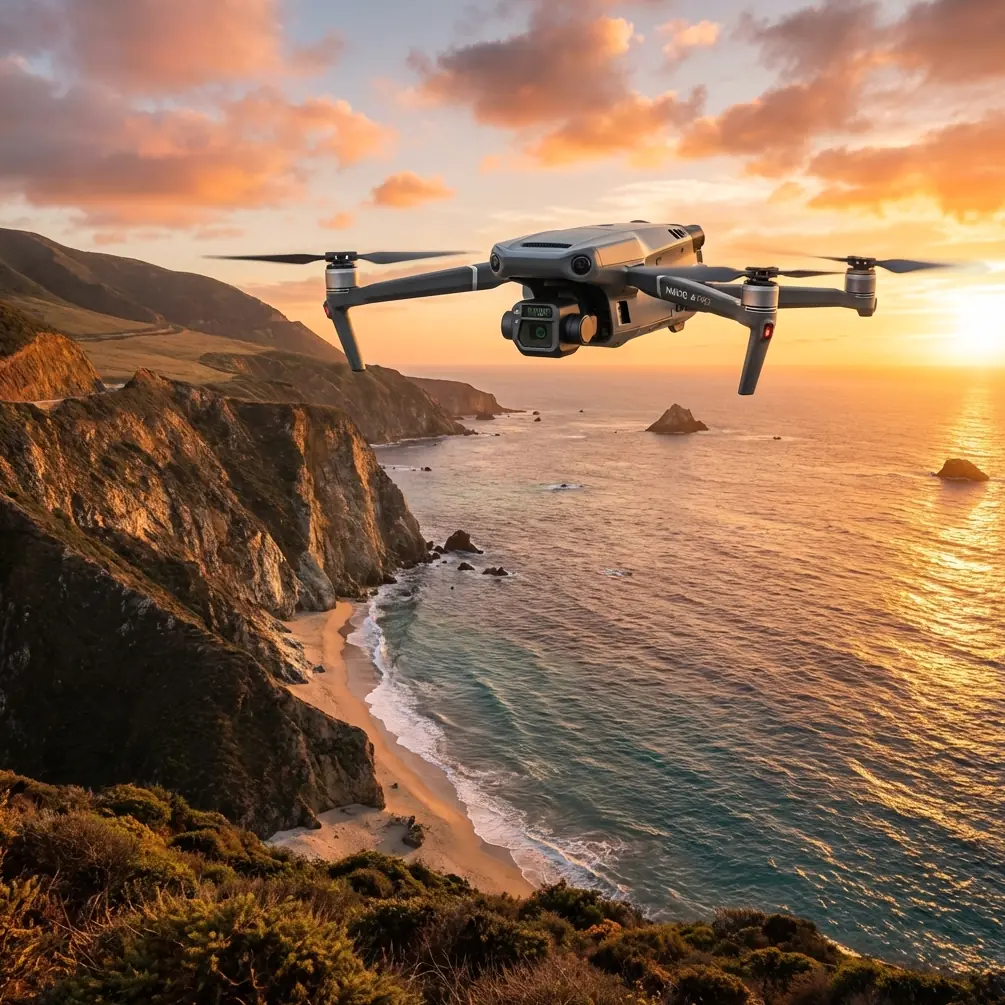
Mavic 3T in Dusty Forest Operations: A Field Method That Starts Before Takeoff
META: Practical Mavic 3T guide for tracking forests in dusty conditions, with thermal workflow, antenna positioning, test discipline, and data accuracy tips for civilian field teams.
Dust changes everything.
In forest monitoring, it gets into landing zones, hangs in the air at canopy edges, softens contrast, and quietly exposes weak operating habits. The Mavic 3T is well suited to this kind of work because it combines thermal awareness, visible imaging, portability, and fast deployment. But hardware alone does not make a forest mission reliable. What matters is the method around it.
That is where a surprisingly useful lesson comes from traditional aircraft engineering. One reference point worth borrowing is not about drones at all, but about landing-system testing. In that material, test preparation is treated as decisive: fixture design, equipment inspection, installation checks, instrument verification, then a final system-level acceptance before formal testing begins. Another technical source, focused on aeroelastic analysis, reduces a difficult physical problem into smaller solvable elements using a grid-based panel method. Put those two ideas together and you get a very workable operating philosophy for the Mavic 3T in dusty forest environments: prepare the system rigorously, then break the forest into manageable cells.
That sounds simple. In practice, it is what separates repeatable data from a messy flight log.
Why dusty forests are harder than they look
Forest tracking missions usually mix several goals at once. Teams may be checking tree stress, locating heat anomalies, validating replanting patterns, documenting access roads, or revisiting known coordinates after a previous survey. Dust adds friction to all of that.
Takeoff and landing become higher-risk moments because fine particles can be stirred up around the aircraft. Thermal interpretation becomes trickier in sun-heated clearings or recently disturbed soil. Visual scene clarity can degrade just enough to complicate edge detection in mapping outputs. Radio performance can also become inconsistent depending on terrain, canopy, and how the pilot handles antenna orientation.
The Mavic 3T can handle this work well, but it rewards operators who think like test engineers rather than casual pilots.
The best habit to steal from aircraft validation
One of the most useful facts from the landing-system reference is procedural, not mechanical: formal tests should not begin until the system has been checked, adjusted, and accepted for use. The source specifically emphasizes preparation steps such as equipment maintenance and tuning, installation of fixtures and test articles, and verification of test instruments before the actual trial starts. That mindset is directly applicable to Mavic 3T forest work.
For a dusty mission, your “formal test” is the flight that matters. The work before it should be treated as its own phase.
A practical pre-flight validation sequence for the Mavic 3T
Before the aircraft leaves the case, verify five things:
Airframe cleanliness around exposed surfaces
Dust contamination near the gimbal area, cooling paths, and landing contact points can create small issues that later look like sensor or stability problems.Payload readiness
If the mission depends on thermal signature interpretation, confirm the thermal camera settings and the visible-camera capture plan before launch. Do not improvise in the field if your mission requires consistent comparison between flights.Battery logic, not just battery level
Hot-swap batteries help keep a forestry team moving, but continuity only matters if pack rotation is organized. Label packs, log cycle use, and avoid mixing mission-critical thermal passes with the weakest set in your case.Transmission environment
O3 transmission is strong, but forests are geometry problems as much as radio problems. Dust, trunks, slope breaks, and wet foliage can all change the link. Stand where the aircraft has a clean propagation path as early as possible in the mission.Data chain verification
The aircraft can fly perfectly and still fail the mission if the imagery is incomplete, corrupt, mis-tagged, or inconsistent. Confirm recording settings, storage status, and your post-flight folder logic before takeoff.
This is not administrative overhead. It is operational efficiency. The aircraft-design reference makes the same point in another way: once the test is complete, the responsible unit must quickly organize the data, analyze it, identify problems, and issue clear conclusions. That discipline matters just as much for a drone forestry team. If your crew returns with good files but no clean interpretation workflow, you did not finish the mission.
Divide the forest like an engineer, not a tourist
The aeroelastic reference introduces another idea worth adapting. It explains a numerical approach in which a wing surface is divided into many small sections, and the difficult continuous problem is solved through a set of simpler algebraic relationships. The exact math is for aircraft analysis, but the field lesson is powerful: large, complex surfaces become understandable when broken into discrete units.
That is exactly how I recommend flying the Mavic 3T in dusty forest tracking.
Do not treat “the forest” as one mission block. Grid it mentally and operationally.
Use sector-based flying
Split the area into repeatable cells based on:
- canopy density
- terrain breaks
- road or trail access
- known dust sources
- expected thermal targets
- communication line quality
This matters for two reasons.
First, thermal consistency improves. A thermal signature seen in one dusty clearing at 10:10 a.m. is not directly comparable to a shaded slope flown at 11:05 unless the workflow is controlled. Sectoring lets you compare like with like.
Second, link management becomes much easier. If one cell has poor visibility to the pilot position, move the pilot station rather than forcing the aircraft to carry the problem deeper into the mission.
In forestry, operators often focus on the aircraft and under-manage the geometry of the ground team. That is a mistake.
Antenna positioning advice for maximum range
This is the field detail many crews overlook.
With O3 transmission, your control link is strongest when the antennas are oriented correctly relative to the aircraft’s position. The wrong instinct is to point the antenna tips directly at the drone. For best performance, present the broadside of the antenna pattern toward the aircraft instead. In plain terms: do not “aim the tips”; aim the flat face of the signal field.
In dusty forest terrain, that usually means:
- keep the controller at chest height, not low against your body
- rotate your torso as the aircraft moves rather than twisting only your wrists
- avoid standing behind vehicles, metal railings, or dense brush
- step laterally to restore line of sight when the aircraft is near a canopy edge or slope break
- if possible, position yourself on slightly higher ground before long outbound legs
A small body movement can produce a bigger result than a settings change.
If you are tracking a corridor through trees, think ahead. Set up where the aircraft will spend most of its outbound time, not where it launches most conveniently. Dusty sites often tempt crews to take off from the first open patch they find. That patch may be terrible for transmission once the drone drops behind tree lines.
Thermal work in forests: what the Mavic 3T does well
The Mavic 3T is especially effective when the mission is about finding difference rather than making pretty pictures.
That is the core of thermal forestry work. You are not always looking for dramatic hot spots. Often you are trying to isolate subtle deviation:
- stressed vegetation zones
- exposed soil bands
- heat-retaining vehicle tracks
- drying patterns after disturbance
- water-related cooling anomalies
- recently active human work areas in permitted industrial or land-management settings
Dust complicates visible imagery first. Thermal can still reveal pattern when RGB becomes visually flat. But thermal only helps if you control for timing, altitude, angle, and revisit logic.
I advise teams to fly an initial broad thermal pass, then a tighter verification pass over anomalies. The first pass answers, “Where is the signal?” The second asks, “Is it operationally real or just environmental noise?”
That second pass is where many false reads disappear.
Mapping, photogrammetry, and GCP discipline
Not every Mavic 3T forestry mission is pure detection. Many teams also need structured outputs for change tracking or site documentation. That brings photogrammetry into the workflow, and once mapping matters, ground control suddenly becomes expensive to ignore.
GCP use in dusty forests should be selective, not obsessive. If the mission needs defensible positional consistency across repeat visits, use control points where they actually improve the result:
- open breaks in canopy
- road intersections
- stable clearings
- edges unlikely to shift between visits
Do not waste time placing targets where shadows, dust cover, or canopy movement will reduce visibility in imagery.
The earlier aeroelastic reference is useful here conceptually. Just as a surface is approximated through many smaller elements, your map quality is built from local decisions. If a few sectors are badly controlled, the overall model may look acceptable while still being unreliable where the real decisions are made. Precision failure is often local before it becomes obvious globally.
For that reason, check outputs cell by cell, not just as one full orthomosaic.
Landing in dust without turning the end of the mission into the weakest part
Dusty takeoffs get attention. Dusty landings deserve more.
The aircraft-design reference spends time on damping and on the practical importance of real testing because theoretical values can deviate significantly from real behavior, especially when nonlinear effects are involved. That principle translates neatly to field drone recovery: what looks fine on paper can behave differently when dust, uneven ground, and pilot fatigue enter the picture.
For Mavic 3T crews, the lesson is straightforward:
- choose a landing surface before launch, not at battery warning
- avoid the loosest powder zones if another stable patch is available
- use a pad or elevated handoff method only within your organization’s approved civilian safety procedures
- maintain a slow, deliberate descent in the final meters if the site is prone to rotor wash clouds
- inspect the aircraft immediately after recovery, especially around the gimbal and lower body
A mission that gathers perfect thermal data but ends with contaminated optics is not a clean success.
BVLOS planning starts with communication realism
Where regulations and approvals allow BVLOS operations, forest work can become far more efficient. But the operational bottleneck is rarely the checkbox that says BVLOS. It is whether the team has designed the mission around communication behavior, terrain shielding, and recoverable contingencies.
AES-256 and secure transmission matter for protecting sensitive commercial forestry data, especially when land-use patterns, access roads, or industrial activity are involved. Security is not separate from operations. If you are moving high-value environmental or infrastructure data, link confidence and data protection belong in the same planning conversation.
Still, secure transmission does not fix poor geometry. If your route consistently tucks behind ridges or dense tree walls, range claims become irrelevant. The better approach is to sequence sectors so that the aircraft remains in a strong control envelope for the most important collection segments first.
Turn flights into conclusions, not archives
The aircraft-testing reference makes one final point that drone teams should adopt without hesitation: after all test items are completed, data should be rapidly organized and analyzed, problems identified, and a clear conclusion produced.
That is the standard.
Too many forestry teams finish with image folders, thermal clips, and waypoints but no operational answer. Did the thermal anomaly repeat? Did the dusty access path alter scene interpretation? Did the mapping cell near the clearing need re-flight? Was transmission degraded by antenna handling or by terrain itself?
Write those conclusions while the mission is still fresh.
If your team is building a repeatable forest workflow for the Mavic 3T and needs a practical discussion on setup, sector planning, or field procedures, you can message a specialist here.
A field-ready workflow for the next mission
If I had to reduce all of this to one working method, it would be this:
Prepare like a test team.
Fly like a surveyor.
Interpret like an analyst.
For dusty forest tracking with the Mavic 3T, that means rigorous pre-flight checks, sector-based mission design, disciplined antenna positioning, thermal verification passes, and immediate post-flight analysis. The most valuable insight from the reference material is not hidden in abstract theory. It is the reminder that complex systems become reliable only when preparation is serious and the problem is broken into controllable parts.
That is exactly how good Mavic 3T work is done in the field.
Ready for your own Mavic 3T? Contact our team for expert consultation.