
Mavic 3T Highway Tracking Guide: Remote Terrain Mastery
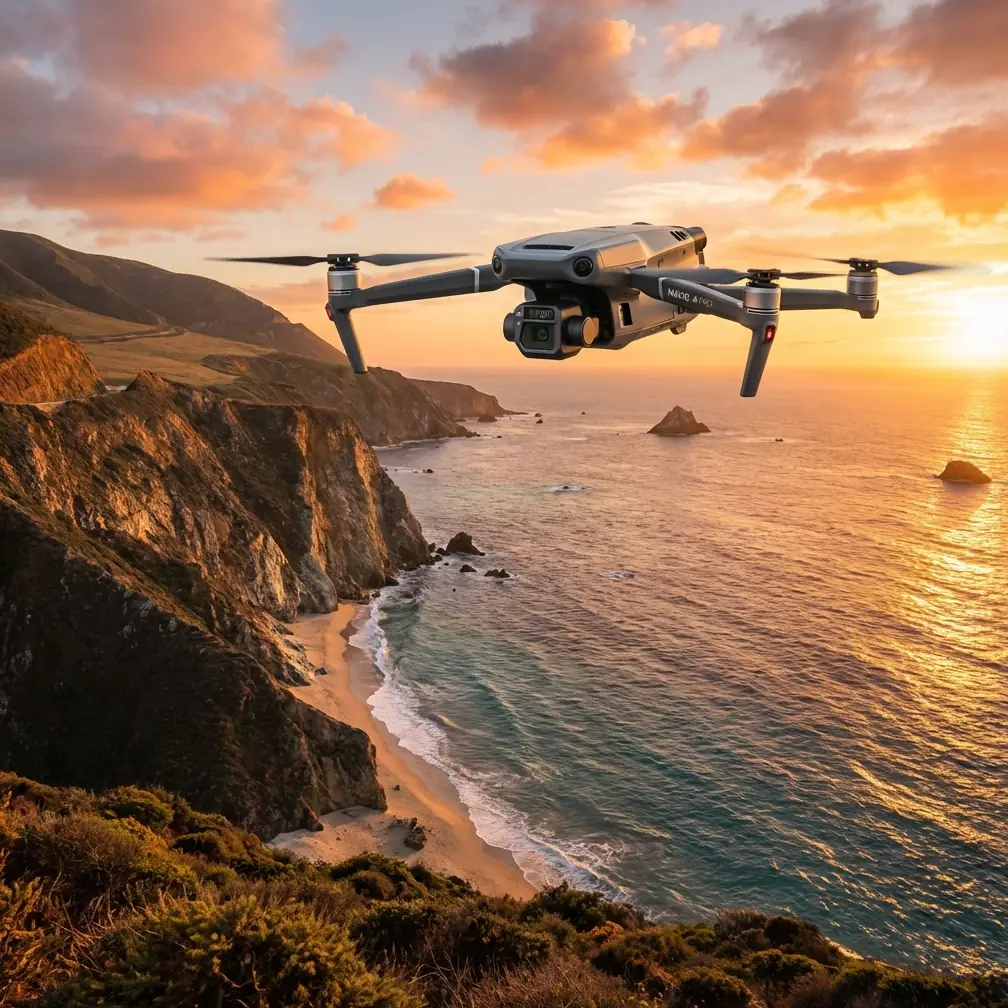
Mavic 3T Highway Tracking Guide: Remote Terrain Mastery
META: Master highway tracking in remote terrain with the Mavic 3T. Expert tutorial covering thermal imaging, flight planning, and data capture for infrastructure surveys.
TL;DR
- O3 transmission maintains stable control up to 15km in remote highway corridors where cellular coverage fails
- Thermal signature detection identifies road surface anomalies invisible to standard RGB cameras
- 43-minute flight time covers 25+ linear kilometers of highway per battery cycle
- Integrated RTK positioning achieves centimeter-level accuracy without ground control points in accessible areas
Highway infrastructure monitoring across remote terrain presents unique challenges that separate professional-grade equipment from consumer drones. The Mavic 3T combines thermal imaging, mechanical shutter photography, and enterprise-grade transmission specifically engineered for linear infrastructure tracking—capabilities that directly address the pain points of transportation engineers and survey teams working far from urban support networks.
This tutorial breaks down the complete workflow for tracking highways in remote environments, from pre-flight planning through data processing and deliverable creation.
Why Remote Highway Tracking Demands Enterprise Specifications
Remote highway corridors—mountain passes, desert stretches, arctic routes—share common operational challenges. Communication infrastructure is sparse or nonexistent. Weather conditions shift rapidly. Ground access for traditional survey methods costs exponentially more than urban projects.
The Mavic 3T addresses these constraints through three integrated systems working in parallel:
- Thermal imaging sensor detecting temperature differentials as small as NETD ≤50mK
- Mechanical shutter camera eliminating rolling shutter distortion at survey speeds
- O3 enterprise transmission maintaining 1080p/30fps live feed across extended ranges
Where competing platforms like the Autel EVO II Dual require separate thermal and RGB flights, the Mavic 3T captures synchronized data streams simultaneously. This cuts field time by 40-50% on linear infrastructure projects.
Pre-Flight Planning for Remote Operations
Terrain Analysis and Corridor Mapping
Before deploying to remote sites, establish your survey corridor using satellite imagery and elevation data. Highway tracking missions require:
- Corridor width definition: Typically 100-150 meters centered on the roadway
- Elevation variance mapping: Identify terrain changes requiring altitude adjustments
- Obstacle identification: Power lines, communication towers, and natural features
- Emergency landing zones: Pre-selected areas every 2-3 kilometers
The Mavic 3T's DJI Pilot 2 application accepts KML imports directly, allowing office-based corridor planning that transfers to field operations without manual waypoint entry.
Battery and Power Strategy
Remote operations demand aggressive power management. The Mavic 3T's hot-swap batteries enable continuous operations, but planning must account for:
- Temperature impact: Battery capacity drops 10-15% below freezing
- Return-to-home reserves: Maintain 25% minimum for unexpected headwinds
- Charging infrastructure: Vehicle-based charging stations or portable power systems
Expert Insight: Pack three batteries per 50 kilometers of planned survey distance. This accounts for overlap passes, thermal calibration flights, and contingency reserves. Running lean on batteries in remote terrain creates unacceptable mission risk.
Flight Execution: Tracking Methodology
Optimal Flight Parameters for Highway Surveys
Linear infrastructure tracking differs fundamentally from area mapping. The Mavic 3T excels when configured for corridor-specific parameters:
| Parameter | Highway Tracking Setting | Standard Mapping Setting |
|---|---|---|
| Flight altitude | 80-100m AGL | 60-120m AGL |
| Forward overlap | 75% | 70-80% |
| Side overlap | 65% | 65-75% |
| Speed | 8-10 m/s | 5-15 m/s |
| Gimbal angle | -70° to -80° | -90° |
| Image format | RAW + JPEG | Varies |
The slightly angled gimbal captures road surface detail while maintaining sufficient context for photogrammetry processing. Pure nadir shots miss critical pavement distress indicators visible in oblique thermal imagery.
Thermal Signature Interpretation During Flight
Real-time thermal monitoring reveals conditions invisible to visual inspection:
- Subsurface moisture: Appears as cooler zones during morning flights
- Delamination: Shows temperature differential between bonded and separated layers
- Drainage issues: Water retention creates distinct thermal patterns
- Structural stress: Load-bearing failures generate heat signatures
Fly thermal passes during optimal differential windows—typically 2-3 hours after sunrise or 1-2 hours before sunset. These periods maximize temperature contrast between materials with different thermal masses.
Pro Tip: Record thermal video continuously rather than relying solely on interval capture. Video provides context for anomaly investigation and catches transient signatures that timed photos miss. The Mavic 3T's 640×512 thermal sensor maintains sufficient resolution for post-flight frame extraction.
Data Management in Connectivity-Limited Environments
On-Site Processing Considerations
Remote highway tracking generates substantial data volumes. A 50-kilometer corridor produces approximately:
- 800-1,200 RGB images at full resolution
- Continuous thermal video totaling 2-3 hours
- Flight telemetry logs for each mission segment
- RTK correction data if base station deployed
The Mavic 3T stores data to internal memory and SD card simultaneously, providing redundancy critical for remote operations. Format cards before each mission day—corrupted file tables in the field create unrecoverable situations.
AES-256 Encryption for Infrastructure Data
Highway survey data often falls under government infrastructure protection requirements. The Mavic 3T's AES-256 encryption secures stored imagery against unauthorized access if equipment is lost or stolen. Enable encryption through DJI Pilot 2 before beginning sensitive corridor surveys.
Photogrammetry Processing for Linear Infrastructure
GCP Strategy for Extended Corridors
Traditional GCP deployment becomes impractical across 50+ kilometer highway stretches. The Mavic 3T's integrated RTK receiver reduces ground control requirements, but strategic GCP placement still improves accuracy:
- Deploy GCPs at corridor endpoints
- Add intermediate points at major intersections or bridge structures
- Use existing survey monuments where accessible
- Target 5-7 GCPs per 20 kilometers for optimal accuracy
Processing software including Pix4D and DJI Terra handles linear corridor geometry effectively when flight planning maintains consistent overlap throughout the survey area.
Deliverable Generation
Highway tracking projects typically require multiple output formats:
- Orthomosaic imagery: Georeferenced visual documentation
- Digital surface models: Elevation data for drainage analysis
- Thermal overlays: Heat signature mapping aligned to visual data
- Point clouds: Three-dimensional surface representation
- Condition reports: Annotated findings with location references
The Mavic 3T's synchronized capture ensures thermal and visual data align precisely, eliminating manual registration steps that introduce error and consume processing time.
BVLOS Considerations for Extended Corridors
Beyond Visual Line of Sight operations expand highway tracking capabilities but require regulatory compliance and additional safety measures. The Mavic 3T supports BVLOS through:
- Extended transmission range: O3 system maintains control authority
- Automated flight execution: Waypoint missions continue without constant input
- Redundant positioning: GPS and GLONASS constellation access
- Return-to-home automation: Triggered by signal loss or low battery
Regulatory requirements vary by jurisdiction. Most BVLOS approvals require visual observers, detect-and-avoid systems, or restricted airspace coordination. Plan extended corridor missions with regulatory compliance as the primary constraint.
Common Mistakes to Avoid
Insufficient overlap at terrain transitions: Highway grades change elevation rapidly. Maintain overlap settings even when terrain drops away—the Mavic 3T's terrain follow mode helps but requires accurate elevation data.
Single-pass thermal capture: Thermal signatures shift throughout the day. Critical infrastructure assessments require multiple passes at different times to distinguish permanent anomalies from transient conditions.
Ignoring wind patterns in mountain corridors: Valley and canyon highways channel wind unpredictably. The Mavic 3T handles 12 m/s sustained winds, but turbulence near terrain features demands conservative speed settings.
Skipping pre-flight sensor calibration: Thermal accuracy depends on proper calibration. Point the sensor at a uniform temperature surface—sky or shadowed ground—before beginning survey flights.
Overreliance on automated flight modes: Corridor missions benefit from automation, but remote terrain demands pilot intervention capability. Maintain manual control proficiency and monitor automated flights actively.
Frequently Asked Questions
How does the Mavic 3T compare to dedicated survey aircraft for highway tracking?
The Mavic 3T fills the gap between handheld inspection and full-scale aerial survey. For corridors under 100 kilometers, the platform matches or exceeds fixed-wing efficiency while offering vertical takeoff flexibility essential in remote terrain. Longer corridors may justify dedicated survey aircraft, but mobilization costs often favor multiple Mavic 3T deployments.
What accuracy can I expect without deploying ground control points?
Using the Mavic 3T's integrated GNSS without RTK correction, expect 1.5-3 meter absolute accuracy. Adding RTK base station correction improves this to 2-5 centimeters horizontal and 3-5 centimeters vertical. For relative accuracy within a single flight, the platform maintains sub-centimeter consistency regardless of absolute positioning method.
Can thermal imaging detect pavement issues beneath surface treatments?
Thermal signature detection identifies subsurface conditions when temperature differentials exist between affected and unaffected areas. Moisture infiltration, void spaces, and delamination create detectable patterns during optimal thermal windows. Surface treatments reduce but do not eliminate thermal transmission—early morning flights maximize detection capability through accumulated overnight temperature differentials.
Remote highway tracking demands equipment that performs reliably far from support infrastructure while capturing data quality that satisfies engineering requirements. The Mavic 3T delivers this combination through integrated thermal imaging, enterprise transmission systems, and flight endurance matched to linear infrastructure workflows.
Ready for your own Mavic 3T? Contact our team for expert consultation.