
Mavic 3T for Remote Power Line Tracking: A Technical Review
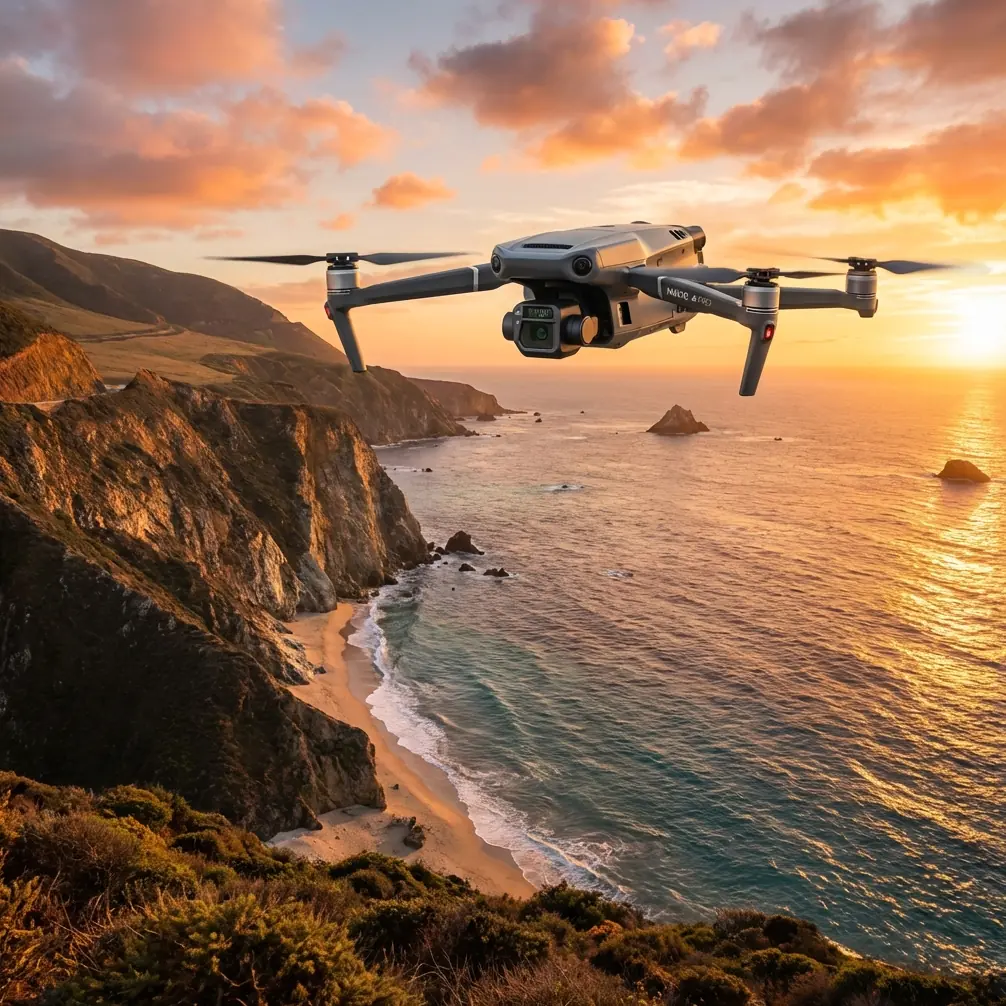
Mavic 3T for Remote Power Line Tracking: A Technical Review from the Field
META: Expert review of the DJI Mavic 3T for remote power line tracking, covering thermal signature analysis, O3 transmission, battery strategy, data security, and practical inspection workflows.
Remote power line work punishes weak workflows.
The aircraft is usually the easy part. The hard part is everything around it: getting stable visual and thermal data in wind corridors, keeping signal quality over uneven terrain, managing battery temperature in long field days, and bringing home data that can actually support maintenance decisions. That is where the Mavic 3T earns its place. Not because it is the biggest platform in the air, but because it closes several operational gaps that matter specifically in remote utility inspection.
I’ve used and evaluated many UAV systems for infrastructure programs, and the Mavic 3T stands out when the mission is not cinematic flying or broad-acre mapping, but targeted tracking of linear assets where heat, context, and speed all need to line up. For teams following conductors through difficult access routes, the aircraft’s value is not a single spec sheet headline. It is the way its thermal payload, transmission link, and field logistics come together into a workable inspection tool.
Why the Mavic 3T fits remote line tracking better than a generic survey drone
Power line tracking is a narrow problem. You are not just photographing towers. You are searching for anomalies across a long corridor where conditions change minute by minute. A cracked insulator, a heating connector, vegetation pressure near an easement, or a stressed component at a structure transition may only reveal itself from one angle, at one distance, and sometimes only in the thermal image.
That is why a dual-view mindset matters. The Mavic 3T combines visible imaging with thermal capture, which lets crews validate a thermal signature against the real-world scene without having to swap aircraft or fly the route twice. On a remote line, that saves more than time. It reduces interpretation error. A hotspot that looks serious in isolation can turn out to be glare, solar loading, or background interference unless the visual context is available immediately.
This is especially useful in mountainous or wooded rights-of-way where visual line of sight for the pilot can be interrupted by terrain and where vehicle access may require a long reposition. If the aircraft gives you both thermal and standard imagery in the same sortie, you leave the field with a more coherent record.
Thermal signature is only useful if the operator respects the environment
Thermal imaging gets oversimplified. People talk about “seeing heat” as if the task is automatic. It is not. In utility work, what matters is interpreting relative temperature behavior under real load and ambient conditions. The Mavic 3T gives crews a thermal view that can surface suspect components, but field discipline still decides whether the output is actionable.
In remote power line tracking, the biggest thermal mistakes usually come from timing. Midday sun can complicate readings on hardware with uneven exposure. Wind can cool surfaces unpredictably. Background clutter from rock faces, metal fencing, or reflective surfaces can distort judgment. A good operator uses the Mavic 3T’s thermal feed as a decision layer, not as a shortcut.
Operationally, that means using thermal to triage. If a splice, clamp, or connection point appears warmer than adjacent hardware under comparable conditions, the pilot can tighten the visual inspection path and capture more angles before moving on. That is where this aircraft is efficient. You do not need to bring a larger thermal platform for every suspected issue. For many routine corridor inspections, the Mavic 3T gives enough thermal awareness to identify what deserves escalation.
O3 transmission matters more in remote terrain than many teams expect
Transmission reliability is often treated as a convenience feature. In remote line work, it is mission stability.
The Mavic 3T uses O3 transmission, and for infrastructure teams this is not just a marketing label. In practical terms, a robust link means more stable situational awareness when the aircraft moves along ridgelines, behind sparse tree cover, or across broken topography. Remote power line routes often create awkward geometry between pilot position and aircraft position. You may have clean visibility at takeoff and a more complex signal environment a few minutes later.
A stronger, cleaner downlink reduces the temptation to fly conservatively to protect the video feed at the expense of inspection quality. It also improves confidence when the pilot needs to pause over an asset and evaluate a possible issue in thermal and visible views. On corridor work, hesitation caused by link instability leads to missed details and repeated flights.
For teams planning regulated extended operations, this also feeds into broader BVLOS readiness thinking. The Mavic 3T does not turn compliance into a trivial matter, and every operator must follow local rules and approvals, but a platform with dependable transmission performance is a better foundation for structured remote asset programs than one that struggles with video continuity.
AES-256 is not a small detail for utilities
Utilities and infrastructure operators should care about data handling as much as flight performance.
The Mavic 3T’s AES-256 security matters because inspection imagery is not just “drone footage.” It can reveal asset condition, site layout, access routes, and maintenance vulnerabilities. For contractors working with grid operators, substations, renewable energy sites, or transmission corridors, secure data transmission and handling are part of professional credibility.
This becomes especially relevant when third-party service providers are delivering inspections to asset owners who have strict cybersecurity expectations. The aircraft’s encrypted data approach helps support those requirements. It is not the whole security model, of course. Teams still need sound device control, storage policy, and transfer discipline. But it gives the flight platform a stronger baseline than many lightweight systems used casually in the field.
In other words, AES-256 is not just a technical line item. It is operationally significant because remote infrastructure work increasingly sits inside formal enterprise risk frameworks.
A field battery management tip that saves real inspection time
Battery management is where many otherwise capable crews lose efficiency.
Here is the field lesson I give junior teams: do not treat all charged batteries as equally ready, especially in remote morning deployments. Battery percentage is only one variable. Temperature and discharge history matter just as much. A cold pack can look ready on the controller and still sag faster once you begin a climb or hover over a tower.
With the Mavic 3T, the most effective habit is rotational discipline. Label packs clearly, keep a flight log for each battery set, and avoid launching on the pack that just came out of a cold vehicle storage case unless it has been conditioned properly. On remote line work, that simple step prevents unstable voltage behavior during the exact phase when the pilot is trying to hold a careful inspection position.
My preferred workflow is straightforward:
- reserve the warmest stable battery for the most technical leg of the route
- use earlier sorties to establish corridor context
- keep one battery in protected ambient conditions rather than exposing all packs to the same cold or hot environment
- after landing, note not just remaining charge, but how the pack behaved under load
This sounds basic, but in the field it changes mission quality. The Mavic 3T is portable enough that teams often operate with a fast tempo. That can hide battery inconsistency until the aircraft is already at the point of interest. Better battery sequencing means cleaner hover performance, more predictable reserve margins, and fewer incomplete inspection passes.
Some crews ask whether hot-swap batteries are the answer for remote utility work. On larger enterprise platforms, hot-swap can be a real productivity advantage. The Mavic 3T does not become something it is not; it remains a compact system. But that is precisely why battery discipline matters more. A smaller aircraft rewards preparation and punishes casual energy management.
Visual inspection, thermal review, and light mapping in one corridor workflow
One of the strengths of the Mavic 3T is that it can sit between pure inspection flying and light documentation work.
For a remote power line team, that means the same deployment can often support three outputs:
- visual asset review
- thermal anomaly screening
- limited geospatial context for maintenance planning
This is where terms like photogrammetry and GCP need a realistic interpretation. The Mavic 3T is not the first choice for high-precision corridor mapping where a dedicated survey payload and rigorous control network are required. Still, there are many utility scenarios where field crews need more than images and less than a full survey campaign. In those cases, the aircraft can help generate situational context around tower access, terrain constraints, encroachment zones, or route obstacles.
If a team uses GCPs for selected documentation tasks, they can improve spatial confidence in localized outputs. That becomes useful when maintenance planners need to compare an observed defect with access conditions on the ground. The key is not to oversell the mapping role. Use the Mavic 3T for what it does well: targeted infrastructure intelligence with enough geospatial discipline to support downstream decisions.
Why remote power line tracking depends on workflow design, not just aircraft choice
Aircraft capability is only half the story. The other half is mission architecture.
A strong Mavic 3T team usually follows a repeatable pattern:
- corridor pre-brief based on known fault history or maintenance backlog
- launch position chosen for signal resilience, not just convenience
- first pass for broad visual orientation
- second pass for thermal focus on connectors, insulators, hardware clusters, and transition points
- immediate annotation of suspect assets before moving to the next structure
That last point matters. In remote areas, crews often plan to “sort out the details later.” That is risky. After twenty structures in similar terrain, memory blurs. The Mavic 3T produces the most value when observations are tagged while the scene is still fresh and the aircraft can still gather confirmation imagery if needed.
For teams building or refining their remote inspection process, a practical way to compare setups and discuss field use is to message a UAV specialist directly on WhatsApp. Not to chase buzzwords, but to align payload, battery routine, and reporting workflow with the actual corridor conditions you face.
The Mavic 3T’s real advantage: lower friction between detection and decision
There are bigger drones. There are more specialized thermal systems. There are stronger mapping platforms.
The reason the Mavic 3T stays relevant is that many utility inspections do not fail because the aircraft lacks a theoretical feature. They fail because the total workflow becomes too heavy. Too much equipment. Too many handoffs. Too much time between seeing a problem and documenting it properly. In remote power line tracking, friction is the enemy.
The Mavic 3T reduces that friction. Its combination of visible and thermal sensing helps crews verify what they are seeing in the moment. O3 transmission supports steadier remote operations over difficult terrain. AES-256 aligns better with the security expectations of infrastructure clients. And because the platform is compact, teams can reach sites faster and reposition more easily along a long corridor.
That does not mean every utility mission should default to this aircraft. Dense vegetation analysis, long-endurance corridor mapping, and highly specialized inspection tasks may call for other systems. But when the assignment is to track remote line assets efficiently, identify thermal anomalies early, and return with inspection data that operations staff can actually use, the Mavic 3T is unusually well balanced.
It is a tool built for the real middle ground of infrastructure work. Not the extreme edge case. The daily one. And in utility programs, that is often where the best return is found.
Ready for your own Mavic 3T? Contact our team for expert consultation.