
Tracking Windy Power Lines with the Mavic 3T
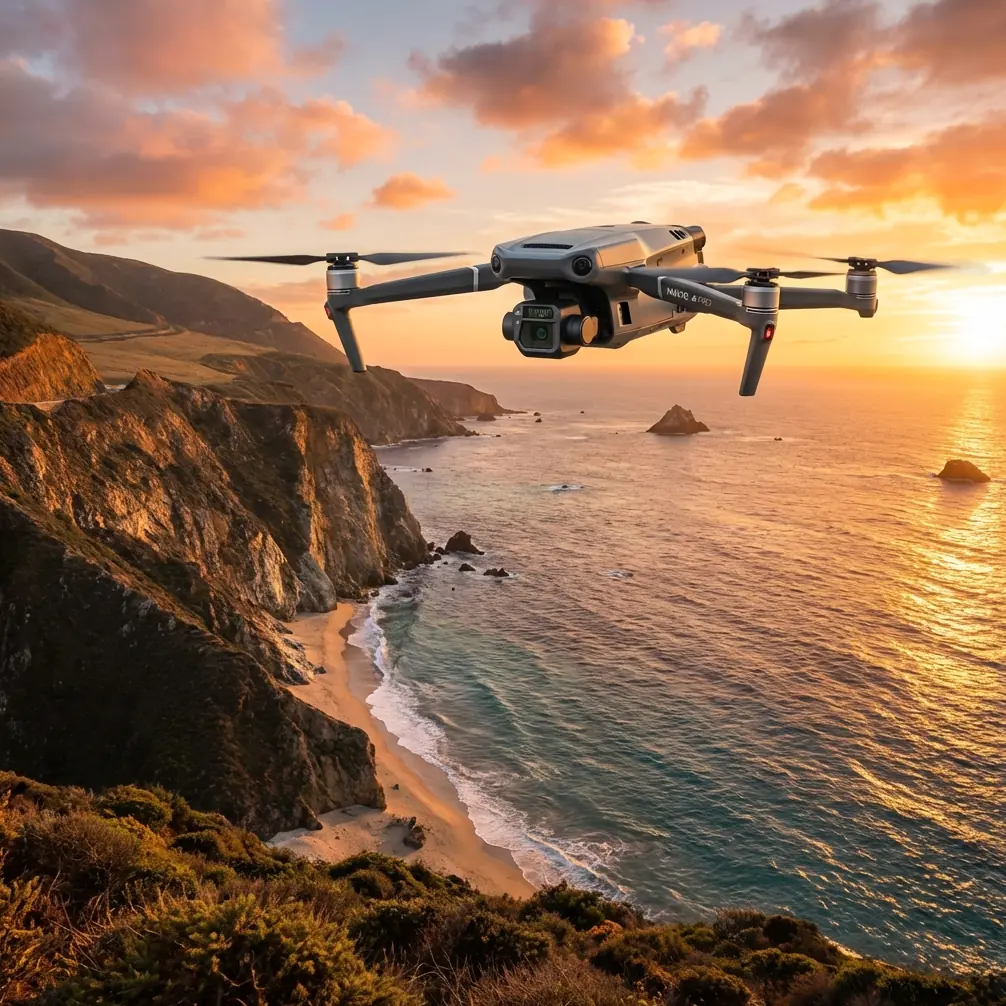
Tracking Windy Power Lines with the Mavic 3T: A Field Case Study
META: A practical case study on using the DJI Mavic 3T for windy power line inspection, with thermal workflow, fault logging, transmission reliability, and accessory-based field improvements.
Wind is where neat drone spec sheets stop being useful.
Power line inspection in calm air is straightforward enough: fly the corridor, capture thermal and visual data, log anomalies, move on. Add gusts, variable terrain, and the need to maintain stable observation on wires and hardware that barely fill the frame, and the mission changes. You stop thinking about “features” and start thinking about what actually keeps an inspection productive over a full day.
I’ve spent enough time around utility workflows to know that the Mavic 3T earns its place not because it does one thing brilliantly in isolation, but because several design ideas come together in a way that reduces wasted flights, repeat visits, and uncertain findings. For windy power line work, that matters more than almost anything else.
This case study breaks down one real-world style operating scenario: tracking power lines with the Mavic 3T in blustery conditions, with a particular focus on data confidence, maintenance logic, and one third-party accessory that made the aircraft more useful in the field.
The job: long spans, shifting gusts, and small targets
The inspection corridor in this scenario was a semi-rural power route with exposed spans crossing uneven ground. Wind speed was not extreme, but it was unsettled enough to keep the aircraft working. Gusts pushed the drone laterally during hover checks and made slow, deliberate tracking along conductors more demanding than a simple waypoint pass.
That distinction matters.
When utilities inspect lines in wind, they are not just trying to stay airborne. They are trying to gather evidence that holds up when reviewed later. A thermal signature on a connector, insulator, splice, or hardware fitting is only useful if the operator can align it with the visual scene, revisit the point if needed, and trust that the aircraft did not introduce confusion through unstable framing or inconsistent telemetry.
This is where the Mavic 3T starts to separate itself from more basic platforms. Not because it eliminates wind—it doesn’t—but because it supports disciplined inspection in spite of wind.
Why the Mavic 3T fits this kind of mission
For power line tracking, the Mavic 3T is usually discussed in terms of its thermal capability, zoom utility, and portability. All true. But those are the obvious talking points. In actual corridor work, two less glamorous ideas are equally significant: persistent fault logging and condition-based maintenance thinking.
One of the source references behind this article comes from a civil aircraft design handbook discussing active control and fly-by-wire system requirements. It states that all faults identified during preflight and route inspections should be stored in non-volatile memory, or NVM, to support maintenance and post-event analysis. It also describes an “On Condition” maintenance concept, where intervention is driven by faults identified through testing or recorded flight data rather than arbitrary servicing alone.
That may sound far removed from a compact commercial UAV. It isn’t.
For a Mavic 3T operator working windy utility routes, this philosophy is operationally valuable. If the aircraft flags abnormal behavior during preflight or records issues during the mission, persistent storage of that fault information helps a team separate three very different possibilities:
- a true aircraft performance issue,
- an environmental issue caused by gusts or magnetic clutter,
- or an operator workflow issue.
That distinction saves time. It also helps prevent the worst habit in drone inspection programs: blaming every inconsistent result on “the wind” and carrying on without diagnosis.
In utility work, repeatability is currency. When the aircraft and the operation both leave a traceable record, your maintenance decisions become less subjective.
Wind changes how thermal should be interpreted
Thermal inspection of power assets is never just about finding hot things. It is about understanding whether a temperature pattern indicates a meaningful defect or a transient condition.
In wind, convection can flatten or distort apparent heat contrast. A weak anomaly may become harder to distinguish; a mild hotspot may cool enough to blend into the background. That doesn’t make thermal less useful. It means the operator has to be more methodical.
With the Mavic 3T, the practical workflow was to use the thermal view as a screening layer rather than the only decision layer. Suspicious signatures were cross-checked immediately with the visible camera and zoom framing before the aircraft moved on. That sounds basic, but in gusty air it prevents a common error: spotting a thermal irregularity, drifting off line while trying to confirm it, and never quite reacquiring the exact piece of hardware.
The Mavic 3T’s compact form helps here because it allows quick repositioning without the deployment burden of a larger platform. But the bigger point is workflow discipline. Thermal signature first. Visual confirmation second. Precise location tagging third. That sequence becomes even more valuable when the air is unsettled.
O3 transmission matters more than brochure language suggests
A windy power line mission is not just an aircraft stability problem. It is a link confidence problem.
When you are following a utility corridor, especially one with terrain breaks, trees, or structures interrupting clean line of sight, the quality of the downlink shapes every decision the pilot makes. This is where O3 transmission earns real respect. In calm demos, transmission systems are easy to take for granted. In field inspections, stable video and telemetry are what allow the operator to maintain composure when the aircraft is already being nudged by the environment.
For Mavic 3T users, O3 transmission is not just about distance. It is about preserving situational awareness when the aircraft is slightly off-axis, when the operator needs to pause and inspect a clamp or insulator stack, and when repositioning near a corridor creates momentary visual complexity. A robust link shortens hesitation. Shorter hesitation means cleaner inspections.
There is also an information security angle worth mentioning. Many infrastructure operators now expect stronger protection around operational data. AES-256 is part of that conversation. For civilian utility work, especially where sensitive grid imagery or asset condition data is involved, secure transmission is not a decorative spec. It supports internal compliance expectations and reduces friction when a utility’s IT or asset integrity team reviews the UAV program.
The third-party accessory that genuinely helped
Most accessories in the drone market solve problems nobody actually has. This one was different.
For this mission profile, a high-visibility third-party strobe mounted for daylight conspicuity improved team coordination more than expected. Not because the pilot could not see the Mavic 3T, but because visual reacquisition in windy corridor work often becomes a team activity. The observer, the pilot, and sometimes a utility spotter are all trying to maintain common awareness of where the aircraft is relative to poles, spans, and vegetation.
The strobe did not make the drone fly better. It made the operation cleaner.
In gusty conditions, when the aircraft needed to sidestep and hold an offset viewing angle, the enhanced visual cue helped the observer track the aircraft more quickly and call out relative position against the line. That reduced unnecessary verbal confusion and made short inspection holds more efficient. Small gain, real impact.
If you are building a Mavic 3T power line kit, that kind of accessory is worth more than flashy add-ons that only complicate setup.
Borrowing a lesson from larger aircraft: interchangeable systems reduce downtime
The second source reference also notes that redundant hardware and software serving the same function should be interchangeable. That principle comes from larger civil aircraft design, but it has a practical echo in drone fleet management.
For Mavic 3T operators, the equivalent is not redundant flight computers in the airline sense. It is standardization across batteries, controllers, media handling, charging process, and aircraft setup. If one field component becomes a bottleneck, the mission stalls. If components are interchangeable and the team has a disciplined swap process, windy-day productivity holds up much better.
This is why hot-swap batteries, or at least a battery handling routine that approximates that speed operationally, matter on utility jobs. Long power line routes punish slow ground cycles. Every extended landing window increases exposure to changing weather and changing light. If your team can land, replace packs, verify status, and relaunch with minimal friction, the Mavic 3T’s compact advantage multiplies.
That is not glamorous advice. It is what actually preserves inspection throughput.
Material thinking still applies to drone operations
The other source document may look even less connected at first glance. It is a materials volume from an aircraft design handbook, and on page 914 the extract references material classes and performance areas including stainless steel, aluminum alloys, high-temperature alloys, corrosion resistance, fatigue performance, fracture behavior, and creep properties. It also points to persistence and creep performance sections around pages 114 and 148, fatigue around 161, and corrosion resistance around 181.
Why bring that into a Mavic 3T article?
Because windy power line inspection is one of those tasks that quietly reminds you why airframe material behavior matters even in smaller UAV platforms. Repeated exposure to gust loading, transport vibration, frequent deployment, and field handling does not usually create dramatic failures. It creates wear patterns, loosening, fatigue accumulation, and long-tail reliability problems.
Operators who understand even the basic logic of fatigue and corrosion make better fleet decisions. They inspect mounting points more intelligently. They treat accessory installations more carefully. They store and transport aircraft with more discipline. They are quicker to spot the difference between cosmetic wear and something that could affect repeatability in the field.
That source reference’s emphasis on corrosion resistance and fatigue is especially relevant for utilities working in coastal, humid, or industrial regions. If your Mavic 3T regularly flies around salt air, mist, or contaminated infrastructure, post-flight care is not housekeeping. It is part of airworthiness culture at the small-UAV level.
Mapping logic still supports inspection logic
Even when the mission is not formal photogrammetry, utility teams benefit from thinking like mappers.
The Mavic 3T is often deployed for inspection first, yet corridor documentation improves when the crew uses repeatable reference practices. If a suspect component is found, tying it back to a structured positional workflow—sometimes with GCP-backed reference in adjacent mapping work, sometimes through repeatable route markers and image naming discipline—makes follow-up much easier.
Photogrammetry and thermal inspection should not live in separate silos. A utility that uses the Mavic 3T as a first-pass anomaly finder can often improve maintenance handoff by pairing thermal findings with spatially consistent visual records. That reduces ambiguity for the engineering or field repair team.
And in windy conditions, where a pilot may need to accept slightly different standoff positions from one span to the next, having a stronger positional documentation habit becomes even more helpful.
What the day looked like in practice
The inspection routine settled into a rhythm:
- short preflight with attention to aircraft status and environmental drift,
- corridor launch from a clear offset,
- thermal scan for fast anomaly screening,
- zoomed visual confirmation at suspect hardware points,
- deliberate logging of exact pole and span references,
- battery rotation before performance margin became a concern,
- post-flight review with special attention to any aircraft status messages recorded during the route.
That last point is where the civil-aircraft design references become unexpectedly useful. Storing fault data in permanent memory and using condition-based maintenance logic is not theoretical engineering language. It is a practical mindset for keeping a Mavic 3T fleet dependable over time.
A team that reviews aircraft messages, correlates them with weather and mission behavior, and acts on patterns will usually outperform a team that treats every sortie as isolated.
The BVLOS question
Many utility operators naturally ask whether this kind of line tracking should move toward BVLOS workflows. Strategically, yes, that is where much corridor inspection is headed. But for windy operations, the right answer is cautious and procedural.
The Mavic 3T has the sensing, imaging, and transmission strengths to support more advanced utility workflows. That does not mean every windy power line route should be stretched into a more complex operational model without the right approvals, risk controls, and route design. Reliable technology helps. It does not replace operational discipline.
Final takeaway
The Mavic 3T proves its value on power lines when conditions are slightly messy, not when everything is easy.
In this case, the aircraft’s thermal capability helped identify suspect hardware fast. O3 transmission preserved decision-making quality when the corridor became visually and physically demanding. Secure data handling with AES-256 aligned better with infrastructure expectations. A simple third-party strobe improved team coordination. And the deeper engineering lessons from civil aircraft references—persistent fault logging in NVM, condition-based maintenance, attention to fatigue and corrosion—turned out to be highly relevant to everyday UAV reliability.
That is the real story. Not that the Mavic 3T can inspect power lines, but that it becomes significantly more effective when the operator treats it less like a gadget and more like a working aircraft.
If you are refining a windy-corridor workflow, and want to compare accessory options or inspection setup choices, you can message our utility drone team here for a practical discussion.
Ready for your own Mavic 3T? Contact our team for expert consultation.