
Mavic 3T Field Report: Best Practices for Tracking Solar
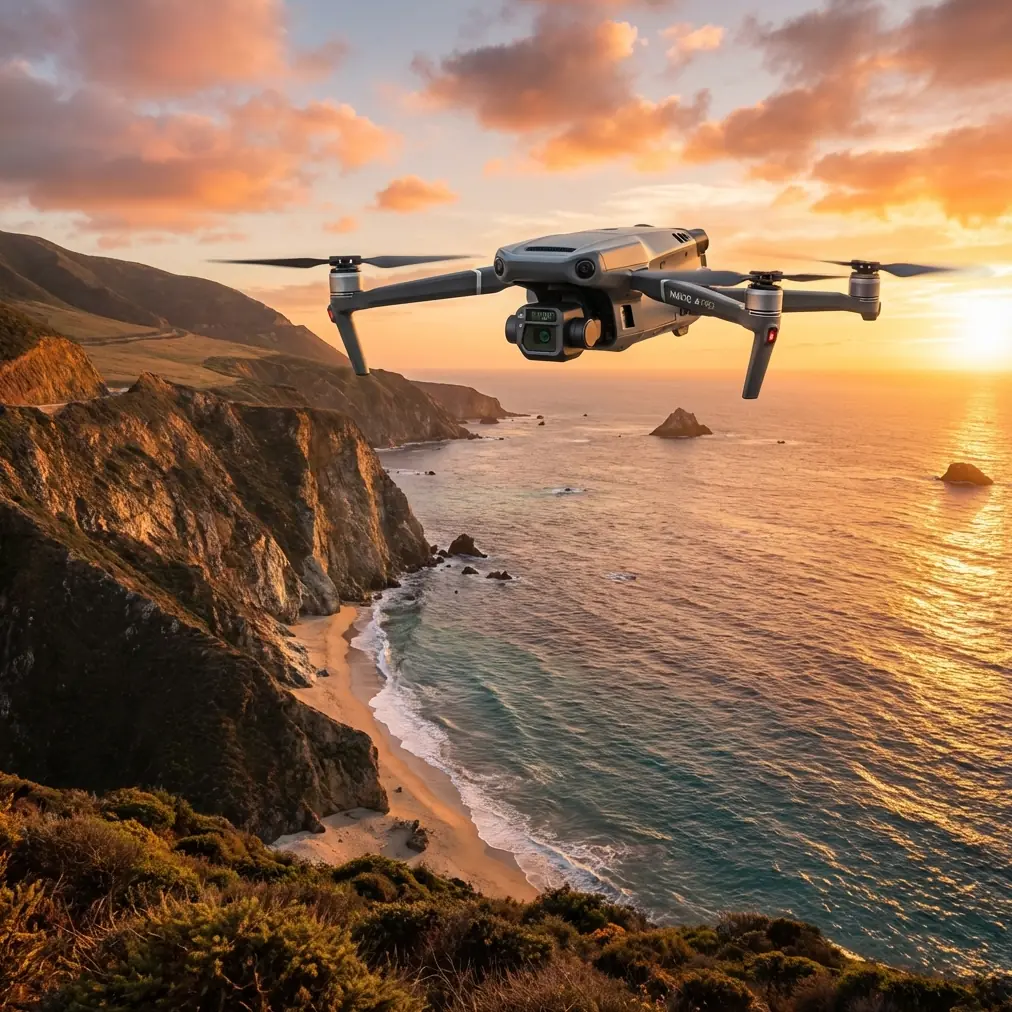
Mavic 3T Field Report: Best Practices for Tracking Solar Farms in Remote Sites
META: Expert field report on using the DJI Mavic 3T for remote solar farm inspection, thermal tracking, antenna positioning, flight workflow, and data capture best practices.
Remote solar work exposes every weak link in a drone workflow.
The site is usually far from support. Heat shimmer builds by mid-morning. Repeating rows of panels can confuse visual orientation. Wind can shift across open ground with very little warning. And when a technician needs to find a weak string, overheating connector, or underperforming section fast, a drone is only useful if its data is dependable.
That is where the Mavic 3T earns its place.
I’ve seen operators approach the Mavic 3T as if it were simply a compact thermal drone with a foldable airframe. That misses the point. Its real value at remote solar farms is the combination of speed, thermal awareness, stable link performance, and the ability to move from broad area scanning to targeted investigation without changing platforms. For teams managing dispersed energy assets, that matters more than headline specs.
This field report is built around the practical question that comes up most often: how do you use a Mavic 3T to track issues across a remote solar farm efficiently, while preserving data quality and link stability?
Why the Mavic 3T fits solar farm work unusually well
Solar inspection requires two very different views of the same site.
First, you need a wide-area perspective to identify patterns. Is there a cluster of abnormal modules in one array block? Is one inverter corridor producing a recurring thermal anomaly? Is there vegetation growth creating partial shading that appears subtle in RGB but obvious in thermal? Second, you need close, targeted observations to confirm whether what you found is operationally meaningful or just a false alarm caused by angle, reflection, soiling, or transient heating.
The Mavic 3T handles that transition well because it combines thermal imaging with a visual payload in a portable aircraft that can be deployed quickly across a spread-out site. In a remote solar environment, response time matters. If your crew has a limited maintenance window, or weather is shifting, a compact aircraft with a fast setup can produce more completed inspection coverage than a larger system that looks better on paper but takes too long to launch and reposition.
The other reason it fits the job is transmission reliability. DJI’s O3 transmission system is not a footnote here. On a solar farm, you are often flying along long corridors of repeating metallic structures with changing line-of-sight conditions. A strong link helps maintain confidence during pattern flights and during detailed thermal checks at distance. When operators ask why one crew consistently returns with cleaner data than another, the answer is often not camera quality alone. It is flight discipline supported by a reliable control and video link.
Thermal signature work: what actually matters on site
The phrase “thermal signature” gets used loosely. In solar work, it should mean something specific: the heat behavior of modules, connectors, combiner areas, and associated electrical components relative to neighboring assets under comparable conditions.
That “relative” part is the key.
A remote solar farm is full of heat. Sun load changes everything. Reflective surfaces can distort interpretation. If you fly too late, panel temperatures may rise so uniformly that subtle defects become harder to separate from the background. If you fly too early, you may miss developing hotspots that become obvious under stronger load. The Mavic 3T gives you the thermal perspective, but your timing and flight pattern create the value.
My recommendation is to use the aircraft in two phases.
Phase 1: fast thermal reconnaissance
Fly a structured route over the target blocks at a consistent altitude and angle. Your goal is not diagnosis. Your goal is triage. Look for outliers: warmer cells, isolated edge heating, repeated anomalies across one section, heat concentration near junction points, or suspicious patterns around cable paths and electrical housings.
At this stage, speed is useful, but only if image interpretation remains clear. Many pilots fly too low at first because they want detail. That slows the mission and fragments the overview. Start by finding thermal patterns across a broader area. You can always tighten in later.
Phase 2: close confirmation with visual cross-check
Once a hotspot cluster is identified, reposition and confirm it using the visual camera. This is where the Mavic 3T’s mixed sensing workflow becomes operationally significant. A thermal anomaly alone does not tell you whether the root cause is a damaged cell, debris, a cracked surface, partial shading, connector heating, or a reflection artifact. The visible image gives context. The thermal layer tells you where to look.
That combination reduces wasted maintenance dispatches. It also creates better records for asset managers who need to prioritize repair decisions across many remote sites.
Antenna positioning advice for maximum range
This is the detail many teams neglect, and it directly affects mission quality.
The best transmission system in the world cannot overcome poor antenna discipline. With the Mavic 3T, especially when covering long rows across remote solar farms, antenna positioning should be treated as part of preflight, not something you adjust only after the signal weakens.
Here is the practical rule: do not point the tips of the controller antennas directly at the aircraft. The broadside of the antenna orientation should face the drone. Think of it as presenting the strongest signal surface toward the aircraft rather than aiming the narrow end at it.
Why this matters operationally:
- During long lateral flights over array rows, pilots often rotate their body to follow the aircraft but forget to maintain proper antenna geometry.
- As distance increases, small errors in antenna orientation can produce avoidable signal drops or inconsistent live view performance.
- On large solar sites, vehicles, service buildings, inverter stations, terrain undulations, and even rows of panels can interrupt ideal line of sight. Correct antenna placement helps preserve link margin.
If you are working from a stationary observation point, set up so the aircraft remains in the strongest forward sector of your controller position for as much of the route as possible. If the mission requires extended travel along one axis, choose a launch point near the centerline of the intended inspection block rather than starting from one extreme edge. That simple adjustment can improve link stability over the full flight.
And one more field habit: hold the controller high enough that your own body is not becoming part of the problem. I still see operators tuck the controller too low against the torso while standing near a truck or structure. Signal performance suffers, and they blame the site.
Why O3 transmission matters in solar operations
O3 transmission is often marketed as a convenience feature. In field inspection, it is closer to a risk-control tool.
A remote solar farm is repetitive by design. From the pilot’s perspective, visual monotony can make orientation harder than expected, especially when several blocks look nearly identical. A stable live feed lets you verify position and maintain confidence during systematic inspection passes. It reduces the temptation to overcorrect, pause unnecessarily, or descend just to regain visual certainty.
That translates into cleaner coverage and more predictable battery use.
Reliable transmission is also relevant to thermal validation. If your live image stutters or degrades at the exact moment you are trying to evaluate a suspect hotspot, you may choose to break the route and re-approach the location. Repeat that across multiple anomalies, and the whole mission becomes less efficient.
Battery workflow: use hot-swap discipline, not just spare packs
When people mention hot-swap batteries in the field, they often mean little more than “bring enough batteries.” That is too simplistic for remote solar work.
At a large site, battery changes are not just about endurance. They are about preserving mission continuity.
A disciplined hot-swap routine means:
- pre-assigning packs to inspection blocks,
- recording cycle use,
- maintaining a repeatable landing and relaunch sequence,
- and ensuring your aircraft resumes the survey with minimal delay and minimal confusion about what was already covered.
This matters because thermal comparisons are strongest when conditions remain reasonably consistent. If your battery handling is disorganized and you lose time between flights, solar loading can shift enough to complicate comparisons between arrays. A clean battery swap process keeps the inspection tempo tight and the data set more coherent.
AES-256 and remote asset data handling
Solar farm operators are paying more attention to data security than they did a few years ago. That is a healthy development. Inspection imagery can reveal site layout, equipment condition, maintenance priorities, and operational weak points. Even in purely civilian energy applications, that information deserves protection.
The Mavic 3T’s AES-256 support is relevant here because remote infrastructure inspection is not only about collecting data. It is about transmitting and storing it responsibly. For contractors, this can affect client confidence. For owner-operators, it can shape internal approval for larger drone programs. Secure handling is not flashy, but it is part of a mature UAS workflow.
Photogrammetry, GCPs, and where the Mavic 3T fits
Solar teams sometimes ask whether one aircraft should handle both thermal inspection and high-accuracy mapping. The answer depends on what they mean by mapping.
If the mission is condition screening and anomaly tracking, the Mavic 3T is a strong fit. If the mission expands into formal photogrammetry for engineering-grade outputs, stockpile-style precision expectations, or repeatable site models tied to asset management systems, then workflow discipline becomes more important than aircraft branding alone.
Ground control points, or GCPs, still matter when positional confidence matters. A thermal hotspot is useful. A thermal hotspot tied accurately to a precise row, string, or maintenance zone is far more useful. On remote solar farms with repetitive geometry, GCP-supported workflows can reduce ambiguity in post-processing and improve consistency across recurring inspections.
That does not mean every thermal flight needs a full mapping setup. It means operators should decide in advance whether they are running a scouting mission, a documentation mission, or a photogrammetry mission. Blending all three without a plan usually weakens the output.
BVLOS conversations should start with workflow, not ambition
The term BVLOS attracts attention, especially on large energy sites where assets stretch beyond easy visual coverage. But the smarter discussion is not “how far can the Mavic 3T go?” The smarter discussion is “what operational structure supports safe, lawful, and useful remote-site inspection?”
For solar operators, that usually means optimizing route design, observer placement where required, communication procedures, and launch positioning before even discussing extended operational concepts. Many line-of-sight inspections become dramatically more efficient once crews fix their site layout planning and antenna discipline.
That is why field performance often improves without changing aircraft at all.
A practical mission template for remote solar inspection
Here is the workflow I recommend for a standard remote deployment:
Site edge review before power-on
Walk the launch area. Identify reflective structures, overhead obstructions, service roads, and any terrain break that could interfere with line of sight.Pick the launch point for transmission, not convenience
The nearest parking area is not always the best location. Choose a position that supports the strongest O3 link through the core inspection corridor.Check antenna orientation before takeoff
Treat this like checking propellers. If you skip it, you may spend the whole mission compensating for a preventable mistake.Run a broad thermal sweep first
Cover the area systematically. Flag anomalies without chasing every one immediately.Revisit suspect areas for visual confirmation
Use the visible sensor to distinguish actual issues from false positives.Track battery swaps by block
Keep environmental conditions and mission logging aligned.Tag findings in a format the maintenance team can act on
“Hotspot near north section” is weak. “Repeated elevated thermal signature on row group adjacent to inverter pad B” is usable.
If your team is refining this process for a remote site program, share your mission profile here: https://wa.me/85255379740
What separates average operators from dependable ones
It is not who flies fastest.
It is the operator who understands that the Mavic 3T is a field instrument, not just a camera platform. They know that O3 transmission affects inspection confidence. They know antenna positioning is a performance variable. They understand that hot-swap discipline preserves comparability. They use thermal signatures as a decision aid, not as a shortcut to diagnosis. And when they need spatial reliability, they bring photogrammetry logic and GCP planning into the workflow rather than pretending every image automatically becomes a map.
That is the difference between collecting footage and delivering usable inspection intelligence.
For remote solar farms, that difference is everything.
Ready for your own Mavic 3T? Contact our team for expert consultation.