
Mavic 3T for Windy Solar Farm Tracking: What Aircraft
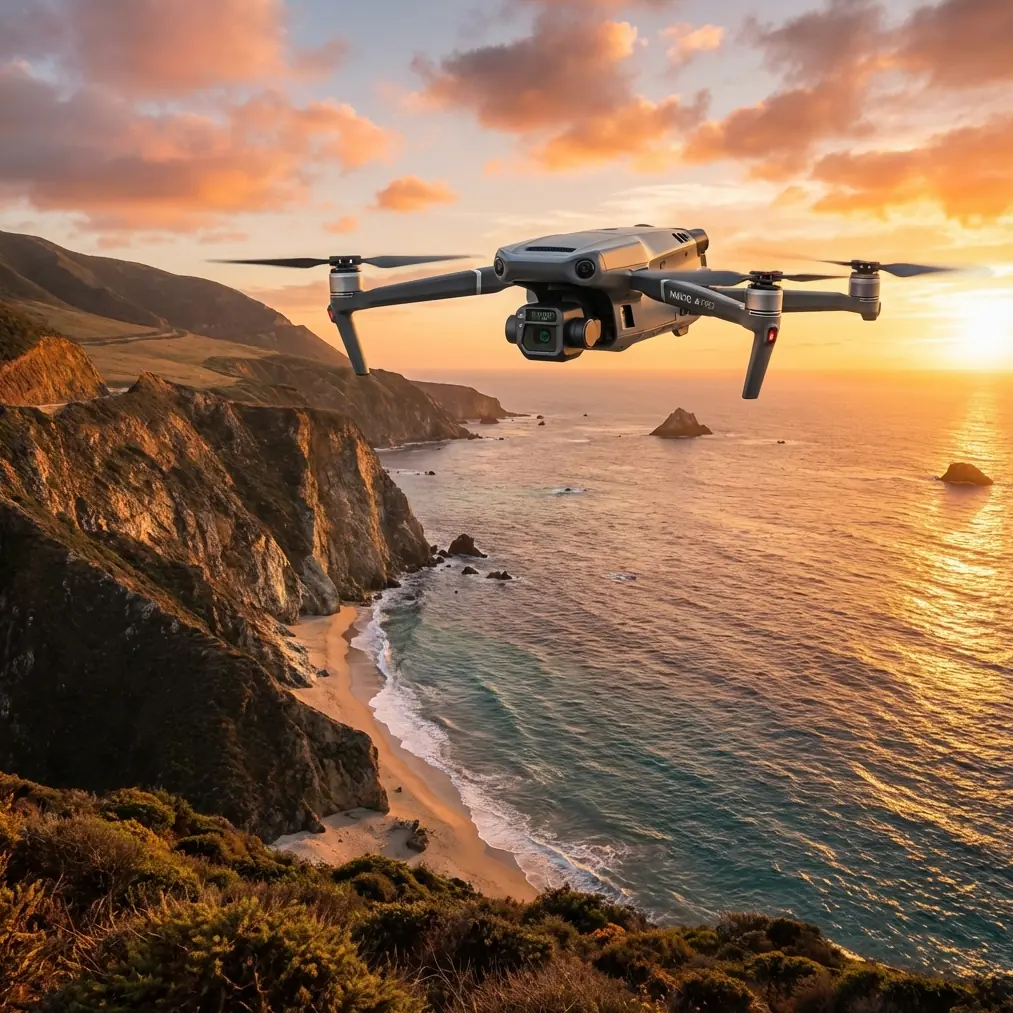
Mavic 3T for Windy Solar Farm Tracking: What Aircraft Design Rules Teach Us About Real-World Reliability
META: A technical review of the Mavic 3T for windy solar farm inspections, with practical guidance on thermal signature capture, antenna positioning, transmission stability, and why classic aircraft design tolerances still matter.
By Dr. Lisa Wang, Specialist
Wind exposes every weakness in an aerial inspection workflow.
On a solar farm, that weakness rarely shows up as a dramatic failure. More often it appears as drift in repeatability, dropped thermal confidence, patchy image overlap, or a transmission link that looks fine on paper but starts to feel fragile once the aircraft gets low over endless reflective rows. The DJI Mavic 3T is often discussed as a compact thermal platform, but for windy solar tracking, the more useful question is not whether it has a thermal camera. It does. The real question is whether the aircraft, the link, and the mission design can hold enough consistency to produce actionable data across long, repetitive corridors of infrastructure.
That is where a surprising lesson from classical aircraft design becomes relevant.
The reference material here comes from manned-aircraft design manuals, not a drone brochure. One section focuses on pressurized cabin design and fault tolerance. Another deals with mechanical flight-control routing, including strict spacing and clearance rules for cables. At first glance, neither seems connected to a Mavic 3T surveying photovoltaic assets. Look closer, and both point to the same operational truth: stable aviation systems are built around margins, not best-case performance.
For Mavic 3T operators working windy solar sites, that principle matters more than spec-sheet enthusiasm.
Why wind changes solar inspection more than many teams expect
Solar farms are deceptively difficult environments for small UAVs. They are open, often flat, and exposed. That means sustained crosswinds can build without much shelter. The panel geometry adds another complication: repeated reflective surfaces can reduce visual texture in some lighting conditions, while thermal interpretation can shift as airflow cools modules unevenly.
Tracking defects under those conditions requires more than a good thermal signature. You need repeatable positioning, predictable overlap, and stable command-and-video transmission. If the aircraft holds the line poorly, hotspot location becomes less trustworthy. If the operator fights the link, antenna angle, or yaw behavior, inspection pace slows. If image geometry changes too much between passes, photogrammetry products can become harder to align with thermal findings and GCP-backed maps.
The Mavic 3T is well suited to this work because it combines thermal imaging, visible imaging, compact deployment, and O3 transmission in a package that can move quickly between blocks of panels. But windy tracking pushes the system beyond a simple “launch and scan” routine. It rewards disciplined setup.
The old aircraft-design lesson: leave room for movement
One of the source references discusses mechanical control systems in conventional aircraft and states that control cables should maintain clearances from surrounding structures, with a minimum gap of 10 mm where a cable passes through a structural opening. It also recommends cable spacing typically not less than 40 mm, and notes that in long runs, guide pulleys are arranged so the span between them is often about 4 to 5 m.
A Mavic 3T has no exposed cable-control runs like a transport aircraft, of course. But the engineering principle behind those numbers is directly relevant: moving systems need clearance, routing discipline, and tolerance for deflection under load.
Translate that into solar-farm drone operations and three practical implications emerge.
First, don’t plan missions as if the aircraft will trace a mathematically perfect rail line in gusts. Build overlap margin into both visible and thermal capture. Wind introduces small but cumulative path deviations, especially on low-altitude crosswind legs over very long rows.
Second, maintain physical and electromagnetic “clearance” in your launch setup. A cluttered ground station is the drone equivalent of a badly routed control path. Vehicles, metallic fencing, inverter enclosures, elevated cable trays, and even the operator’s own body orientation can interfere with transmission quality and situational awareness. If aircraft designers worry about a 10 mm passage clearance to protect control integrity, drone crews should be just as strict about keeping the operator position clean, elevated when possible, and free from unnecessary obstructions.
Third, avoid unnecessary directional changes. The flight-control manual warns that arbitrary changes in cable direction increase weight, friction, and performance penalties in traditional systems. In mission planning, the equivalent is excessive zig-zag routing. Every extra turn in wind costs time, battery, and image consistency. On solar sites, longer straight segments usually produce cleaner thermal interpretation and better mapping continuity than overcomplicated path logic.
The pressurization analogy is really about fault tolerance
The structural reference is even more interesting.
It states that for pressurized aircraft, designers must consider not only damage or penetration probability, but also misuse of closing devices and accidental opening scenarios. It also describes a failure-tolerant requirement: if certification is sought above 7,600 m, the aircraft must still keep cabin pressure altitude at no more than 4,500 m after reasonably probable pressurization failures. Under normal conditions, occupied pressurized compartments must maintain cabin altitude at no more than 2,400 m.
Those numbers—2,400 m, 4,500 m, and 7,600 m—belong to a different class of aircraft. Yet the design philosophy maps neatly to Mavic 3T fieldwork: do not judge system suitability only under nominal conditions. Judge it by degraded but realistic conditions.
For windy solar tracking, degraded-but-realistic conditions include:
- a gust front arriving mid-mission
- the aircraft flying along repetitive panel rows with reduced visual contrast
- low-angle sun causing glare in the visible sensor
- a pilot unknowingly shading or misaligning the remote controller antennas
- partial obstruction from service buildings or terrain undulations
- battery swaps occurring under schedule pressure
A good Mavic 3T operation is one that still produces usable thermal and mapping outcomes when one or two of those variables go wrong.
That is where O3 transmission and disciplined antenna use matter. The system can provide strong operational flexibility, but only if the crew understands that “maximum range” in the field has less to do with advertised distance and more to do with geometry, orientation, and line quality.
Antenna positioning advice for maximum practical range
Here is the most overlooked habit I see on solar-farm missions: operators point the ends of the antennas at the drone instead of presenting the broad side of the signal pattern toward it.
If you are using the Mavic 3T on a large photovoltaic site, keep the controller oriented so the flat faces of the antenna pattern are directed toward the aircraft’s path, not the tips. As the drone moves down a long corridor, rotate your torso before the link quality drops rather than after. That sounds trivial. It is not. On repetitive infrastructure, pilots often become absorbed in thermal observation and forget that their own body has become a signal obstacle.
A few field rules help:
- Stand where you can preserve a clean line over panel rows and service equipment.
- Avoid positioning yourself directly beside large metal cabinets, transformers, or parked vehicles.
- For long outbound legs, face the aircraft’s intended route before takeoff so the link starts in a favorable geometry.
- If the mission profile includes turns around blocks, re-center your body and controller alignment during each transition.
- Don’t wait for image breakup to correct orientation. By then the system is recovering rather than performing optimally.
For teams running broad sites, I usually advise assigning one crew member to own the link environment just as seriously as the pilot owns the aircraft track. If you need a quick field checklist for controller setup and antenna alignment, I can share one here: message me directly.
Thermal work in wind: what the Mavic 3T does well, and where discipline still matters
The Mavic 3T’s value on solar farms is not simply that it can “see heat.” It can help isolate inconsistent module behavior, suspicious strings, connector anomalies, and heat patterns that deserve a closer ground check. In windy conditions, though, thermal interpretation gets trickier.
Airflow can reduce temperature contrast on some faults and exaggerate localized cooling patterns that are not electrical issues. That means the mission should be designed around consistency more than speed. Keep altitude, look angle, and pass direction as stable as site geometry allows. If the wind is pushing hard from one side, compare suspect signatures against adjacent rows captured under nearly identical conditions rather than mixing observations from different headings and times.
This is also where visible imaging and photogrammetry support the thermal workflow. A thermal hotspot without reliable spatial context slows maintenance teams. A thermal hotspot linked to a georeferenced visible map and checked against GCP-supported layout information becomes operationally useful. The Mavic 3T is at its best when it is not treated as a standalone thermal gadget but as part of a layered inspection method.
Why repeatability beats headline specs
Many buyers ask whether the Mavic 3T can handle wind. The better question is whether your inspection method can handle wind.
Aircraft design manuals obsess over what happens when a closure is misused, when a failure is reasonably probable, or when movement causes unexpected contact. That mindset is worth borrowing. In drone inspection, the biggest gains usually come from reducing ordinary mistakes:
- launching from a poor RF position
- flying thermal passes with inconsistent headings
- pushing batteries too far into reserve on return legs
- skipping GCP discipline when map accuracy matters
- assuming encrypted links such as AES-256 remove the need for site-level communications planning
- treating BVLOS ambitions as a technical setting rather than a regulatory and operational framework
Even the mention of AES-256 has practical value here. Data protection matters on energy infrastructure, especially when inspection files reveal the layout and condition of critical commercial assets. But encryption is only one layer. Secure handling of thermal imagery, flight logs, mission plans, and maintenance records matters just as much. Windy sites often encourage decentralized workflows—operators spread out, swap batteries quickly, and move between substations and panel blocks. That is exactly when disciplined data handling can begin to slip.
Hot-swap rhythm without hot-swap hardware
Operators often use the phrase “hot-swap batteries” loosely when they really mean rapid turnaround. The Mavic 3T is effective partly because it supports a fast field rhythm even without true uninterrupted power swapping in the industrial sense. On large solar farms, that matters. The inspection bottleneck is often not flight time alone but how quickly a team can land, document, relaunch, and maintain continuity across dozens of similar blocks.
Wind amplifies battery planning. Headwind return legs can punish optimistic estimates. Build your launch points so the aircraft does not finish every mission segment fighting back from the far edge of the property. If possible, reposition the crew as the inspection progresses rather than forcing each sortie to cover the maximum possible footprint from a single static position. It is a small operational change with outsized effects on safety margin and dataset consistency.
A realistic view on BVLOS and large-site scaling
Solar operators naturally look at Mavic 3T performance and wonder whether it can scale to very large assets under BVLOS concepts. Technically, the platform’s transmission and sensor package make it attractive for wide-area work. Operationally, scaling depends on far more than link range. You need site procedures, communications architecture, emergency routing, observer logic where required, and a data pipeline that can absorb thermal and visible outputs without introducing traceability gaps.
That brings us back to the source material one last time. The manuals do not celebrate raw capability. They emphasize design against misuse, spacing against interference, and survivability under probable faults. That is exactly how a strong Mavic 3T solar program should be built.
Not around the aircraft at its best. Around the mission when conditions are merely acceptable.
For windy solar farm tracking, the Mavic 3T remains one of the most practical compact tools available. Its thermal capability is useful, its visible imaging is more valuable than many teams admit, and its O3 link can be dependable if the operator respects antenna geometry and field positioning. But the platform delivers its best results when treated like an aviation system, not a flying camera.
That means margins in overlap. Margins in battery planning. Margins in radio line quality. Margins in thermal interpretation. And a workflow that assumes something small will go wrong and prepares for that before takeoff.
That is not caution for caution’s sake. It is how reliable inspection work is built.
Ready for your own Mavic 3T? Contact our team for expert consultation.