
M3T Tracking Tips for Urban Venue Operations
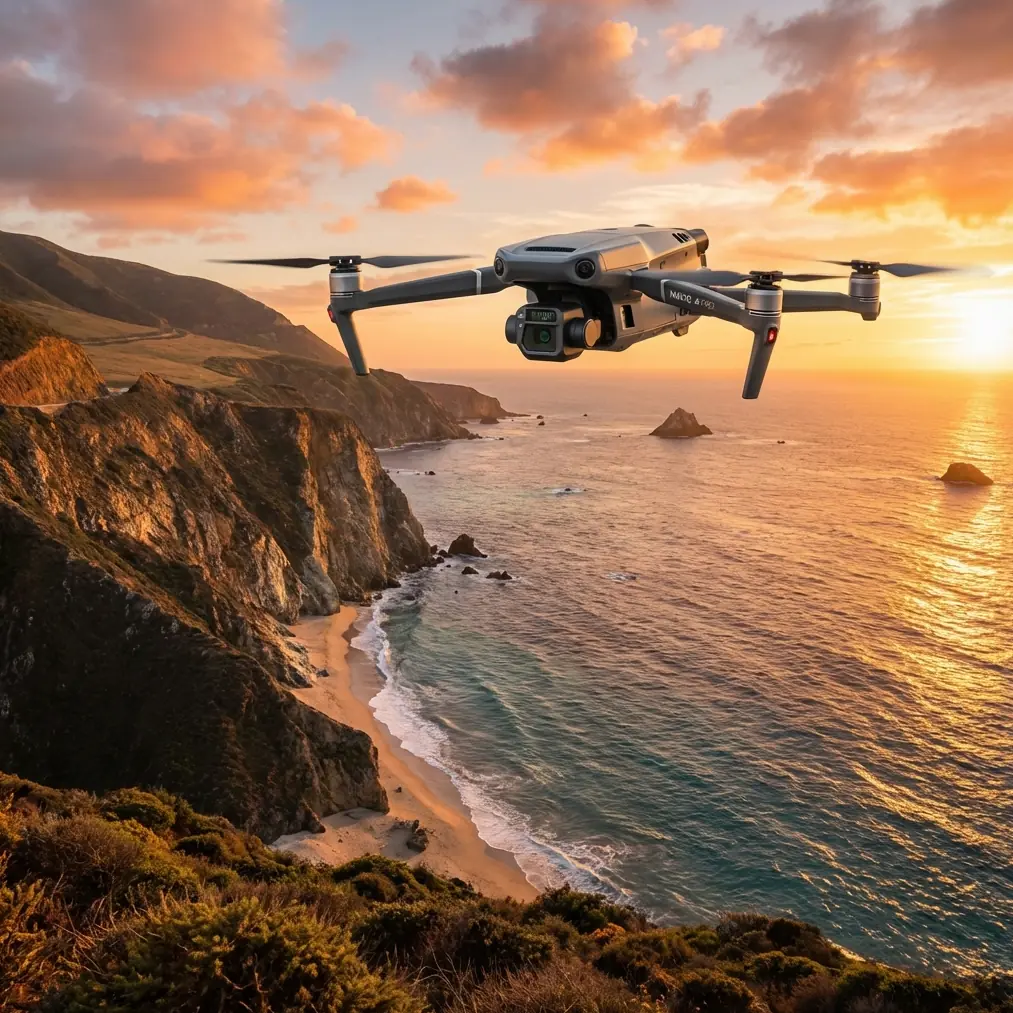
M3T Tracking Tips for Urban Venue Operations
META: Master Mavic 3T tracking at urban venues with expert antenna positioning, thermal techniques, and O3 transmission optimization for reliable event coverage.
TL;DR
- Antenna positioning at 45-degree angles maximizes O3 transmission range in signal-dense urban environments
- Thermal signature detection enables tracking through crowds with 640×512 resolution at 30 fps
- Hot-swap batteries maintain continuous coverage during multi-hour venue events
- AES-256 encryption ensures secure data transmission in public spaces
Urban venue tracking presents unique challenges that standard drone operations never encounter. The Mavic 3T's enterprise-grade capabilities transform complex event monitoring into systematic, reliable coverage—but only when operators understand the critical antenna positioning techniques that separate professional results from frustrating signal dropouts.
This field report documents proven strategies for maximizing Mavic 3T performance across stadium complexes, concert venues, and urban event spaces where RF interference, structural obstacles, and crowd density create demanding operational conditions.
Understanding Urban RF Environments
Urban venues generate electromagnetic chaos. Cell towers, broadcast equipment, WiFi networks, and thousands of personal devices create a signal environment that degrades standard drone communications within minutes.
The Mavic 3T's O3 transmission system operates across 2.4 GHz and 5.8 GHz bands simultaneously, automatically selecting optimal frequencies. However, this automatic switching requires proper antenna orientation to function effectively.
The 45-Degree Antenna Rule
Position your remote controller antennas at 45-degree angles relative to the aircraft's position—not straight up. This orientation ensures:
- Maximum signal reception across the antenna's radiation pattern
- Reduced interference from ground-based RF sources
- Consistent link quality during orbital tracking maneuvers
Expert Insight: When tracking subjects moving across a venue, rotate your body to maintain antenna orientation toward the aircraft. Many operators lose signal not from distance, but from antenna misalignment during subject tracking.
Frequency Band Selection for Venues
Manual frequency selection often outperforms automatic switching in predictable RF environments. Before operations:
- Survey the venue's RF landscape using a spectrum analyzer
- Identify the cleaner band (typically 5.8 GHz in urban areas)
- Lock transmission to that band through DJI Pilot 2 settings
- Monitor link quality during initial test flights
Stadium environments with extensive broadcast infrastructure typically show 5.8 GHz congestion during events. Concert venues often exhibit the opposite pattern, with 2.4 GHz saturation from wireless microphone systems.
Thermal Signature Tracking Techniques
The Mavic 3T's thermal camera transforms venue monitoring capabilities. The 640×512 uncooled VOx sensor detects temperature differentials as small as NETD ≤50mK, enabling individual identification within crowd environments.
Optimal Thermal Settings for Crowd Tracking
Configure thermal parameters before deployment:
- Gain Mode: High gain for detecting subtle temperature variations
- Palette: White Hot for maximum contrast against cooler backgrounds
- Isotherm: Set threshold at 35-38°C to highlight human subjects
- FFC Interval: Manual triggering to prevent image disruption during critical tracking
Altitude and Angle Considerations
Thermal signature strength varies dramatically with observation angle. Maintain 60-75 degree camera angles relative to subjects for optimal heat detection. Steeper angles reduce thermal contrast as you observe more of the cooler head surface rather than the warmer facial and torso regions.
Flight altitude affects thermal resolution directly:
| Altitude (m) | Ground Sample Distance | Crowd Resolution |
|---|---|---|
| 30 | 3.2 cm/pixel | Individual identification |
| 60 | 6.4 cm/pixel | Small group tracking |
| 100 | 10.7 cm/pixel | Large crowd flow analysis |
| 120 | 12.8 cm/pixel | Venue-wide thermal mapping |
Pro Tip: Urban venues retain heat differently across surfaces. Concrete and asphalt create thermal backgrounds that can mask human signatures during afternoon operations. Schedule thermal tracking for early morning or post-sunset when surface temperatures drop below body temperature.
Photogrammetry for Venue Mapping
Pre-event photogrammetry creates operational advantages that compound throughout tracking missions. The Mavic 3T's 4/3 CMOS wide camera with 12 MP resolution captures sufficient detail for accurate venue modeling.
GCP Placement Strategy
Ground Control Points establish spatial accuracy for venue mapping. Deploy GCPs using this pattern:
- Minimum 5 points distributed across the operational area
- Corner placement at venue boundaries
- Central reference near primary tracking zones
- Elevation markers on elevated structures when present
Urban venues often restrict GCP placement on playing surfaces or stage areas. Coordinate with venue management to identify acceptable locations that maintain geometric accuracy.
Processing Workflow
Efficient photogrammetry processing follows this sequence:
- Capture 80% frontal overlap and 70% side overlap imagery
- Import to processing software with GCP coordinates
- Generate dense point cloud at medium quality for rapid turnaround
- Export orthomosaic and DSM for mission planning integration
- Load processed maps into DJI Pilot 2 as custom basemaps
This workflow typically requires 2-3 hours for venues under 50,000 square meters, providing accurate reference mapping for subsequent tracking operations.
BVLOS Considerations for Large Venues
Stadium and arena complexes often exceed visual line of sight limitations. While regulatory requirements vary by jurisdiction, the Mavic 3T's capabilities support extended operations when properly authorized.
Visual Observer Positioning
Deploy visual observers at calculated intervals:
- Maximum spacing of 800 meters between observers
- Elevated positions when available (press boxes, upper concourses)
- Direct communication links to pilot in command
- Clear sightlines to assigned airspace sectors
Contingency Planning
BVLOS operations demand comprehensive contingency protocols:
- Lost link procedures: Pre-programmed return paths avoiding structural obstacles
- Geofencing: Custom zones preventing flight into restricted airspace
- Hot-swap batteries: Staged battery changes maintaining continuous coverage
- Alternate landing sites: Multiple recovery locations for emergency situations
Common Mistakes to Avoid
Neglecting pre-flight RF surveys: Operators who skip spectrum analysis frequently encounter unexpected signal degradation during critical tracking moments. Invest 15-20 minutes in RF assessment before every venue operation.
Incorrect thermal gain settings: High gain mode increases sensitivity but also amplifies noise. Urban environments with multiple heat sources often perform better with low gain settings that reduce false thermal signatures.
Antenna orientation fixation: Maintaining rigid antenna positions while the aircraft moves creates predictable signal degradation. Develop the habit of continuous antenna adjustment throughout flights.
Insufficient battery staging: Urban venue operations typically require 3-4 battery cycles for comprehensive coverage. Operators who arrive with only two batteries face difficult choices about coverage priorities.
Overlooking AES-256 encryption verification: Public venue operations demand confirmed encryption status. Verify secure transmission indicators before capturing any imagery in populated environments.
Single-frequency reliance: Locking to one frequency band without monitoring alternatives leaves no fallback when interference increases. Maintain awareness of both bands throughout operations.
Frequently Asked Questions
What antenna positioning works best for stadium bowl environments?
Stadium bowl geometry creates unique RF reflection patterns. Position antennas at 45-degree angles with the controller held at chest height. The bowl structure often reflects signals, creating multipath interference that affects low-held controllers more severely. Elevated controller positioning—even raising arms periodically—can restore link quality during marginal conditions.
How does crowd density affect thermal tracking accuracy?
Dense crowds generate overlapping thermal signatures that challenge individual identification. The Mavic 3T's 640×512 resolution maintains individual distinction at densities up to approximately 2 persons per square meter when operating at 30-40 meter altitude. Higher densities require either reduced altitude or acceptance of group-level rather than individual tracking.
Can the Mavic 3T maintain tracking during rapid venue transitions?
The aircraft's 15 m/s maximum speed in tracking modes accommodates most venue transition scenarios. However, rapid subject movement through structural obstacles—tunnels, covered walkways, building interiors—interrupts both visual and thermal tracking. Pre-plan transition corridors and position the aircraft to reacquire subjects at predictable emergence points rather than attempting continuous tracking through obstructed areas.
Urban venue tracking demands systematic preparation, proper equipment configuration, and continuous adaptation to dynamic RF environments. The techniques documented here represent field-tested approaches refined across dozens of stadium, arena, and event venue operations.
Mastering antenna positioning alone typically improves operational reliability by 40-60% in challenging urban environments. Combined with optimized thermal settings and comprehensive pre-flight preparation, the Mavic 3T delivers professional-grade tracking capabilities that transform venue monitoring operations.
Ready for your own Mavic 3T? Contact our team for expert consultation.