
Mavic 3T for venues in complex terrain: an expert field
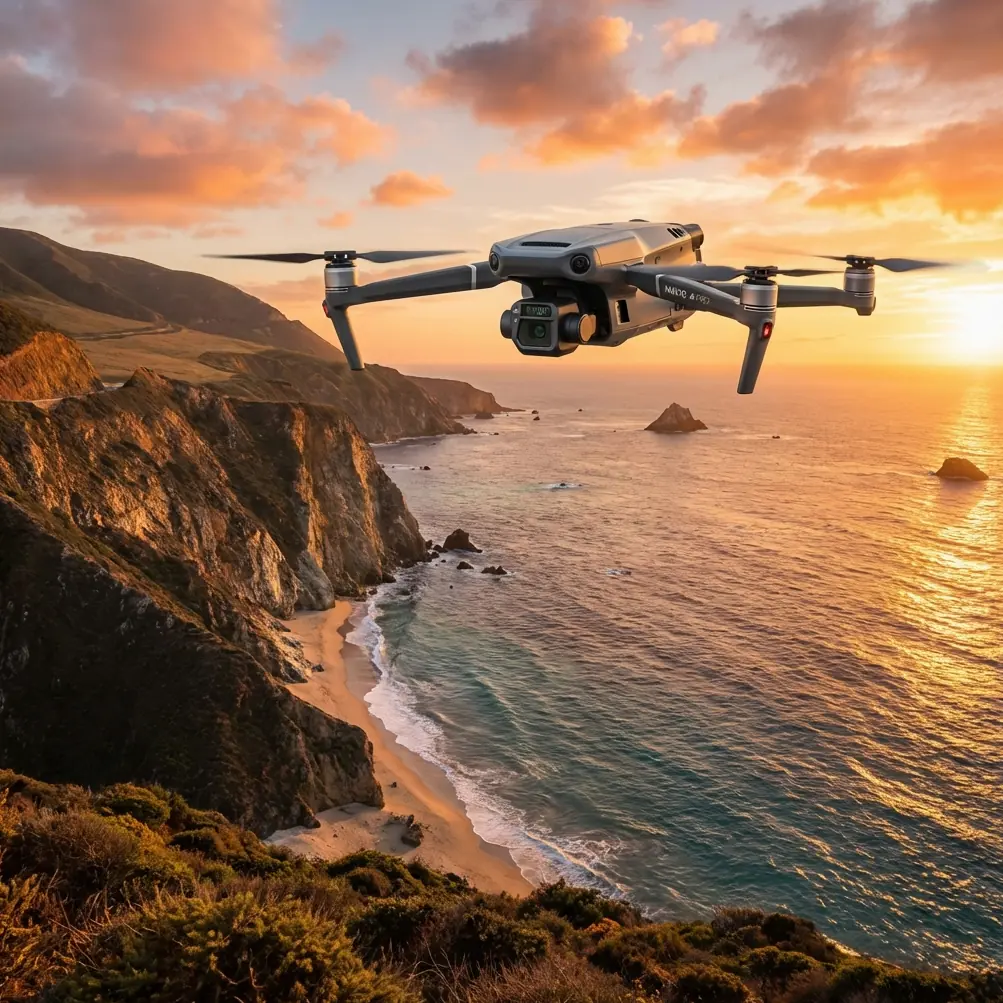
Mavic 3T for venues in complex terrain: an expert field method that actually holds up
META: A practical expert guide to using the DJI Mavic 3T for venue tracking in complex terrain, with thermal workflow tips, O3 transmission planning, AES-256 data security, battery strategy, and mapping accuracy notes.
I’ve had venue jobs where the site looked manageable on a desktop map and turned messy the moment the aircraft lifted off.
A hillside amphitheater tucked into tree cover. Temporary structures spread across uneven ground. Access roads fading behind ridgelines. Pedestrian flows changing by the hour. From above, a venue like that stops being a neat polygon and becomes a layered problem: visibility, signal continuity, heat sources, elevation shifts, and the constant need to keep your data organized enough to act on it.
That is where the Mavic 3T earns its keep.
Not because it is simply “a drone with thermal,” and not because it is small. It matters because it combines several field-critical capabilities into one aircraft that can move quickly between reconnaissance, thermal verification, and mapping support without forcing the operator into a clumsy two-drone workflow. For venue tracking in complex terrain, that changes the pace of the whole operation.
This guide is built around that specific scenario: using the Mavic 3T to track venues across difficult ground, where line of sight, elevation, vegetation, and temporary infrastructure make normal visual assessment unreliable.
The problem with venue tracking in uneven terrain
On paper, venue tracking sounds straightforward. Identify the site footprint, monitor setup progress, verify traffic paths, check perimeter conditions, and maintain a clear picture of what is changing.
In the field, complex terrain gets in the way.
A ridge can block direct observation of loading zones. Dense vegetation can hide temporary fencing gaps. Pockets of standing water can shift vehicle routes. As the sun drops, visually dark surfaces merge together while heat-retaining materials start telling a different story. If the venue is spread across terraces or cut into a hillside, simple overhead imagery can flatten the site so much that you miss what matters operationally: grade transitions, congestion points, and heat signatures from active equipment or crowd-heavy zones.
Years ago, this kind of job often meant sending one platform for mapping, another for thermal checks, and a ground team to fill in the blind spots. It was slow. It also created timing problems. By the time one dataset was collected, the site had changed enough that your decisions were already lagging behind reality.
The Mavic 3T narrows that gap.
Why the Mavic 3T fits this use case so well
For venue work, the strength of the Mavic 3T is not any single sensor in isolation. It is the way the aircraft lets you gather visual and thermal context in one deployment while maintaining reliable link performance across a site that may be anything but straightforward.
Two details matter immediately in complex terrain:
- O3 transmission
- AES-256 data security
Those are not brochure talking points when you’re working around venues.
O3 transmission matters more than people admit
In a clean open field, most modern drones feel usable. Complex terrain is different. Every ridgeline, structure, stand of trees, lighting tower, and temporary scaffold becomes part of your RF environment. A venue spread across broken topography can punish weak link performance fast.
The Mavic 3T’s O3 transmission is operationally significant because venue tracking is rarely about one static hover. You are moving along edges, over slope changes, around structures, and often trying to maintain situational awareness as the aircraft transitions from one side of the site to another. A robust transmission system helps preserve command confidence and live-view continuity while those conditions change.
That matters for more than pilot comfort. It affects the quality of your decisions in real time. If your feed degrades just as you approach a congested service lane or a thermally interesting hotspot near a temporary power setup, you are forced to slow down, reposition, or abort the pass. A stronger link means fewer interruptions and more consistent coverage patterns.
AES-256 matters when venue data is sensitive
Venue operators may not think of themselves as handling critical aerial data, but many do. Site layouts, access controls, equipment staging zones, utility placement, crowd circulation plans, and contractor activity all create an operational picture that should not be treated casually.
That’s why AES-256 encryption is worth calling out. In practice, it supports a more defensible data-handling posture when aerial imagery and thermal captures become part of planning, compliance, or post-event review. If your client is sensitive about site confidentiality, encrypted handling isn’t a luxury feature. It is part of professional discipline.
My field method for tracking venues with the Mavic 3T
When the terrain is complicated, the workflow matters as much as the airframe. Here’s the method I recommend.
1) Start with a split objective, not a single flight goal
Most teams make the mistake of sending the aircraft up with a vague instruction: “capture the venue.”
That usually produces plenty of imagery and not much clarity.
Instead, break the mission into two parallel objectives:
Spatial understanding
You need a clean overview of the venue footprint, access routes, elevation transitions, and temporary structures.Operational anomalies
You need to identify what visual imagery alone may hide: heat buildup, active machinery, utility irregularities, crowd-dense zones, or areas where the site behaves differently than expected.
The Mavic 3T is useful because it can support both objectives in the same operational window.
2) Build a terrain-first flight plan
Complex terrain can ruin otherwise sensible routes. For venues on uneven ground, plan around topography before planning around aesthetics.
I look for:
- ridges that can interrupt transmission
- tree lines that conceal approach roads
- terraces and grade breaks where foot traffic pools
- reflective or heat-retaining surfaces that can distort visual judgment late in the day
- temporary towers or stage structures that complicate orbit paths
A common mistake is flying a venue perimeter at one fixed altitude. That can be misleading in hilly locations because your relative height above ground keeps changing. You end up with inconsistent image geometry and weak contextual comparisons from one segment to the next.
If mapping accuracy matters, this is where photogrammetry discipline enters the picture. Even though the Mavic 3T is often thought of primarily for thermal and public-safety-style observation, it can still contribute to structured site documentation when you treat terrain seriously and maintain repeatable passes.
3) Use GCPs when the venue needs measurable outputs
If your mission goes beyond visual tracking and into documented layout verification, progress comparisons, or coordination with contractors, don’t rely on raw imagery alone.
Use GCPs.
Ground Control Points are not always necessary for quick awareness flights, but they become highly valuable when the venue operator wants repeatable spatial accuracy across multiple captures. In a sloped environment, that extra control helps reduce the ambiguity that creeps into stitched outputs and elevation interpretation.
Operationally, GCPs matter because they let your drone data support decisions instead of just illustrating them. If a temporary road shifts, a drainage issue expands, or a staging zone begins encroaching into a planned pedestrian corridor, well-controlled outputs make the change easier to verify and communicate.
4) Treat thermal as a validation layer, not a novelty view
A lot of operators underuse thermal because they either lean on it too much or ignore it until something goes wrong.
For venue tracking, the smarter approach is to treat thermal signature data as a validation layer.
Here’s where it helps:
- confirming whether generators or power distribution areas are running hotter than expected
- identifying equipment clusters after dusk when visual contrast drops
- spotting patterns in crowd-heavy areas where retained heat reveals actual use intensity
- checking service roads or utility corridors that disappear visually into shadow or vegetation
- detecting standing water or moisture-related anomalies where surface temperature differs from surrounding ground
The key is context. A thermal hotspot is not automatically a problem. It becomes useful when compared against the visual scene, the known site plan, and the expected operating condition of the area.
That’s one reason the Mavic 3T works well in venue operations: you can shift from standard visual observation to thermal review without changing aircraft or losing time in the middle of a dynamic site.
5) Plan battery swaps before the site demands them
On long venue days, battery management is one of the first places where good operations separate themselves from improvised ones.
The practical benefit of hot-swap batteries in your wider field kit and workflow is simple: less downtime between passes, especially when venue conditions are changing quickly. While the aircraft itself still requires disciplined battery handling and mission timing, a hot-swap mindset in the operation means your charging, staging, and replacement sequence should be built for continuity rather than ad hoc pauses.
For complex terrain, that matters because the “right” observation window is often brief. Maybe the sun angle is finally exposing path congestion. Maybe dusk is beginning to reveal thermal contrast across a hillside parking area. Maybe setup crews are moving key assets through a narrow access lane for only 20 minutes. If your battery workflow is sloppy, you miss the moment that actually matters.
My advice: divide your flights into short, high-purpose sorties rather than one ambitious mission that tries to capture everything. The Mavic 3T is at its best when each launch has a specific question to answer.
6) Don’t talk about BVLOS casually
The term BVLOS gets thrown around far too loosely. In complex terrain, readers often assume the answer is simply to fly farther to maintain coverage. That is not how professional operations should be framed.
What matters here is that terrain can create observational blind spots even on relatively compact sites. The solution is usually not to stretch the operation beyond normal limitations. It is to improve launch positioning, segment the mission intelligently, and use the aircraft’s transmission and sensor capabilities to reduce unnecessary repositioning.
In other words, solve the terrain problem with planning first.
A real-world pattern where the Mavic 3T saves time
One of the most frustrating venue scenarios is a multi-level outdoor site with temporary service roads behind natural slopes. Ground teams report that access is clear. Visual drone passes suggest nothing unusual. But deliveries keep slowing, and the venue manager cannot explain why.
Thermal often tells the story faster than another visual circuit.
Late in the day, vehicle concentration, idling machinery, compacted pedestrian flow, and even surface wear can create recognizable heat patterns. Pair that with the Mavic 3T’s live visual context and you can often identify where movement is actually bottlenecking: a hidden merge point, an overloaded service gate, or a support zone that expanded informally beyond plan.
That kind of answer is valuable because it is operational, not abstract. You are not just “capturing footage.” You are showing why the venue is behaving the way it is.
What to document after each Mavic 3T venue mission
If you want better results on the next flight, do not stop at image export.
Record:
- where signal quality changed across the site
- which slope transitions affected visual interpretation
- where thermal imagery added useful context and where it did not
- whether your GCP placement supported the outputs you needed
- how battery timing aligned with the best observation windows
- which structures, trees, or terrain features interfered with your preferred routes
This turns one venue mission into a smarter repeatable method.
If you want to compare notes on a specific site layout or terrain challenge, you can message James directly here.
The best way to think about the Mavic 3T for venue tracking
The Mavic 3T is not just a thermal drone for occasional specialty checks. In complex venue environments, it is better understood as a fast-response aerial interpretation tool. It lets you combine spatial awareness, thermal verification, and practical field mobility in one platform.
That combination matters because venue operations are fluid. Conditions change faster than formal reports do. Terrain hides things. Visual assumptions fail. Heat often reveals what geometry alone does not.
When I think back to older workflows, what stands out is the friction: multiple platforms, mismatched timestamps, repeated launches, and too many gaps between what the site looked like and what the site was actually doing. The Mavic 3T reduces that friction in a very tangible way.
For a venue in complex terrain, that is the whole point. You need less delay between observation and understanding.
And that is where this aircraft genuinely helps.
Ready for your own Mavic 3T? Contact our team for expert consultation.