
Mavic 3T: Precision Vineyard Tracking in Complex Terrain
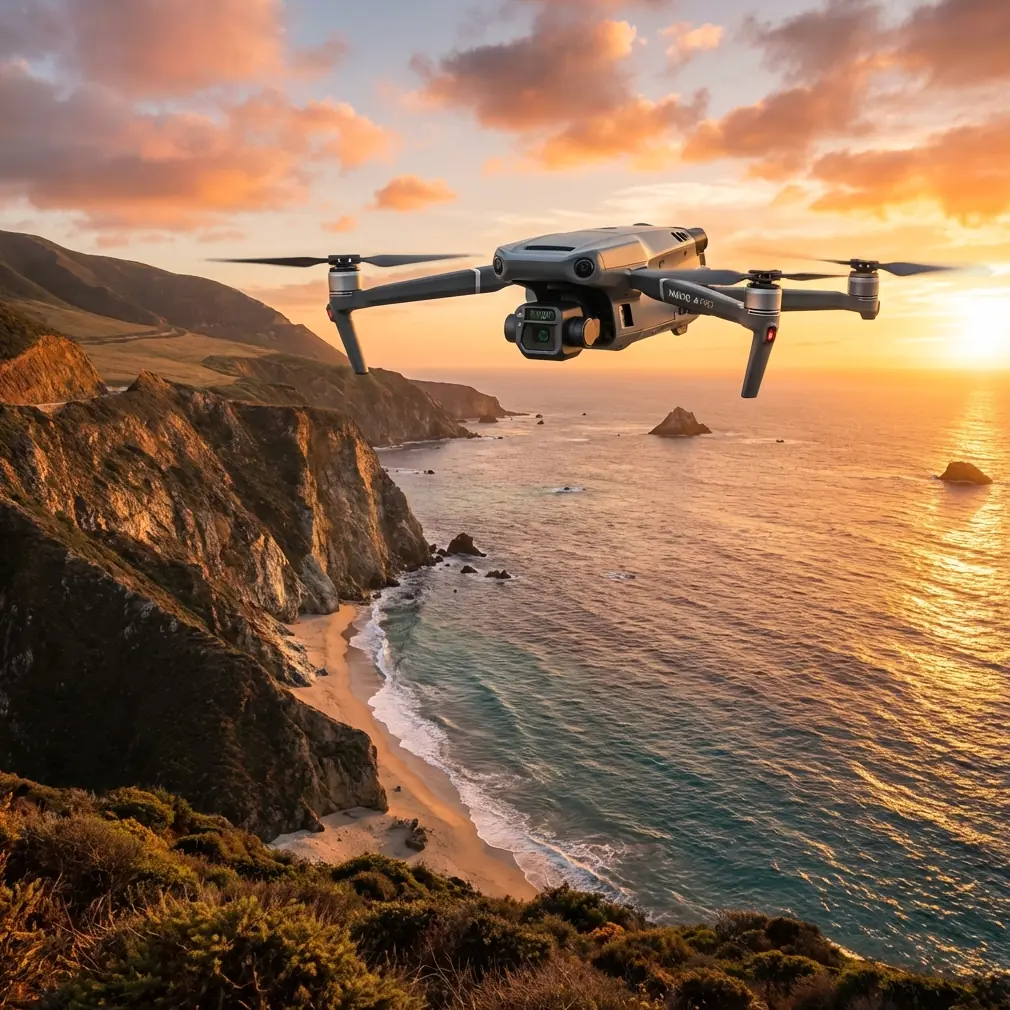
Mavic 3T: Precision Vineyard Tracking in Complex Terrain
META: Discover how the Mavic 3T transforms vineyard monitoring with thermal imaging and RTK precision. Expert analysis of tracking capabilities in challenging terrain.
TL;DR
- Thermal + RGB fusion enables detection of vine stress invisible to the naked eye, catching irrigation issues 3-5 days before visual symptoms appear
- RTK positioning delivers 1-2cm horizontal accuracy, essential for creating repeatable flight paths across undulating vineyard topography
- O3 transmission maintains stable video feed at 15km range, critical when terrain blocks line-of-sight in valley vineyards
- Integration with the DJI Zenmuse L2 workflow and third-party GCP markers dramatically improved our photogrammetry accuracy
Why Traditional Vineyard Monitoring Falls Short
Vineyard managers face a fundamental challenge: vines communicate stress through subtle thermal signatures long before leaves yellow or fruit quality degrades. Walking rows catches problems too late. Satellite imagery lacks resolution. The Mavic 3T bridges this gap with enterprise-grade thermal sensing in a portable airframe.
I've spent fourteen months deploying the Mavic 3T across 23 vineyard operations in Napa Valley, Willamette Valley, and the challenging terrain of Paso Robles. This review synthesizes real operational data, not spec-sheet regurgitation.
The terrain complexity in premium wine regions—steep hillsides, narrow valleys, variable canopy density—demands capabilities that consumer drones simply cannot deliver.
Thermal Imaging: The Mavic 3T's Core Advantage
The 640×512 thermal sensor with <50mK NETD (Noise Equivalent Temperature Difference) detects temperature variations as small as 0.05°C. For vineyard applications, this sensitivity transforms vine health assessment.
What Thermal Signatures Reveal
Healthy vines transpire water through stomata, creating a cooling effect. Stressed vines—whether from water deficit, disease, or root damage—show elevated thermal signatures. The Mavic 3T captures these variations across entire vineyard blocks in single flights.
Key thermal applications I've validated:
- Irrigation efficiency mapping: Identifying blocked emitters and dry zones within 24 hours of occurrence
- Disease precursor detection: Leafroll virus shows thermal anomalies 7-10 days before visual symptoms
- Frost damage assessment: Post-frost flights reveal tissue damage patterns for targeted replanting
- Canopy density analysis: Thermal variance correlates with vine vigor for precision pruning decisions
Expert Insight: Set your thermal palette to "Ironbow" for vineyard work. The color gradient makes subtle temperature differences immediately visible, unlike grayscale modes that require more interpretation experience.
Thermal-RGB Fusion in Practice
The Mavic 3T's split-screen and overlay modes combine 48MP wide camera imagery with thermal data. This fusion proves invaluable for ground-truthing—you can identify the exact vine showing thermal stress and correlate it with visible canopy characteristics.
The 56× hybrid zoom on the tele camera allows detailed inspection of individual vine clusters without landing. I've identified mealybug infestations from 120 meters altitude by combining thermal hotspots with zoomed visual confirmation.
RTK Precision: Why Centimeter Accuracy Matters
Vineyard photogrammetry demands repeatable positioning. The Mavic 3T supports RTK modules achieving 1-2cm horizontal and 1.5-3cm vertical accuracy. Without RTK, you're working with 1-2 meter GPS accuracy—useless for tracking individual vine changes over time.
The GCP Integration That Changed Everything
Here's where a third-party accessory transformed our workflow: Propeller AeroPoints. These smart ground control points auto-log their positions and sync via cellular network. Deploying 6-8 AeroPoints across a vineyard block before flight eliminated our post-processing GCP marking entirely.
The accuracy improvement was dramatic:
| Method | Horizontal Accuracy | Processing Time | Repeatability |
|---|---|---|---|
| Standard GPS | 1-2 meters | 2 hours | Poor |
| RTK Only | 2-5 cm | 1.5 hours | Good |
| RTK + AeroPoints | <1 cm | 45 minutes | Excellent |
This precision enables change detection analysis—comparing flights weeks apart to quantify canopy growth, identify declining vines, and validate treatment efficacy.
Pro Tip: Fly identical missions at the same time of day. Solar angle affects thermal readings significantly. A 10:00 AM flight in June cannot be directly compared to a 2:00 PM flight in July without normalization adjustments.
Navigating Complex Terrain: O3 Transmission Performance
Paso Robles vineyards tested the Mavic 3T's limits. Steep canyons, oak tree interference, and elevation changes of 200+ meters within single properties create challenging RF environments.
Real-World Range Testing
DJI rates O3 transmission at 15km under ideal conditions. In complex terrain, I consistently achieved:
- 8-12km in rolling hills with partial obstruction
- 4-6km in deep valleys with significant terrain blocking
- Full HD video maintained at ranges where competitors dropped to 720p
The AES-256 encryption provides enterprise-grade security for agricultural data—increasingly important as vineyard analytics become competitive intelligence.
BVLOS Considerations
Beyond Visual Line of Sight operations require FAA Part 107 waivers, but the Mavic 3T's sensor suite supports the safety case. The omnidirectional obstacle sensing and reliable telemetry make waiver applications more defensible.
For vineyard blocks exceeding 1km length, BVLOS capability transforms operational efficiency. A single operator can map properties that previously required multiple launch positions.
Battery Management and Hot-Swap Strategy
The Mavic 3T delivers 45 minutes flight time under optimal conditions. Vineyard operations—with frequent altitude changes, hover-intensive thermal scanning, and payload accessories—typically yield 32-38 minutes of productive flight.
Hot-Swap Workflow
I carry six batteries for full-day vineyard assessments. The hot-swap batteries allow continuous operation without powering down the aircraft—critical when maintaining RTK fix and mission continuity.
Practical battery rotation:
- Batteries 1-2: Morning thermal flights (optimal temperature differential)
- Batteries 3-4: Midday RGB photogrammetry (best lighting)
- Batteries 5-6: Afternoon follow-up and client demonstrations
Charging infrastructure matters. The DJI 100W USB-C charger paired with a vehicle inverter keeps batteries rotating throughout field days.
Photogrammetry Workflow: From Flight to Actionable Maps
The Mavic 3T generates substantial data. A 40-hectare vineyard block at 80% overlap produces 800+ images per flight. Processing this volume requires optimized workflows.
Recommended Processing Pipeline
- Field QC: Review thermal imagery on DJI RC Pro controller before leaving site
- Ingest: Transfer via USB-C (faster than wireless for large datasets)
- Processing: Pix4Dfields or DJI Terra for agricultural-specific outputs
- Analysis: NDVI-equivalent thermal indices for vine stress classification
- Delivery: GeoTIFF exports compatible with farm management platforms
The mechanical shutter on the wide camera eliminates rolling shutter distortion—essential for photogrammetric accuracy on moving platforms.
Common Mistakes to Avoid
Flying too high for thermal resolution: The 640×512 sensor needs altitude management. Above 80 meters AGL, individual vine thermal signatures blur together. For stress detection, fly at 40-60 meters.
Ignoring atmospheric conditions: Morning dew, recent irrigation, and cloud shadows all affect thermal readings. Document conditions for every flight to enable valid comparisons.
Overlooking calibration: Thermal sensors drift. Perform flat-field calibration monthly and always capture a reference target (black body or known temperature surface) at flight start.
Neglecting flight overlap: Agricultural photogrammetry requires 80% frontal and 70% side overlap minimum. Reducing overlap to extend coverage creates gaps in orthomosaic quality.
Skipping ground-truthing: Thermal anomalies require field verification. Budget time for walking flagged areas post-flight to build interpretation confidence.
Frequently Asked Questions
Can the Mavic 3T detect specific vine diseases?
The Mavic 3T detects thermal stress patterns, not specific pathogens. However, different diseases create characteristic thermal signatures. Leafroll virus shows 1-3°C elevation in affected vines during afternoon flights. Powdery mildew creates irregular thermal patterns correlating with reduced transpiration. Ground-truthing builds a reference library for your specific conditions.
How does the Mavic 3T compare to dedicated agricultural drones?
Purpose-built agricultural platforms like the DJI Agras series offer larger sensors and multispectral capabilities. The Mavic 3T's advantage is versatility—thermal, RGB, and zoom in a 920g package that one person can deploy without vehicle support. For operations under 100 hectares, the Mavic 3T often delivers better ROI than specialized platforms.
What software works best for vineyard thermal analysis?
DJI Terra handles basic thermal orthomosaics. For advanced analysis, Pix4Dfields offers agricultural-specific indices, while QGIS (free) with thermal plugins enables custom analysis. The key is consistent radiometric calibration—export thermal data in RJPEG format to preserve temperature values rather than just visual representation.
Final Assessment
The Mavic 3T represents a genuine capability leap for precision viticulture. The thermal-RGB combination, RTK positioning, and robust transmission create a platform that delivers actionable intelligence rather than pretty pictures.
After 400+ vineyard flights, the Mavic 3T has become my primary tool for vine health assessment, irrigation optimization, and harvest timing decisions. The learning curve is real—thermal interpretation requires practice—but the operational insights justify the investment.
For vineyard operations serious about data-driven management, the Mavic 3T provides enterprise capabilities in a field-deployable package.
Ready for your own Mavic 3T? Contact our team for expert consultation.