
Expert Vineyard Tracking with Mavic 3T at Altitude
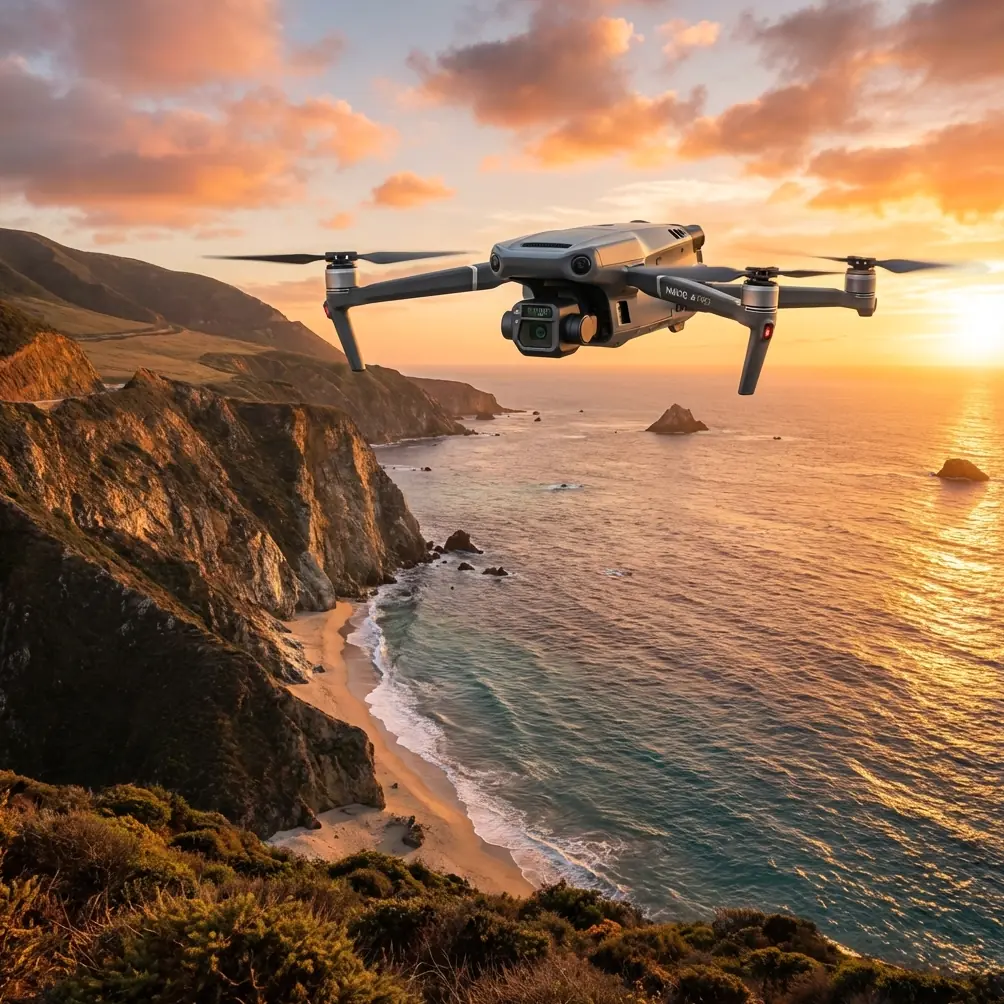
Expert Vineyard Tracking with Mavic 3T at Altitude
META: Master high-altitude vineyard tracking with the Mavic 3T. Learn thermal imaging techniques, flight planning, and precision agriculture workflows from drone experts.
TL;DR
- Thermal signature analysis enables early detection of vine stress invisible to standard RGB cameras at elevations above 2,000 meters
- Pre-flight sensor cleaning is critical for accurate photogrammetry data in dusty vineyard environments
- The Mavic 3T's O3 transmission maintains stable connectivity across challenging mountain terrain up to 8 km
- Proper GCP placement reduces positional errors to under 2 cm for actionable crop health maps
High-altitude vineyards present unique monitoring challenges that ground-based methods simply cannot address efficiently. The DJI Mavic 3T combines a 48MP wide camera, 12MP zoom lens, and 640×512 thermal sensor into a platform specifically engineered for precision agriculture workflows—this guide walks you through the complete tracking methodology I've refined over three growing seasons in mountain vineyard operations.
Why High-Altitude Vineyards Demand Specialized Drone Solutions
Mountain vineyards operating between 1,500 and 3,000 meters face environmental pressures that lowland operations never encounter. Thinner atmosphere reduces lift efficiency, temperature swings stress both equipment and crops, and rugged terrain creates communication dead zones.
Traditional scouting methods require workers to traverse steep slopes manually—dangerous, time-consuming, and fundamentally incomplete. A single worker might cover 2-3 hectares daily. The Mavic 3T surveys that same area in under 15 minutes while capturing data across three spectral bands simultaneously.
The Thermal Advantage for Vine Health
Grapevines under water stress close their stomata to conserve moisture. This physiological response reduces transpiration, causing leaf temperatures to rise 2-4°C above healthy tissue. The Mavic 3T's thermal sensor detects these thermal signatures before visible symptoms appear—often 7-10 days earlier than human observation.
Expert Insight: Schedule thermal flights during the 10:00-14:00 window when solar loading maximizes temperature differentials between stressed and healthy vines. Early morning flights produce flat thermal profiles with minimal diagnostic value.
Pre-Flight Protocol: The Cleaning Step That Prevents Disasters
Before discussing flight operations, I need to address a safety-critical procedure that many operators overlook: sensor cleaning. Vineyard environments generate significant particulate matter—dust from access roads, pollen during flowering, and spray residue from treatments.
Sensor Cleaning Procedure
Contaminated sensors compromise both safety systems and data quality. The Mavic 3T's obstacle avoidance relies on clean vision sensors to function correctly. A dust film reduces detection range and can cause the aircraft to miss obstacles entirely.
Required cleaning sequence:
- Power off the aircraft completely before cleaning
- Use a rocket blower (never compressed air) to remove loose particles from all sensors
- Clean optical surfaces with lens-specific microfiber cloths using circular motions
- Inspect the thermal sensor window for residue that could create false hot spots
- Verify gimbal movement is smooth and unobstructed
- Check propeller surfaces for debris accumulation affecting balance
This 3-minute procedure has prevented two potential crashes in my operations when vision sensors were partially obscured by spray drift residue.
Flight Planning for Mountain Terrain
Effective vineyard tracking requires systematic coverage patterns adapted to slope conditions. The Mavic 3T's flight planning capabilities handle terrain following automatically, but proper configuration is essential.
Altitude Considerations
At 2,500 meters elevation, air density drops to approximately 74% of sea level values. This reduction affects both lift generation and battery performance. Plan for:
- 15-20% reduction in flight time compared to sea-level specifications
- Increased motor temperatures during aggressive maneuvers
- Reduced maximum payload capacity if using accessories
The Mavic 3T's 45-minute rated flight time typically yields 35-38 minutes of practical operation at high altitude. Hot-swap batteries become essential for covering larger vineyard blocks without returning to base.
Terrain Following Configuration
Mountain vineyards rarely present flat surfaces. Configure terrain following with these parameters:
- Set relative altitude to 30-40 meters AGL for thermal surveys
- Use 50-60 meters AGL for RGB photogrammetry missions
- Enable terrain following with high sensitivity for slopes exceeding 15 degrees
- Maintain 70% frontal overlap and 65% side overlap for accurate orthomosaic generation
Pro Tip: Create separate flight plans for thermal and RGB missions rather than attempting simultaneous capture. Optimal altitudes differ significantly, and thermal data requires slower flight speeds for proper sensor integration time.
Technical Comparison: Mavic 3T vs. Alternative Platforms
| Feature | Mavic 3T | Enterprise Competitor A | Agricultural Platform B |
|---|---|---|---|
| Thermal Resolution | 640×512 | 320×256 | 640×512 |
| Zoom Capability | 56× hybrid | 32× hybrid | None |
| Flight Time | 45 min | 42 min | 35 min |
| Transmission Range | 8 km O3 | 6 km | 5 km |
| Weight | 920g | 1,350g | 2,100g |
| Data Encryption | AES-256 | AES-128 | AES-256 |
| RTK Compatibility | Yes | Yes | Yes |
| Folded Portability | Excellent | Moderate | Poor |
The Mavic 3T's combination of thermal resolution, transmission reliability via O3 transmission technology, and portability makes it uniquely suited for vineyard operations requiring frequent repositioning across scattered blocks.
Establishing Ground Control Points for Precision Mapping
Accurate photogrammetry outputs require proper ground control. Without GCP references, positional errors can exceed several meters—unacceptable for precision agriculture applications where treatment zones must align with actual vine locations.
GCP Placement Strategy
For vineyard blocks under 10 hectares, deploy a minimum of 5 GCPs:
- One at each corner of the survey area
- One near the center
- Additional points at significant elevation changes
Use high-contrast targets measuring at least 60×60 cm for reliable detection at survey altitudes. Survey each point with RTK GPS to achieve sub-centimeter positional accuracy.
Processing Workflow
Post-flight processing transforms raw imagery into actionable intelligence:
- Import thermal and RGB datasets into photogrammetry software separately
- Align images using GCP coordinates for georeferencing
- Generate thermal orthomosaics with temperature calibration applied
- Create NDVI or stress index maps from RGB data
- Overlay thermal and vegetation indices to identify correlation patterns
- Export prescription maps for variable-rate applications
Maintaining Connectivity in Challenging Terrain
Mountain topography creates natural barriers to radio transmission. The Mavic 3T's O3 transmission system provides significant advantages over previous generations, but proper technique maximizes reliability.
Transmission Optimization
- Position the controller antenna perpendicular to the aircraft's location
- Avoid operating with the aircraft directly behind ridgelines
- Use the 8 km maximum range as a theoretical limit—practical operations should maintain 60-70% of maximum for safety margins
- Monitor signal strength indicators continuously during BVLOS operations where permitted
The dual-frequency transmission automatically switches between 2.4 GHz and 5.8 GHz bands to avoid interference, but dense vegetation can still attenuate signals. Plan flight paths that maintain line-of-sight during critical phases.
Data Security for Agricultural Intelligence
Vineyard health data represents significant competitive intelligence. The Mavic 3T implements AES-256 encryption for all transmitted data, preventing interception during flight operations.
Additional security measures include:
- Local data storage option to avoid cloud transmission
- Encrypted SD card support for data at rest
- Secure boot verification preventing firmware tampering
- Remote data wipe capability if aircraft is lost
Common Mistakes to Avoid
Flying during inappropriate thermal conditions: Overcast skies eliminate the solar loading necessary for meaningful thermal differentiation. Reschedule flights for clear conditions.
Neglecting battery temperature management: Cold mountain mornings can drop battery temperatures below safe thresholds. Pre-warm batteries to 20°C minimum before flight.
Insufficient overlap in steep terrain: Standard overlap settings assume flat ground. Increase overlap by 10% on slopes exceeding 20 degrees to prevent gaps in coverage.
Ignoring wind patterns: Mountain terrain generates complex wind patterns including downdrafts and rotors. Check conditions at multiple elevations before committing to extended flights.
Processing thermal data without calibration: Raw thermal values require atmospheric correction for accurate temperature readings. Always apply calibration using known reference temperatures.
Frequently Asked Questions
How does altitude affect the Mavic 3T's thermal sensor accuracy?
The thermal sensor maintains calibration accuracy across the Mavic 3T's operational altitude range. Atmospheric absorption between the aircraft and ground does increase with altitude, but at typical survey heights of 30-60 meters AGL, this effect introduces less than 0.5°C error—well within acceptable limits for agricultural stress detection.
Can the Mavic 3T operate effectively in vineyard spray conditions?
The aircraft carries an IP45 ingress protection rating, providing resistance to dust and water spray. Light mist or residual spray drift poses no operational risk. Avoid flying during active spray operations or immediately afterward when droplets remain airborne. Always clean sensors after operating in spray-affected environments.
What flight speed optimizes thermal data quality for vineyard surveys?
Thermal sensors require adequate integration time to produce accurate readings. For the Mavic 3T's 640×512 sensor, maintain flight speeds below 8 m/s during thermal capture. Higher speeds cause motion blur in thermal imagery, reducing the ability to detect subtle temperature variations indicating early stress.
Ready for your own Mavic 3T? Contact our team for expert consultation.