
Mavic 3T Guide: Tracking Vineyards in Mountains
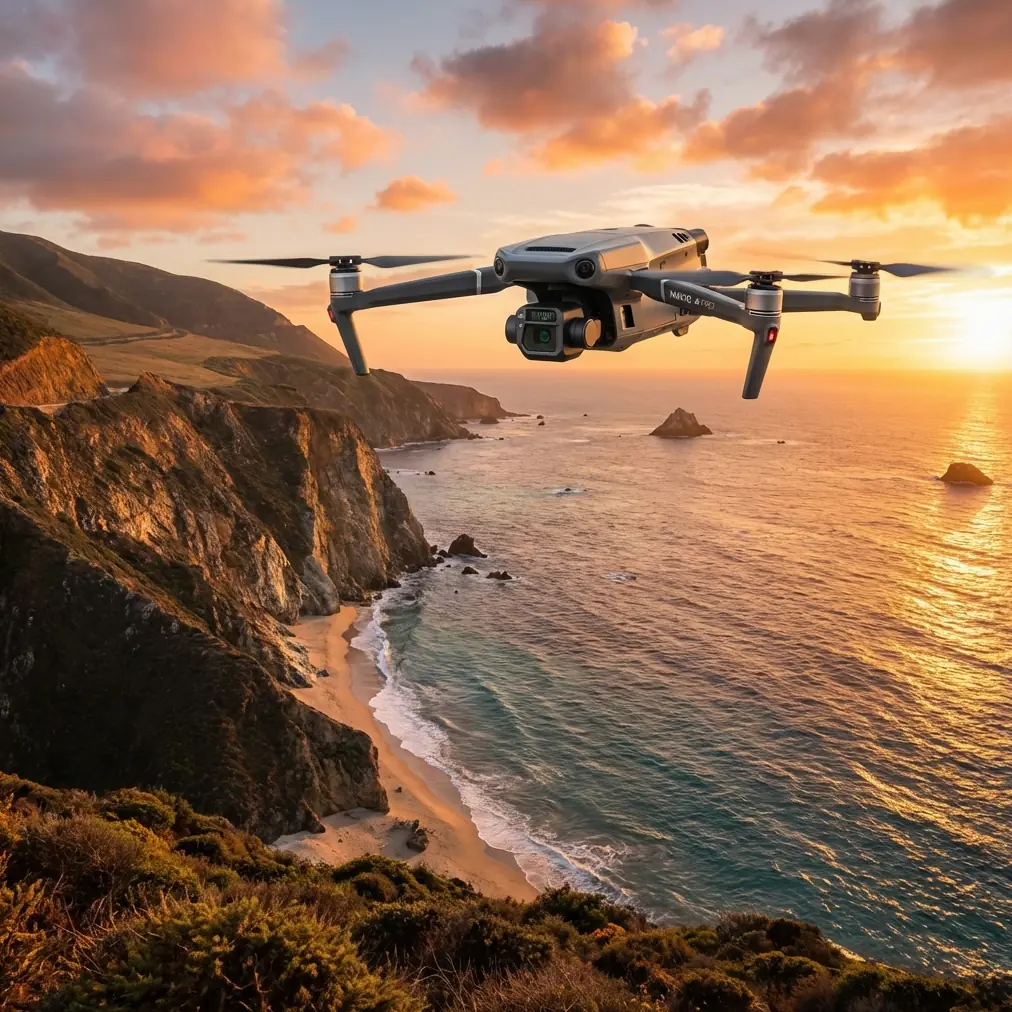
Mavic 3T Guide: Tracking Vineyards in Mountains
META: Learn how the DJI Mavic 3T transforms mountain vineyard tracking with thermal imaging, photogrammetry, and precision mapping. Expert tutorial inside.
By James Mitchell | Drone Mapping Specialist & Precision Agriculture Consultant
TL;DR
- The Mavic 3T's triple-sensor system (wide, zoom, and thermal) enables comprehensive vineyard health monitoring across steep mountain terrain where ground crews simply cannot operate efficiently.
- O3 transmission maintains a stable video feed up to 15 km, critical for BVLOS operations in valleys with signal-obstructing ridgelines.
- Thermal signature analysis detects irrigation failures, disease onset, and frost damage days before visible symptoms appear on the vine canopy.
- This tutorial walks you through the complete workflow—from GCP placement on mountain slopes to orthomosaic generation and thermal data interpretation.
Why Mountain Vineyards Demand a Different Drone Approach
Tracking vineyard health on flat terrain is straightforward. Tracking it across 30–45 degree mountain slopes, with microclimates shifting every hundred meters of elevation, is an entirely different challenge. Standard agricultural drones with single RGB sensors miss the subsurface stress signals that determine whether a harvest thrives or fails.
The DJI Mavic 3T was engineered for enterprise inspection and surveying, but its combination of portability, thermal capability, and transmission range makes it arguably the best tool available for mountain viticulture monitoring. Where competitors like the Autel EVO II Dual 640T offer thermal imaging, the Mavic 3T pairs its 640 × 512 thermal sensor with a 48 MP wide camera and a 12 MP zoom camera—giving you three distinct data layers in a single flight.
This guide covers every step of deploying the Mavic 3T for vineyard tracking in mountainous terrain, from pre-flight planning to actionable data output.
Equipment Checklist Before Heading to the Field
Mountain vineyard missions require more preparation than lowland flights. Elevation changes, wind corridors, and limited vehicle access mean you need to be self-sufficient once you reach the site.
Essential gear:
- DJI Mavic 3T with DJI RC Pro Enterprise controller
- 3–4 hot-swap batteries (each provides approximately 45 minutes of flight time)
- 5+ ground control points (GCPs) with RTK-grade GPS coordinates
- A portable RTK base station or NTRIP connection for centimeter-level accuracy
- MicroSD cards (minimum 64 GB per flight block)
- A wind meter—mountain thermals can spike unpredictably
- DJI Pilot 2 app with pre-loaded waypoint missions
Pro Tip: Hot-swap batteries are your lifeline in remote mountain locations. Unlike competitors that require a full power-down to change batteries, the Mavic 3T's hot-swap system keeps your mission parameters loaded and GPS lock intact. On a recent job covering 120 hectares of terraced Malbec vineyards in Mendoza, I completed the entire survey on four batteries without a single mission reset.
Step 1: Planning Your Flight Grid for Steep Terrain
Flat-field flight planning assumes uniform ground sample distance (GSD). Mountain vineyards violate that assumption entirely. A vine row at 800 m elevation and another at 950 m elevation within the same block will produce wildly inconsistent data if you fly a single-altitude grid.
How to compensate:
- Use terrain-follow mode in DJI Pilot 2, which adjusts altitude relative to the ground surface using onboard sensors and loaded DEM data.
- Set your flight altitude to 60–80 m AGL (above ground level) for RGB photogrammetry. This yields a GSD of roughly 1.5–2.0 cm/pixel with the wide camera.
- For thermal passes, reduce altitude to 40–50 m AGL to maximize thermal signature resolution at the vine canopy level.
- Plan 75% frontal overlap and 70% side overlap—steep terrain causes more geometric distortion, so higher overlap ensures cleaner photogrammetric stitching.
- Schedule thermal flights for pre-dawn or post-sunset when the canopy temperature differential is most pronounced.
Handling Wind Corridors
Mountain valleys funnel wind. The Mavic 3T handles sustained winds up to 12 m/s, but gusts around ridgelines can exceed that. Plan your grid so the drone flies parallel to the prevailing wind on its longest legs, reducing battery drain and gimbal compensation errors.
Step 2: GCP Placement on Mountain Slopes
Ground control points are non-negotiable for survey-grade photogrammetry. On flat ground, you might get away with 4–5 GCPs for a moderate block. On mountain terrain, you need more—and placement strategy matters enormously.
GCP placement rules for slopes:
- Place GCPs at every significant elevation change—top of slope, mid-slope, and valley floor
- Minimum 5 GCPs per 50-hectare block, with 8–10 recommended for slopes exceeding 25 degrees
- Use high-contrast targets (minimum 30 cm × 30 cm) that are visible in both RGB and thermal channels
- Record coordinates with an RTK GPS unit achieving ±2 cm horizontal accuracy
- Anchor targets securely—mountain wind will relocate unsecured markers within minutes
The Mavic 3T's AES-256 encrypted data transmission ensures your GCP-tagged imagery and flight logs remain secure from capture to cloud processing. For operations working with proprietary vineyard data or client contracts requiring data security compliance, this encryption standard matches what enterprise clients expect.
Step 3: Executing the Multi-Sensor Flight
Here is where the Mavic 3T's triple-sensor advantage becomes tangible. Rather than flying separate missions with separate drones—one for RGB, one for thermal—you capture both datasets simultaneously.
Recommended mission sequence:
- Dawn thermal flight (40–50 m AGL): Capture thermal signature data while temperature differentials are highest. Irrigation leaks, stressed root zones, and early-stage Botrytis infections produce distinct thermal patterns against the cool morning canopy.
- Mid-morning RGB flight (60–80 m AGL): After the dew has evaporated and light is even (avoid harsh midday shadows on north-facing slopes in the Southern Hemisphere), execute the photogrammetry grid.
- Targeted zoom inspection (manual flight): Use the 56× max hybrid zoom to visually inspect flagged anomalies—damaged trellis systems, erosion channels, or pest clusters—without landing.
Camera Settings for Vineyard Mapping
| Parameter | Wide Camera (RGB) | Thermal Camera | Zoom Camera |
|---|---|---|---|
| Resolution | 48 MP | 640 × 512 | 12 MP |
| Mode | Timed interval (2s) | Timed interval (2s) | Manual trigger |
| ISO | Auto (100–400) | N/A | Auto (100–800) |
| Shutter | 1/1000s minimum | N/A | 1/800s minimum |
| File Format | JPEG + DNG (RAW) | R-JPEG (radiometric) | JPEG |
| Color Palette (Thermal) | N/A | Ironbow or White Hot | N/A |
Expert Insight: The R-JPEG thermal format is critical. Unlike standard thermal JPEGs, radiometric JPEGs embed per-pixel temperature data, allowing you to extract absolute temperature readings in post-processing software like DJI Terra or Pix4Dfields. I have seen operators lose entire thermal datasets because they captured in standard JPEG mode and could not perform quantitative analysis afterward. Always verify R-JPEG is enabled before takeoff.
Step 4: Processing and Interpreting Vineyard Data
Once you have landed and swapped your data cards, the real analytical work begins.
Photogrammetry processing pipeline:
- Import RGB imagery into DJI Terra, Pix4Dmapper, or Agisoft Metashape
- Tag GCPs in the point cloud for georeferencing
- Generate orthomosaic, DSM (Digital Surface Model), and 3D point cloud outputs
- Export at native GSD for maximum vineyard row detail
Thermal analysis pipeline:
- Import R-JPEG thermal data into Pix4Dfields or QGIS with thermal plugins
- Generate a thermal orthomosaic
- Apply a consistent temperature scale across the entire vineyard block
- Overlay thermal data onto the RGB orthomosaic for cross-referencing
What Thermal Signatures Reveal in Vineyards
- Cool patches in otherwise warm canopy: Likely over-irrigated zones or standing water near roots
- Hot spots on individual vines: Water stress, blocked drip emitters, or root damage
- Linear cool streaks across rows: Subsurface water flow or drainage channel interference
- Diffuse warm zones at canopy edges: Early fungal infection generating metabolic heat before visible symptoms emerge
Technical Comparison: Mavic 3T vs. Competing Enterprise Drones
| Feature | DJI Mavic 3T | Autel EVO II Dual 640T | Parrot Anafi USA |
|---|---|---|---|
| Thermal Resolution | 640 × 512 | 640 × 512 | 320 × 256 |
| RGB Resolution | 48 MP | 8K (single sensor) | 21 MP |
| Zoom Capability | 56× hybrid | 16× digital | 32× |
| Max Flight Time | 45 min | 38 min | 32 min |
| Transmission Range | 15 km (O3) | 15 km | 4 km |
| Data Encryption | AES-256 | AES-256 | AES-256 |
| Weight | 920 g | 1191 g | 500 g |
| Terrain Follow | Yes | Yes | Limited |
| Hot-Swap Batteries | Yes | No | No |
The Mavic 3T's combination of lower weight, longer flight time, and triple-sensor array makes it the strongest choice for mountain vineyard work where portability and data richness per flight are both critical. The Anafi USA is lighter but sacrifices thermal resolution significantly—320 × 256 versus 640 × 512—which translates to losing fine-grained vine-level thermal detail on wide-area surveys.
Common Mistakes to Avoid
1. Flying thermal passes at midday. Solar loading saturates the canopy with heat and eliminates the temperature differentials you need. Fly thermal at dawn or dusk. Period.
2. Neglecting terrain-follow on slopes. A fixed-altitude mission over a 200 m elevation change means your GSD varies wildly from hilltop to valley. Your photogrammetry software will struggle to stitch cleanly, and your thermal data will be inconsistent.
3. Insufficient GCP density on steep terrain. Four GCPs work on flat ground. Mountain vineyards need 8–10 minimum for blocks with significant elevation variation. Skipping this step introduces meter-scale positional errors in your orthomosaic.
4. Ignoring wind patterns between passes. Mountain winds change direction and intensity throughout the morning. What was a calm 3 m/s breeze at dawn may become a 12 m/s ridge gust by mid-morning. Check conditions before every battery swap.
5. Storing batteries in extreme heat or cold. Mountain environments swing from cold mornings to hot afternoons. Keep batteries in an insulated case between 20–28°C for optimal performance and longevity.
6. Forgetting to calibrate the thermal sensor. The Mavic 3T performs a flat-field correction (FFC) automatically, but in rapidly changing ambient temperatures—common at altitude during sunrise—trigger a manual FFC every 5–10 minutes for the most accurate radiometric readings.
Frequently Asked Questions
Can the Mavic 3T operate in BVLOS conditions for large vineyard blocks?
The Mavic 3T's O3 transmission system supports ranges up to 15 km with stable video and telemetry, making it technically capable of BVLOS flights. However, BVLOS operations require regulatory approval in most jurisdictions—typically a waiver from your national aviation authority. The drone's ADS-B receiver (available via enterprise accessories) aids situational awareness for extended-range operations. Always confirm local BVLOS regulations before planning missions beyond visual line of sight.
How many hectares can I cover on a single battery in mountain terrain?
This depends on altitude, wind, and overlap settings. At 70 m AGL with 75/70% overlap and moderate wind (5–7 m/s), expect to cover approximately 25–35 hectares per battery on gentle slopes. Steep terrain with aggressive terrain-follow reduces this to roughly 18–25 hectares because the drone expends more energy on constant altitude adjustments. With 3–4 hot-swap batteries, a single morning session can map 80–120+ hectares.
What software works best for processing Mavic 3T vineyard data?
DJI Terra integrates seamlessly with Mavic 3T flight data and handles both RGB photogrammetry and thermal mapping. For advanced agricultural analysis, Pix4Dfields excels at generating vegetation index maps and thermal overlays specifically designed for crop monitoring. Agisoft Metashape offers the most flexible photogrammetric processing for complex terrain models. For vineyard managers who need quick field-side results, DJI Terra's cluster processing option can generate a thermal orthomosaic in under 30 minutes for a typical 50-hectare block.
Ready for your own Mavic 3T? Contact our team for expert consultation.