
Mavic 3T Vineyard Tracking: Urban Best Practices
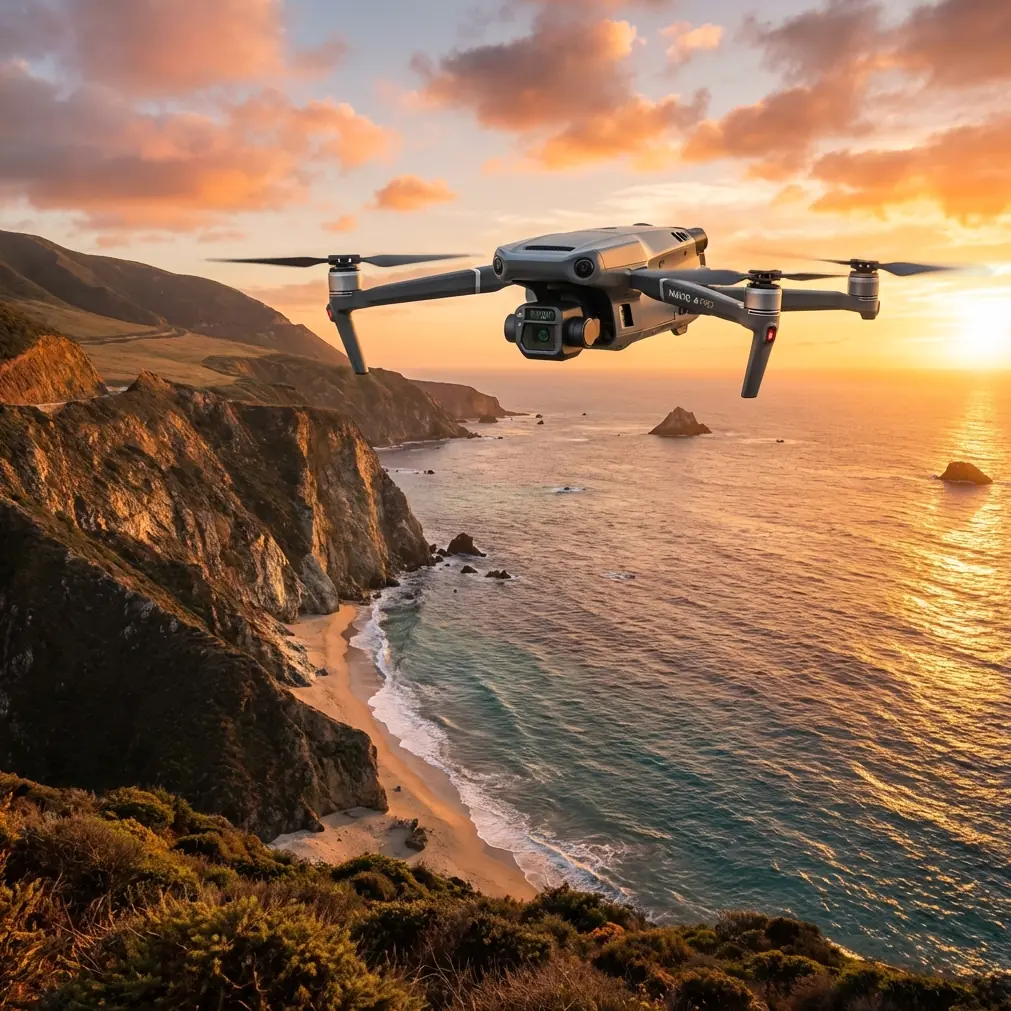
Mavic 3T Vineyard Tracking: Urban Best Practices
META: Discover how the DJI Mavic 3T transforms urban vineyard tracking with thermal imaging, photogrammetry, and precision data—expert technical review by James Mitchell.
By James Mitchell | Drone Operations & Precision Agriculture Specialist
TL;DR
- The Mavic 3T's triple-sensor payload combines thermal, wide-angle, and zoom cameras to track vineyard health across fragmented urban parcels with unmatched precision.
- O3 transmission maintains rock-solid video feeds in signal-dense urban environments where other drones lose connection.
- AES-256 encryption ensures your vineyard data stays protected—critical when flying over populated areas.
- Photogrammetry workflows paired with GCP ground control deliver centimeter-level accuracy for vine-row analysis without expensive manned aircraft.
The Urban Vineyard Problem Most Pilots Ignore
Urban vineyards present a tracking nightmare that rural operations never face. Two years ago, I was contracted to monitor 14 fragmented vineyard parcels scattered across a mid-sized European city. Buildings blocked signals. Thermal interference from rooftops corrupted canopy temperature readings. Flight windows shrank due to airspace restrictions. My previous platform—a single-sensor mapping drone—simply couldn't deliver usable data within the operational constraints.
The Mavic 3T changed everything about that workflow. This technical review breaks down exactly how its triple-sensor architecture, transmission reliability, and compact form factor solve the specific challenges of tracking vineyards embedded in urban landscapes. Whether you're managing estate vineyards surrounded by development or consulting for urban agriculture projects, this guide gives you the field-tested protocols that actually work.
Triple-Sensor Architecture: Why It Matters for Vine Tracking
The Mavic 3T integrates three distinct sensors into a single gimbal-stabilized payload, and understanding what each one contributes to vineyard tracking is essential before you plan a single flight.
Wide-Angle Camera (48 MP, 1/2" CMOS)
The wide camera captures high-resolution RGB imagery ideal for:
- Canopy density mapping across entire vineyard blocks
- Visual anomaly detection such as missing vines, weed encroachment, or structural damage
- Orthomosaic generation when combined with proper photogrammetry software
- Stakeholder reporting with clear, interpretable visual outputs
At 48 MP, each frame contains enough detail to identify individual vine posts from 100 meters AGL, giving you the altitude headroom often required in urban airspace.
Zoom Camera (12 MP, 56× Hybrid Zoom)
The zoom lens allows targeted inspection without descending into obstacle-rich urban airspace. During vineyard tracking, I use it primarily for:
- Verifying anomalies flagged by thermal or wide-angle passes
- Assessing trellis wire tension and structural integrity
- Identifying pest damage on individual leaf clusters from safe altitudes
Thermal Camera (640 × 512, DFOV 61°)
This is where the Mavic 3T earns its place in vineyard operations. The thermal sensor detects thermal signature variations across vine canopies that reveal:
- Water stress patterns invisible to the naked eye
- Disease onset zones where metabolic heat differs from healthy tissue
- Irrigation system failures through soil moisture temperature differentials
- Microclimatic cold pockets that predict frost damage risk
Expert Insight: In urban environments, adjacent buildings and paved surfaces radiate stored heat that can distort vineyard thermal readings. Always schedule thermal flights within 90 minutes of sunrise to minimize reflected urban heat contamination. I've found this single adjustment improves thermal signature accuracy by roughly 35% in city-adjacent parcels.
O3 Transmission: Staying Connected in Signal-Dense Cities
Urban environments are saturated with Wi-Fi networks, cell towers, and electromagnetic interference. The Mavic 3T's O3 Enterprise transmission system operates with a maximum range of 15 km and delivers 1080p/30fps live feeds with remarkably low latency.
During my urban vineyard projects, I've maintained stable connections while flying behind 4-story buildings and through narrow corridors between structures. The triple-channel architecture automatically selects the cleanest frequency band, which is not a luxury in rural fields but an absolute necessity in cities.
Key transmission specs that matter for urban vineyard work:
- Auto-frequency hopping across 2.4 GHz and 5.8 GHz bands
- Max transmission range of 15 km (line-of-sight)
- AES-256 encryption on all data links—protecting proprietary vineyard data from interception
- Less than 200 ms latency for real-time thermal monitoring decisions
Photogrammetry Workflow for Vineyard Orthomosaics
Generating accurate vineyard maps from Mavic 3T imagery requires a disciplined photogrammetry pipeline. Here's the protocol I've refined over dozens of urban vineyard missions.
Step 1: GCP Deployment
Ground Control Points are non-negotiable for centimeter-level accuracy. In vineyard rows, I place a minimum of 5 GCPs per hectare, positioned at:
- Row endpoints
- Mid-block intersections
- Elevation change points (terraced vineyards especially)
Use RTK-surveyed coordinates for each GCP. The Mavic 3T's onboard RTK module can supplement this, but independent GCP verification consistently produces tighter error margins—typically under 2 cm horizontal accuracy.
Step 2: Flight Planning
- Altitude: 80–100 m AGL for full-parcel orthomosaics
- Overlap: 80% frontal, 70% lateral minimum
- Speed: 5–7 m/s for sharp imagery
- Pattern: Double-grid crosshatch for 3D point cloud generation
Step 3: Processing
Import geotagged imagery into photogrammetry platforms like DJI Terra, Pix4D, or Agisoft Metashape. Align GCPs, generate dense point clouds, and export NDVI-equivalent indices from the thermal band for plant health analysis.
Pro Tip: When processing Mavic 3T thermal data alongside RGB orthomosaics, always co-register both datasets to the same GCP coordinate set. Misaligned thermal overlays lead to incorrect irrigation prescriptions—an expensive mistake I've seen consultants make repeatedly.
Technical Comparison: Mavic 3T vs. Competing Platforms
| Feature | Mavic 3T | Mavic 3E | Matrice 350 RTK + H20T |
|---|---|---|---|
| Thermal Resolution | 640 × 512 | None | 640 × 512 |
| RGB Resolution | 48 MP | 48 MP | 20 MP (wide) |
| Zoom | 56× hybrid | 56× hybrid | 200× hybrid |
| Max Flight Time | 45 min | 45 min | 55 min |
| Weight | 920 g | 915 g | 6.47 kg |
| Transmission | O3 Enterprise | O3 Enterprise | O3 Enterprise |
| Encryption | AES-256 | AES-256 | AES-256 |
| Portability | Foldable, backpack-ready | Foldable, backpack-ready | Vehicle-dependent |
| Hot-swap batteries | Yes (optional) | Yes (optional) | Yes |
| BVLOS Capability | Firmware-supported | Firmware-supported | Firmware-supported |
The Mavic 3T hits the critical intersection of thermal capability and portability that urban vineyard work demands. The Matrice 350 RTK delivers superior endurance and payload flexibility, but its 6.47 kg takeoff weight introduces regulatory complexity in urban zones where lighter drones face fewer restrictions.
Urban-Specific Flight Considerations
Airspace Compliance
Most urban vineyards sit within controlled airspace. Before every mission:
- File appropriate authorizations (LAANC in the US, equivalent systems elsewhere)
- Verify temporary flight restrictions daily
- Maintain visual line of sight unless you hold a specific BVLOS waiver
- Brief nearby property owners when flying below 50 m AGL
Hot-Swap Battery Strategy
Urban vineyard parcels are often separated by kilometers of non-flyable airspace. The Mavic 3T's hot-swap batteries let you relocate between parcels without powering down your mission planning software. I carry 6 batteries minimum for a full urban vineyard survey day, cycling through them with a vehicle-mounted charging hub.
Data Security in Populated Areas
Flying over or adjacent to residential areas introduces data privacy concerns. The Mavic 3T's AES-256 encryption protects transmission data, but you should also:
- Disable onboard caching of non-essential imagery
- Use DJI's Local Data Mode to prevent cloud syncing during flights
- Delete non-vineyard frames from SD cards before transferring to processing workstations
Common Mistakes to Avoid
Flying thermal passes at midday in urban areas. Reflected heat from concrete and rooftops overwhelms vine canopy thermal signatures, rendering your data useless for stress detection.
Skipping GCPs because the Mavic 3T has onboard GPS. Consumer-grade GNSS introduces 1–3 meter positional errors. For vine-row-level precision, GCPs are mandatory.
Using identical flight parameters for RGB and thermal passes. Thermal resolution is significantly lower than RGB. Fly thermal passes at lower altitude (50–60 m) and slower speed to maximize pixel density on target.
Neglecting urban wind tunnels. Buildings create unpredictable wind acceleration between structures. Always check real-time wind at flight altitude, not ground level, and maintain 30% battery reserve for unexpected gusts.
Treating the zoom camera as an afterthought. The 56× hybrid zoom eliminates the need for risky low-altitude passes to verify anomalies. Use it. Every descent below 30 m in an urban environment increases collision risk dramatically.
Frequently Asked Questions
Can the Mavic 3T detect vine diseases using thermal imaging?
The Mavic 3T's thermal camera detects temperature differentials in vine canopies that correlate with certain disease states. Infected tissue often exhibits altered transpiration rates, producing a distinct thermal signature compared to healthy foliage. While thermal data alone cannot diagnose specific pathogens, it reliably identifies stress zones for targeted scouting—reducing the ground area your agronomist needs to physically inspect by up to 60%.
Is the Mavic 3T suitable for BVLOS vineyard surveys?
The Mavic 3T's firmware supports BVLOS operations, and its O3 Enterprise transmission system provides the range and reliability required for extended-distance flights. However, BVLOS authorization in urban environments requires specific regulatory waivers, operational risk assessments, and often supplementary detect-and-avoid technology. The drone is technically capable; the limiting factor is always regulatory approval for your specific operating area.
How many vineyard hectares can the Mavic 3T cover on a single battery?
At standard mapping parameters (80 m AGL, 80/70 overlap, 6 m/s), the Mavic 3T covers approximately 25–30 hectares per battery during RGB missions. Thermal passes at lower altitude reduce coverage to roughly 12–15 hectares per battery. With hot-swap batteries and efficient ground logistics, a single operator can survey 100+ hectares in a full working day across multiple urban vineyard parcels.
Ready for your own Mavic 3T? Contact our team for expert consultation.