
Expert Tracking with the Mavic 3T in Coastal Vineyards
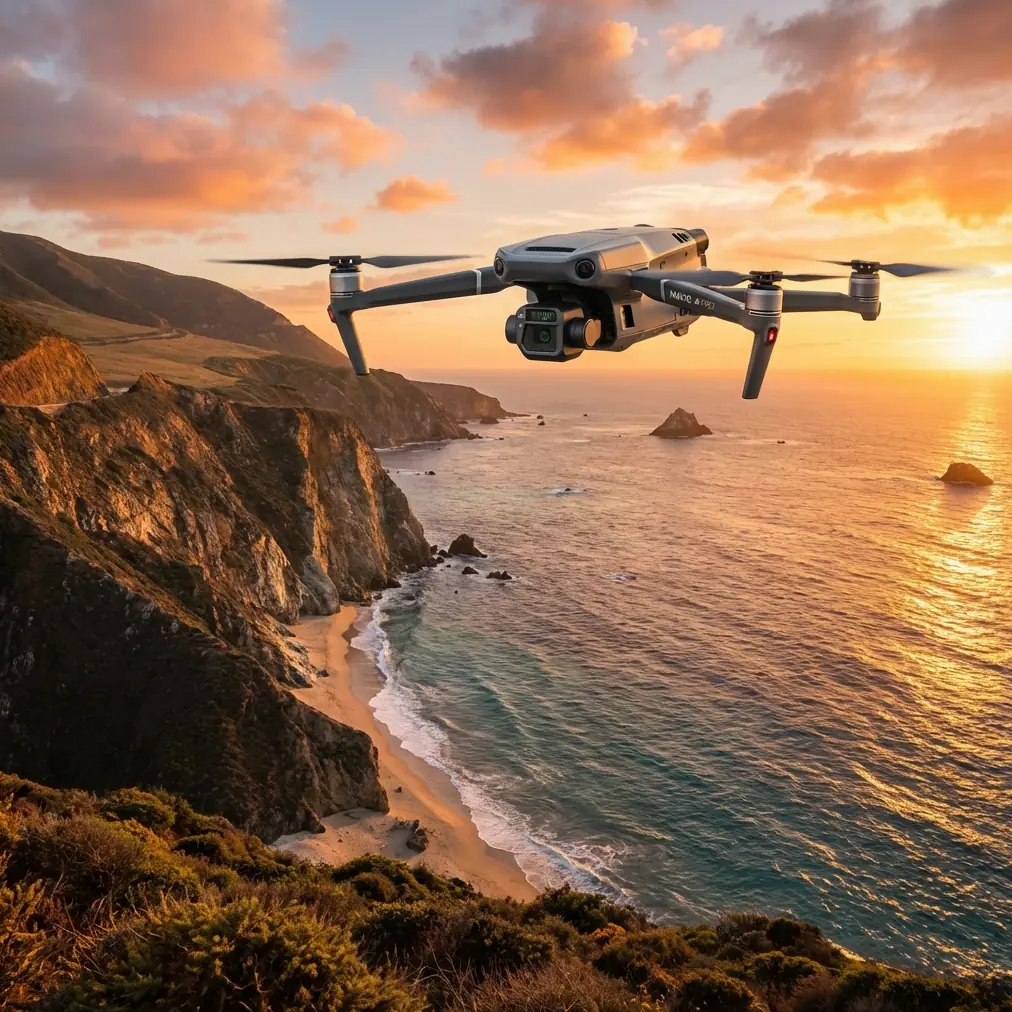
Expert Tracking with the Mavic 3T in Coastal Vineyards
META: A technical review of how the Mavic 3T performs in coastal vineyard tracking, from thermal signature analysis and EMI handling to O3 transmission, AES-256 security, and field workflow planning.
By Dr. Lisa Wang, Specialist
The Mavic 3T sits in an unusual position in the vineyard workflow. It is compact enough to launch quickly between rows, yet it carries enough sensing capability to produce decisions that matter the same day. For coastal growers and technical operators, that combination is not just convenient. It changes how often data can be collected, how safely the aircraft can be flown near variable terrain, and how much confidence a team can place in the resulting imagery.
Coastal vineyards are demanding environments for small UAVs. The flying itself can look easy from a distance: orderly blocks, recognizable boundaries, predictable management zones. The reality is more complex. Salt-laden air, uneven wind behavior, steep sections, reflective water nearby, fog intrusion, and patches of electromagnetic noise from pumps, utility lines, radios, and site infrastructure all complicate data capture. A drone that performs well on a broad inland farm may behave differently when asked to track plant stress along a coastal slope in marginal signal conditions.
That is where the Mavic 3T becomes interesting as a technical tool rather than a spec-sheet object.
The aircraft’s operational value begins with sensor fusion. In vineyard tracking, the visible camera helps teams interpret canopy structure, row continuity, surface conditions, irrigation evidence, and access issues. The thermal payload adds another layer: not a magic answer, but a fast way to locate heat differentials that deserve inspection. In practical field terms, thermal signature analysis can reveal irrigation irregularities, blocked emitters, stressed vine sections, equipment hotspots, or subtle temperature anomalies near storage and processing areas. Those signals are not final diagnoses. They are triage markers. That distinction matters because too many operators treat thermal imagery as a verdict when it should often be the beginning of a more disciplined field check.
On a coastal property, that thermal layer becomes especially useful during weather transitions. Early marine influence, uneven cloud cover, and shifting humidity can create nonuniform plant response across relatively short distances. If one block warms differently than an adjacent one, the Mavic 3T gives the viticulture team a way to see patterns before they become visible from the ground. This is where an aircraft with a stabilized thermal payload earns its place. A vineyard manager does not need a perfect cinematic frame. They need a repeatable one.
Repeatability is the hidden currency in drone operations. One useful flight is good. A dataset captured on the same pattern, with similar geometry and consistent timing, week after week, is where agronomic value starts to compound. The Mavic 3T is well suited to that discipline because it can be deployed quickly and flown with enough positional stability to support routine monitoring. For vineyard tracking, that speed matters more than many people realize. If an operator can launch in a narrow weather window, inspect a suspect block, and return before the marine layer thickens or afternoon gusts build, the aircraft has delivered something more valuable than headline specifications: operational timing.
The transmission link is another major piece of the story. DJI’s O3 transmission system matters in vineyards because terrain and vegetation can interfere with clean line-of-sight even over modest distances. A ridgeline, a stand of trees, winery structures, and row orientation can all affect link quality. In a coastal scenario, radio performance may also be influenced by external infrastructure and reflections from nearby surfaces. O3 is not simply about flying farther. Its significance is that it helps preserve command confidence and video reliability in the moments when the aircraft dips behind a contour or skirts the edge of a block with partial obstruction. Operators who understand RF behavior know that a stable link reduces workload, and reduced workload improves mission quality.
That point becomes sharper when electromagnetic interference enters the picture.
In vineyard environments, electromagnetic interference often appears in localized pockets rather than across the whole property. You may see it near pump houses, transformer areas, repeater installations, buried utility corridors, or maintenance sheds with active equipment. When the Mavic 3T encounters EMI, the operator’s reaction should be procedural, not improvised. I recommend watching for early indicators first: inconsistent signal bars, delayed live view, unusual compass prompts, or brief control hesitation. If those signs appear, one of the simplest and most effective adjustments is antenna orientation.
Too many pilots treat controller antennas as static hardware instead of active tools. With the Mavic 3T, careful antenna adjustment can materially improve link integrity. The goal is not to point the antenna tips directly at the aircraft. It is to align the broad face of the antennas relative to the drone’s position to maximize the signal path. In a coastal vineyard with cross-slope flying, that may mean changing your own stance, stepping a few meters away from a metal fence, or rotating the controller as the aircraft transitions from one block to another. Small changes can clean up a noisy link surprisingly well. If EMI persists, it is usually wiser to re-stage the pilot position than to force the mission from a compromised location. That is a fieldcraft issue, not a technology issue.
Security also deserves more attention than it usually gets in agricultural drone discussions. The Mavic 3T supports AES-256 data security, and that is operationally significant for vineyards managing sensitive imagery. Thermal and visible datasets can expose more than crop stress. They may reveal infrastructure layouts, access routes, equipment placement, worker patterns, and production-adjacent facilities. For estates concerned about privacy, biosecurity, or internal operational confidentiality, secure transmission and data handling are not abstract IT talking points. They are part of the trust model for drone adoption. A small aircraft collecting spatially rich information over a premium agricultural site should be held to a high standard.
The Mavic 3T also fits well into a mixed workflow that includes both rapid inspection and structured mapping. It is not always described first as a photogrammetry platform, yet in practice many teams use it alongside mapping procedures to create decision-ready records. For coastal vineyards, that can be valuable when tracking erosion edges, drainage movement, row changes, replant sections, or access-road deformation after weather events. If the objective is measurement rather than simple observation, GCP placement becomes a critical discipline. Ground control points help anchor the map to real-world coordinates and improve consistency across repeated surveys. Without that rigor, teams often overestimate what their map can support.
This matters because vineyard decisions are spatial decisions. If a stress zone appears in thermal imagery and the team wants to compare it to irrigation infrastructure, terrain breaks, or previous orthomosaics, alignment quality matters. A visually impressive map with weak control can create false confidence. The better workflow is straightforward: use the Mavic 3T for fast thermal screening, identify suspect zones, then capture or integrate geospatially controlled data where measurement accuracy matters. That is a more mature use of the platform than treating every flight as either a pure inspection or a pure mapping mission.
Battery workflow is another area where the Mavic 3T earns practical respect. In vineyards, travel time between blocks can waste more operational energy than actual flying. Batteries that can be changed quickly keep the mission moving, especially when the team is racing light, fog, or labor schedules. In the field, people often refer to this loosely as a hot-swap workflow, even if best practice still requires disciplined power and safety checks between sorties. The real point is continuity. A compact aircraft that returns, swaps packs efficiently, and launches again with minimal friction enables a denser sampling schedule across multiple blocks in one morning. That is a real advantage in coastal monitoring, where environmental conditions can shift within an hour.
There is also a strategic reason the Mavic 3T attracts interest around advanced operations such as BVLOS discussions, even where actual flights remain bound by local regulations and approvals. The aircraft’s transmission reliability, imaging flexibility, and compact field footprint make it relevant to organizations thinking ahead about corridor-style monitoring, distributed estates, and remote risk inspection. For vineyard groups operating across separated parcels, the appeal is obvious. Still, professionalism requires restraint here. BVLOS is not a casual feature claim. It is a regulatory and safety framework. The aircraft may have characteristics that support those conversations, but the mission must remain inside the legal operating envelope unless proper authorization is in place.
What I appreciate most about the Mavic 3T in vineyard tracking is that it encourages a disciplined operator to be more observant. It does not replace field agronomy. It sharpens it. A thermal anomaly in a coastal block may be irrigation-related, wind-exposure related, soil-depth related, or simply a temporary artifact from timing and weather. The aircraft helps narrow the search. That saves labor, but more importantly it improves how teams ask questions. Better questions lead to better intervention.
A good example is disease scouting support. The drone will not diagnose every vine issue from the air, and anyone claiming otherwise is overselling the platform. But it can identify patterns worth prioritizing. If a warm patch follows a drainage line, the team investigates moisture distribution. If irregular signatures cluster near a service corridor, they look at compaction or infrastructure leakage. If a block edge behaves differently than the interior, they test exposure assumptions. The Mavic 3T does not eliminate uncertainty. It reorganizes it into something manageable.
For teams setting up a coastal program, mission design matters as much as the aircraft itself. Fly at consistent times when comparing thermal datasets. Avoid mixing heavily shaded runs with sun-exposed passes if the goal is trend analysis. Keep overlap and altitude disciplined when collecting imagery intended for mapping support. Log environmental conditions. Note wind direction. Record marine layer behavior. And when signal quality softens near EMI sources, adjust antenna orientation before assuming the aircraft is at fault. Many field problems are really geometry problems.
This is also why operator training remains central. The Mavic 3T is accessible, but accessibility can create bad habits. A vineyard team gets the best results when the pilot understands RF propagation, thermal interpretation limits, geospatial control, and how coastal microclimates distort assumptions. A capable aircraft in unstructured hands produces attractive files. A capable aircraft in trained hands produces useful evidence. If your team is building that workflow and wants to compare mission design approaches, you can message a field specialist here and discuss practical deployment questions.
For coastal vineyard tracking, the Mavic 3T is not compelling because it tries to do everything. It is compelling because it covers the most time-sensitive layers of the job with unusual efficiency: visible inspection, thermal screening, secure data handling, dependable transmission, and rapid redeployment. The details that matter are not flashy. O3 transmission reduces operational friction in uneven terrain. AES-256 matters when site imagery is sensitive. GCP-supported workflows keep maps honest. Antenna adjustment can rescue a noisy mission near interference. Those are the details professionals remember after the marketing language fades.
That is the real measure of a field aircraft. Not whether it sounds advanced, but whether it keeps producing actionable information in the places where conditions are slightly messy, time is limited, and every sortie needs to justify itself.
Ready for your own Mavic 3T? Contact our team for expert consultation.