
Mavic 3T for Urban Vineyard Tracking: What Actually Gets
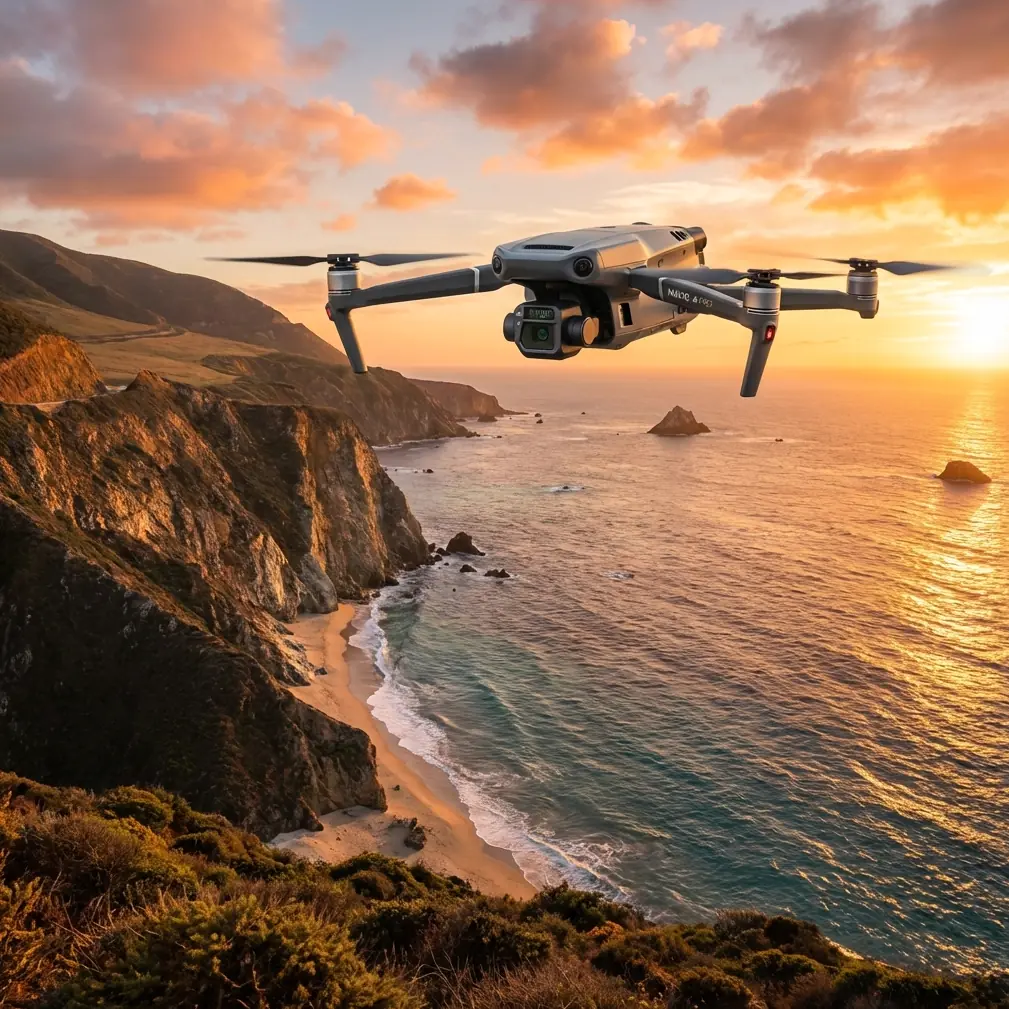
Mavic 3T for Urban Vineyard Tracking: What Actually Gets Easier in the Field
META: A practical expert look at how the DJI Mavic 3T helps track vineyard stress, heat patterns, and documentation challenges in urban growing environments.
Urban vineyards create a strange kind of operational puzzle. They look small on paper, but they rarely behave like simple sites. You’re dealing with fragmented blocks, neighboring buildings, access constraints, heat reflections from roads and walls, and a crop that can swing from healthy to stressed fast enough to punish slow decision-making. That is where the Mavic 3T starts to make sense—not as a generic drone with a thermal camera, but as a field tool that reduces friction where urban grape monitoring usually bogs down.
I say that from experience. Years ago, one of the hardest jobs I worked on involved a compact vineyard bordered by mixed-use development. The manager’s problem sounded straightforward: identify irrigation inconsistency and monitor vine vigor before visible damage spread. The reality was much messier. Ground inspections were slow. Fixed cameras missed context. Traditional visual drone flights showed canopy shape and color, but that only got us part of the way. The real issue was timing. By the time heat stress was obvious to the eye, the corrective window had already narrowed.
The Mavic 3T changes that workflow because it lets one operator collect several layers of evidence in one visit and make decisions while still standing on site.
The real problem with urban vineyard tracking
Vineyards in open rural blocks are one thing. Urban vineyards are another. You get microclimates stacked into a small footprint. One row catches reflected afternoon heat from a concrete façade. Another sits in a narrow wind corridor. A corner block near utility infrastructure dries differently than the rest. Shade lines move unpredictably. Surface temperatures become noisy. If you rely only on visible imagery, the site can look uniform when it isn’t.
That’s why thermal signature matters.
A thermal view does not replace agronomic judgment, but it gives you a direct path to patterns that are otherwise easy to miss. In grape production, that means spotting canopy temperature anomalies, irrigation irregularities, localized drainage issues, and heat concentration zones early enough to act on them. In a dense urban setting, it also helps separate “this vine block is stressed” from “this wall is hot and contaminating the scene,” which is a distinction that matters more than most operators expect.
The Mavic 3T’s value begins there: it combines thermal inspection capability with high-resolution visual observation in a package light enough to deploy quickly and often. For urban vineyard managers, frequent deployment is not a luxury. It is the entire point.
Why the Mavic 3T fits this specific job
The Mavic 3T is often discussed as if it belongs only in emergency response or broad asset inspection, but that misses a very practical agricultural use case. For vineyard tracking, especially in constrained urban plots, the aircraft’s strength is not raw size or endurance alone. It is the integration of thermal and visual sensing with fast setup and stable transmission.
The wide camera on the Mavic 3 series platform uses a 4/3 CMOS sensor. Operationally, that matters because vineyard managers are rarely looking for pretty images. They need enough visual fidelity to review row spacing, canopy consistency, trellis condition, access paths, edge encroachment, and environmental context without returning for a second flight. In an urban block, contextual detail around neighboring surfaces is critical, since those surfaces often explain abnormal heat readings.
Then there’s the thermal side. The Mavic 3T includes a thermal camera suited to identifying temperature differentials across a site. In vineyard work, those differences can point toward blocked emitters, overwatered sections, poor drainage, or stress pockets developing ahead of visible decline. The practical significance is simple: thermal lets the operator stop treating the vineyard as one unit. Instead, they can isolate zones and send the grower directly to the rows that deserve attention.
For this kind of work, that saves more than walking time. It preserves management bandwidth.
The field advantage of one aircraft collecting two kinds of truth
A good vineyard assessment is rarely built from a single image type. Visual imagery tells you what the canopy looks like. Thermal imagery tells you how the site is behaving. Put together, they become much more useful than either layer alone.
That is where the Mavic 3T earns its place.
If a row section appears visually thin, thermal can help confirm whether you’re looking at water stress, heat load, or a non-thermal issue like pruning inconsistency. If a thermal hotspot shows up near a perimeter, the visible image helps determine whether it’s crop-related or a false signal from nearby pavement, roofing, glass, or machinery. Urban vineyards produce plenty of misleading thermal artifacts. Without visual corroboration, operators can misread the scene.
This dual-sensor workflow is especially useful during seasonal transition periods when visual symptoms lag behind thermal behavior. In practice, that means you can flag an issue early, validate it with the visible feed, and brief the grower before the site visit is even over.
That kind of same-day interpretation is why compact thermal platforms matter.
O3 transmission is more useful than the spec sheet makes it sound
One of the details that often gets buried in product summaries is O3 transmission. On paper, it sounds like a connectivity feature. In the field, it is a confidence feature.
Urban vineyard operations are full of signal complications: buildings, trees, metal structures, narrow flying lanes, visual clutter, and RF noise. A stable transmission system matters because image confidence matters. If the operator is trying to evaluate subtle canopy temperature variations or inspect edge rows near obstructions, they cannot afford an inconsistent live feed.
O3 transmission supports cleaner situational awareness when flying complex urban plots. That does two things. First, it helps the pilot maintain safer, more predictable control in constrained environments. Second, it improves interpretation quality while airborne, which is especially valuable when you’re deciding whether a thermal anomaly is real enough to justify a closer pass or a ground check.
This is one of those features people treat as background technology until they work a difficult site. Then it becomes central.
AES-256 matters for vineyard clients more than many operators realize
Another detail from the Mavic 3 ecosystem that deserves more attention in commercial operations is AES-256 data security. People tend to associate secure transmission with highly sensitive sectors, but even civilian agricultural clients have reasons to care.
Urban vineyards can sit on private estates, hospitality properties, research plots, educational campuses, or mixed commercial developments. Their aerial data may reveal irrigation layouts, building relationships, operational timing, infrastructure weaknesses, or land-use details the client would rather not expose casually. If you are producing imagery for management decisions, insurance documentation, or long-term crop records, secure handling is part of professionalism.
AES-256 is operationally significant because it supports a more defensible workflow for clients who expect discretion. It is not just about cyber terminology. It is about trust in how site data is captured and transmitted.
Thermal signatures in vineyards: what they can and cannot tell you
Thermal is powerful, but it is not magic. The Mavic 3T can show you temperature contrast. Your job is to interpret why that contrast exists.
In urban vineyard tracking, thermal signatures often help with:
- spotting rows that are heating faster than neighboring rows
- identifying irrigation imbalance across zones
- revealing stressed corners near hardscape or reflected heat
- highlighting pooled moisture or poor drainage patterns
- checking whether remediation work changed field conditions over time
The key is to compare rather than chase isolated hotspots. A hot patch beside a stone wall at 3 p.m. may be normal. A repeating warm band halfway through multiple rows may not be. That’s where repeated flights become valuable. The Mavic 3T is compact enough that frequent monitoring is realistic, and repeatability is what turns thermal imagery into management intelligence.
Urban growers often need trend confirmation more than a dramatic one-off image. This aircraft supports that habit well.
Where photogrammetry and GCPs still fit
The Mavic 3T is not usually the first name people mention for pure photogrammetry, but that does not mean it has no place in documentation-driven vineyard work. In urban sites, you may not need a heavy mapping platform every time. Sometimes you need a fast, current record of terrain relationships, trellis geometry, access paths, drainage changes, or construction impact near the vineyard edge.
That is where disciplined image capture and GCP use can still matter.
If the operation requires repeatable spatial comparison, ground control points help tighten consistency between surveys. You may not be building a large engineering-grade map on every visit, but even modest geospatial discipline improves change tracking. For vineyard managers, that can mean clearer before-and-after records when adjusting irrigation zones, repairing drainage, modifying row access, or assessing adjacent urban development impacts.
The Mavic 3T’s strength in this context is not that it replaces a dedicated surveying workflow in every case. It is that it lets one team collect actionable thermal, visual, and basic spatial documentation without mobilizing a larger stack of equipment.
For many urban vineyards, that balance is exactly right.
Battery workflow matters more than people admit
Anyone who has worked crop monitoring long enough knows that field momentum is fragile. Once you stop to recharge, reorganize, cool equipment, or troubleshoot, the site changes. Sun angle shifts. Thermal readings drift. Shadows move. Staff attention disappears.
That’s why hot-swap battery workflow comes up so often in serious operational planning, even if people phrase it loosely in day-to-day conversation. What matters is minimizing downtime between sorties so the operator can maintain consistent collection conditions across the vineyard.
On a thermally sensitive site, continuity is valuable. If you can keep the mission sequence tight, your data is easier to compare. For an urban vineyard with multiple small blocks, terraces, or segmented access points, efficient battery handling can be the difference between one coherent survey window and a patchwork of mismatched observations.
The Mavic 3T is well suited to that kind of practical rhythm. It is not burdensome to move, set up, and relaunch, which keeps the operator focused on crop interpretation rather than logistics.
About BVLOS: why it comes up even on small agricultural sites
BVLOS gets mentioned in drone discussions so often that it can feel disconnected from real agricultural work, especially on compact urban plots. But the concept still matters because it shapes how professionals think about coverage, compliance, and operational design.
For most urban vineyard work, flights remain close and controlled. That is appropriate. Still, the broader industry movement around BVLOS has pushed manufacturers and operators toward stronger transmission reliability, better mission planning discipline, and more robust data workflows. Those improvements benefit even standard visual-line-of-sight operations.
In other words, you do not need to be flying far away to benefit from systems designed with professional-grade link stability and mission confidence in mind. The Mavic 3T inherits that maturity.
A better way to brief the vineyard manager
The biggest operational upgrade with the Mavic 3T is not airborne. It happens after landing.
Instead of telling the grower, “We think there may be stress in the west block,” you can show a thermal pattern, pair it with visible context, and point to likely environmental causes. Instead of sending them to inspect every row, you send them to the six that deserve immediate attention. Instead of treating the vineyard as a single management problem, you break it into zones with evidence.
That changes the conversation. It becomes less speculative and more directional.
If you’re building or refining that workflow and want to compare mission planning notes with a specialist, this field support channel is useful: message a Mavic 3T workflow expert.
What made this model easier than older methods
The past challenge I mentioned at the start stayed with me because it exposed the weakness of fragmented tools. We had visual imagery from one system, spot temperature checks from another, and ground observations from a third process. By the time everything was stitched together, the urgency had faded and the vineyard had already moved on.
The Mavic 3T simplifies that chain.
You launch one aircraft. You assess visual structure and thermal behavior in the same session. You maintain situational awareness through O3 transmission. You handle client data with AES-256-backed security. You can document repeatable site conditions, support targeted follow-up, and build a practical monitoring rhythm for a vineyard surrounded by urban complexity.
That is why this model works so well for the job. Not because it promises perfect diagnosis from the sky, and not because every vineyard needs thermal every week. It works because it shortens the distance between observation and action.
For urban grape production, that distance is where a lot of problems either get solved early or become expensive later.
Ready for your own Mavic 3T? Contact our team for expert consultation.