
Tracking Wildlife in Mountain Terrain With the Mavic 3T
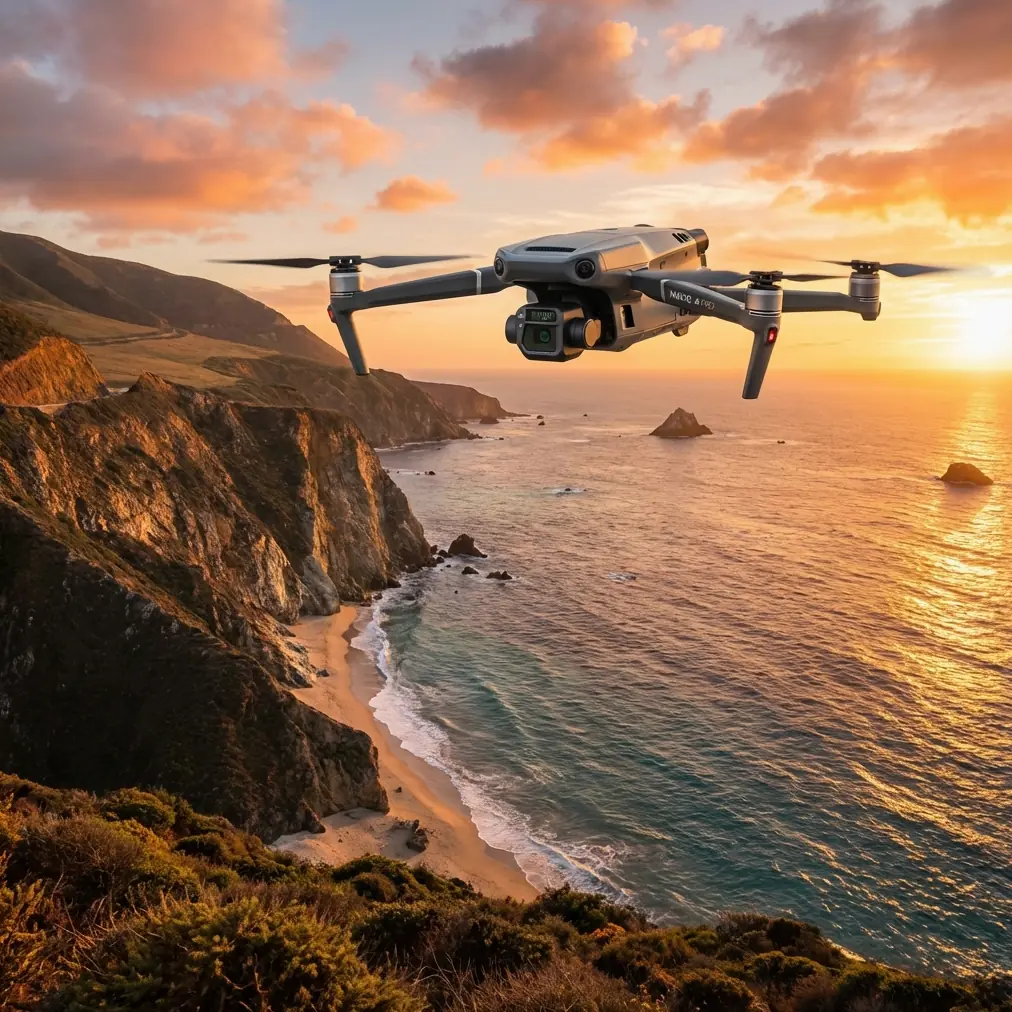
Tracking Wildlife in Mountain Terrain With the Mavic 3T: A Field Case Study on Altitude, Thermal Signatures, and Regulatory Reality
META: Expert case study on using the Mavic 3T for mountain wildlife tracking, with practical altitude guidance, thermal imaging strategy, O3 transmission considerations, and safety lessons from tighter drone rules in Beijing.
I’ve used thermal drones in rough country long enough to know that mountain wildlife work is rarely limited by camera specs alone. Terrain bends line of sight. Temperature swings scramble contrast. Wind creates small control problems that become big ones once you are working above treeline. With the Mavic 3T, the real skill is not simply launching and scanning. It is choosing the altitude and flight profile that gives you a usable thermal signature without disturbing animals or losing situational discipline.
This matters more now because the operating environment around drones is tightening. A recent BBC report by Laura Bicker highlighted that China has imposed stronger restrictions in Beijing, including limits on drone sales, with authorities citing public safety. That story is not about wildlife surveys in the mountains, but it says something every serious Mavic 3T operator should pay attention to: access and trust are becoming operational variables. If regulators believe drone use is outpacing safe practice, the result is not just paperwork. It can directly affect who flies, where they fly, and what platforms remain easy to deploy.
For conservation teams, ecologists, and mountain land managers using the Mavic 3T, the lesson is straightforward. Your field methods need to be defensible. Not merely effective.
The Mountain Scenario
Let’s ground this in a realistic assignment.
A wildlife team needs to track ungulate movement across a steep mountain basin at dawn. The goal is not cinematic footage. It is to locate animals moving out of the tree line, identify travel corridors, and log positions for later habitat analysis. In some sectors, the team also wants overlapping visible-light imagery for basic photogrammetry so animal sightings can be linked to slope features, drainage edges, and vegetation breaks. In a more advanced workflow, that visible dataset may later be tied to GCP-supported mapping, but the immediate mission is thermal detection first, terrain interpretation second.
This is where the Mavic 3T earns its place. It is compact enough for hike-in deployment, fast enough to reposition between ridges, and versatile enough to switch between thermal and visual perspectives without changing aircraft. In mountain work, that flexibility is more useful than raw payload complexity.
The Single Most Important Question: How High Should You Fly?
For this scenario, the best starting altitude is usually 80 to 120 meters above ground level, adjusted to terrain shape rather than a fixed launch-point height.
That range is not arbitrary.
Below roughly 80 meters AGL, the Mavic 3T can produce excellent detail on medium to large animals, but in mountain habitat you often narrow your search footprint too much. You also increase rotor-noise exposure and raise the chance of disturbing wildlife, especially in still morning air. In broken terrain, flying too low can also force constant vertical corrections as the slope rises into your flight path.
Above about 120 meters AGL, your thermal search becomes more efficient in terms of area covered, but you begin trading away confidence. A warm-bodied animal may still show up clearly as a thermal signature, yet the context around it becomes less interpretable. Was that heat source a deer bedded near a rock face, two animals partially screened by brush, or a false positive created by sun-warmed stone from the previous afternoon? In open alpine bowls, a higher pass can work. In mixed forest and ravine systems, it often costs more than it saves.
So my default recommendation for mountain wildlife tracking with the Mavic 3T is this:
- 80–100 m AGL when the objective is positive detection in broken ground, near treeline, or around brush pockets
- 100–120 m AGL when the terrain opens up and the mission is broad-area scanning over meadows, scree fields, or ridge transitions
The key phrase is above ground level, not above takeoff point. Mountain operators who ignore that distinction create avoidable risk. A legal and comfortable height over the valley floor can become an uncomfortably low pass as the drone tracks along a rising slope.
Why Dawn Usually Beats Midday
Thermal wildlife work in mountains lives and dies by contrast. Early morning normally gives the Mavic 3T the cleanest separation between animals and background terrain. Ground surfaces have not yet absorbed much solar load, shaded slopes remain cool, and warm-bodied movement stands out.
By late morning, rocks, exposed soil, and sparse grass patches can begin competing with the target. At that point, flight altitude decisions become less forgiving. If you are too high, the scene flattens. If you are too low, you may chase heat anomalies that waste battery and time.
The Mavic 3T lets you work this transitional window well, but only if your search pattern matches the thermal reality of the site. In practical terms, I prefer a two-pass method:
- Initial wide scan at about 110–120 m AGL to identify likely movement corridors
- Follow-up confirmation passes at 80–90 m AGL over hotspots or ambiguous signatures
That approach reduces unnecessary low-level exposure while preserving detail when it matters.
O3 Transmission Changes What Is Practical on a Mountain
One overlooked strength of the Mavic 3T in this use case is not the camera. It is the transmission link.
Mountain environments are full of places where line-of-sight feels clear from the pilot’s position but is actually vulnerable to small terrain interruptions. Saddles, outcrops, and tree shoulders can interfere with command confidence quickly. This is where O3 transmission has real field value. It supports a more stable live view and command link in challenging topography than many operators are used to from older compact platforms.
That does not mean mountains become BVLOS-friendly by default. They do not. It means the Mavic 3T gives the operator a better margin when working across folds in terrain, provided the mission remains compliant with local rules and visual observers are used where required.
For wildlife tracking, that stability matters because thermal interpretation is often a slow visual task. You are not just piloting. You are reading subtle movement and contrast changes in real time. If the downlink stutters at the moment an animal crosses from timber shadow into open ground, you may lose the best observation of the flight.
Thermal Signatures Are Easy to Spot. Correctly Interpreting Them Is Harder.
A lot of new operators assume mountain wildlife work is simple because mammals “glow” on thermal. Sometimes they do. Often the real skill is separating true biological heat from thermal clutter.
In steep country, the main sources of confusion are:
- rock surfaces holding residual heat
- livestock or working dogs outside the intended survey
- partially hidden animals showing only fragmented signatures
- temperature inversions in valley bottoms that reduce obvious contrast
This is why visible imagery still matters. Even if your primary mission is thermal detection, the Mavic 3T’s ability to quickly cross-check the scene in daylight view improves confidence dramatically. A thermal hotspot on a ridgeline may look like a perfect target until the visual feed reveals a dark boulder cluster with uneven heating. The reverse also happens: a weak thermal spot in scrub may become clearly animal-shaped once movement is visible.
If the mission includes habitat documentation, capturing visible imagery with sufficient overlap for later photogrammetry adds another layer of value. Even without a full survey-grade workflow, you can align sightings with terrain features and refine future search routes. If precision mapping is needed later, GCP-backed products can strengthen repeatability, especially for seasonal wildlife corridor studies.
Safety Is Not Separate From Performance
The BBC report about Beijing’s tighter drone restrictions may seem distant from a mountain wildlife mission, but the logic behind it is directly relevant. Public safety is increasingly the lens through which drone operations are judged.
For Mavic 3T users, especially those in conservation and environmental work, that means good flying is not just about getting the data. It is about demonstrating restraint, predictability, and respect for operational boundaries.
I’d break that down into three practical habits.
1. Plan for conservative altitude, not maximum coverage
Operators sometimes push altitude higher to finish a basin in fewer passes. In wildlife work, that can produce weak detections and create a false sense of survey completeness. Better to fly a disciplined grid or corridor pattern at a height where targets are still operationally meaningful.
2. Protect data like field evidence
Location data for sensitive wildlife can be as important as the imagery itself. The Mavic 3T’s AES-256 security matters here. If you are logging animal positions, denning activity, or migration routes, encrypted data handling is not a luxury feature. It is part of responsible stewardship.
3. Keep turnaround tight in cold mountain conditions
Battery efficiency drops in cold air, and dawn missions often start cold. If your workflow supports hot-swap batteries, the benefit is not convenience for its own sake. It keeps the aircraft cycling efficiently while preserving the team’s rhythm for repeat passes during the best thermal window. In wildlife tracking, missing fifteen minutes after sunrise can be more costly than missing half an hour in the middle of the day.
A Useful Parallel From Aerospace Testing
One of the less obvious insights from the reference material comes from a completely different aviation context: system validation under harsh conditions. A technical handbook section on aircraft fuel system suppression testing describes extensive compatibility and environmental analysis, including exposure tests at 10% and 100% HALON1301 concentrations for 100 hours, and repeated corrosion trials involving 1149°C hot gas flow with 100 cycles.
That has nothing to do with putting fire suppression agents on a Mavic 3T. But it does underline a mindset that serious aviation work has always required: systems should not be trusted casually; they should be understood under stress, temperature variation, and repeated exposure.
For mountain drone work, the operational equivalent is simple. Don’t assume your payload, batteries, seals, and transmission behavior will be identical from one ridge mission to the next. Cold launches, warming electronics, wind-driven hover corrections, and repeated climb segments all change aircraft behavior in subtle ways. The professionals who get reliable wildlife data are usually the same people who test methodically, review logs, and adjust procedures rather than relying on habit.
A second reference, from an aircraft supportability handbook, points to maintenance planning, support equipment analysis, and repair-level analysis as structured disciplines rather than afterthoughts. Again, not drone-specific on the page, but highly relevant in practice. If your Mavic 3T is being used repeatedly for conservation flights, maintenance cannot be reactive. Prop condition, battery health, sensor cleanliness, controller updates, and storage handling are part of mission quality.
The Field Workflow I Recommend
For a mountain wildlife team using the Mavic 3T, this is the workflow I would hand over before launch:
- Launch from a vantage point that preserves line of sight across the first search sector
- Begin at 110 m AGL for a broad thermal sweep
- Reduce to 85–90 m AGL for verification over active signatures
- Fly perpendicular to likely travel corridors where possible, not directly along them
- Use thermal first, visible second, for confirmation
- Mark terrain features associated with sightings for later photogrammetry review
- Keep battery swaps fast and deliberate during the dawn contrast window
- End the sortie before the terrain begins producing too many false thermal reads
If your team needs a second opinion on setting up that sort of mountain workflow, this Mavic 3T field planning contact is a sensible place to start.
What Makes the Mavic 3T Effective Here
The Mavic 3T is not magic. It does, however, fit mountain wildlife work unusually well because it combines thermal reconnaissance, visual confirmation, manageable field logistics, and dependable transmission in one platform. That combination matters more than any isolated specification.
For this specific scenario, I would not describe the aircraft as “best” in a universal sense. I would describe it as operationally well-matched. It lets small field teams move fast, work early, and gather observations that are useful beyond the immediate flight.
The biggest mistake is treating mountain wildlife tracking like a generic thermal search. It is not. The right altitude changes with slope geometry. The value of the thermal feed depends on time of day. The quality of your interpretation depends on visible cross-checks. The credibility of the mission depends on whether your operating practices can stand up to a stricter regulatory climate.
That last point is where the Beijing restrictions become relevant again. When authorities start tightening access in the name of public safety, every responsible civilian operator should hear the same message: precision and discipline are no longer optional extras. They are part of keeping these tools usable.
For mountain wildlife teams flying the Mavic 3T, the smartest altitude is rarely the highest one you can get away with. It is the lowest one that preserves context, respects the animals, and gives you thermal signatures you can trust.
Ready for your own Mavic 3T? Contact our team for expert consultation.