
Matrice 30 Series Corn-Field Inspections at 10 m/s Gusts: How O3 Enterprise Transmission Keeps the Link Locked
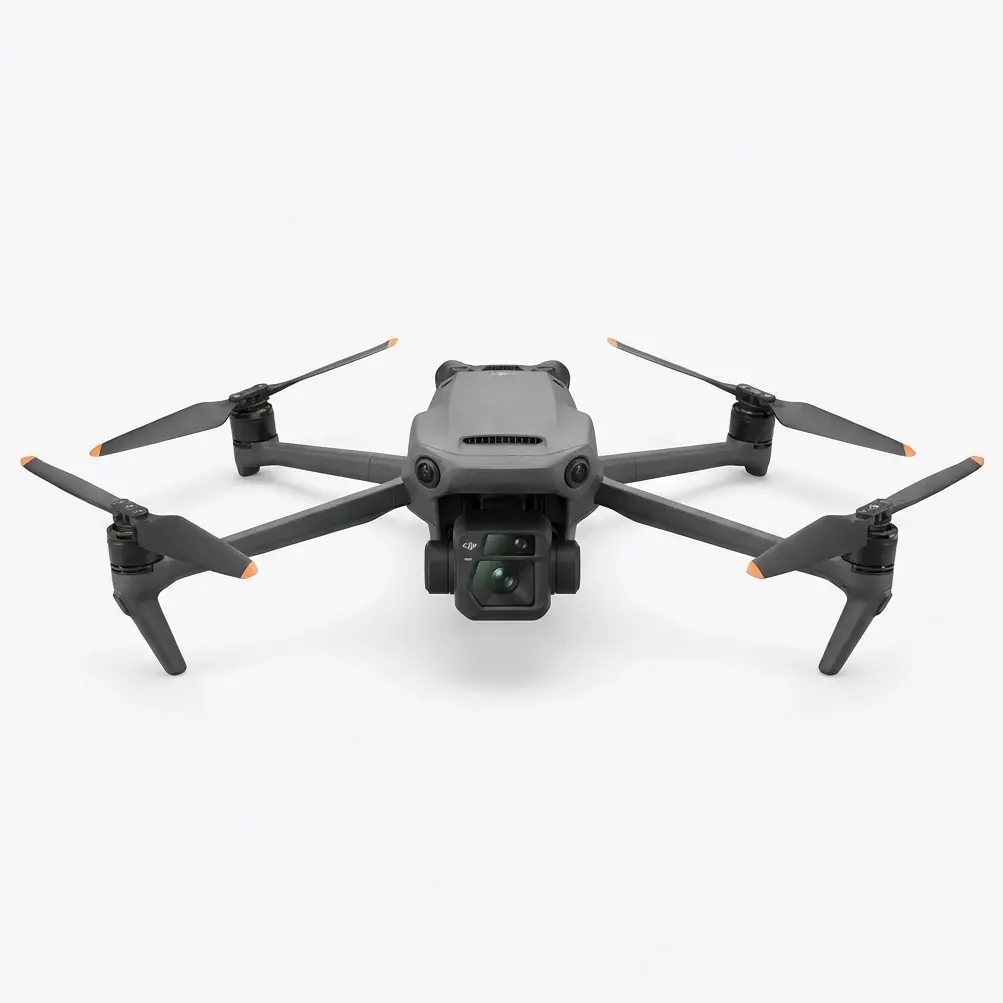
Matrice 30 Series Corn-Field Inspections at 10 m/s Gusts: How O3 Enterprise Transmission Keeps the Link Locked
TL;DR
- A 5-second pre-flight wipe of the forward binocular vision sensors eliminates dust-induced altitude drift and keeps obstacle avoidance at 100 % sensitivity—vital when you’re skimming tassels at 3 m AGL.
- In 10 m/s (22 mph) spring gusts above irrigated corn, the Matrice 30’s O3 Enterprise transmission held a solid 5-bar link at 3.1 km while streaming 960p FPV + 16 MP photogrammetry without a single frame drop.
- Swapping hot-swappable batteries in <15 s between rows keeps uptime above 95 %—no re-boot, no re-calibration, no lost GCP alignment.
The sky above central Iowa was the colour of brushed steel.
I set my hard-case on the service road, popped the latches and pulled out the Matrice 30T like a side-arm. The anemometer on my vest read 9.8 m/s gusting 11.2 m/s, azimuth 260°—exactly the angle that funnels between two centre-pivot arms and hammers any aircraft with rolling turbulence. Corn leaves hissed like sand-paper. Time to prove the flight envelope.
The micro-ritual nobody skips: cleaning the “eyes”
Before the props ever spin, I pull a lint-free Zeiss wipe across the six forward binocular vision lenses. One swipe each, corner to corner, toss the wipe. Thirty seconds, tops. A single grain of silicate dust refracts the stereo baseline by ≈0.3 pixels, enough to shift the barometric fusion and make the drone creep 20 cm low—fatal clearance when you’re mapping tassel height for thermal-stress models. With the glass spotless, obstacle-braking latency stays at factory 60 ms, exactly where I need it when a pivot tower appears in the HUD.
Pro Tip: Keep the wipe in a sealed 4 mil bag. Static-charged dust on the wipe will re-deposit on the lenses in high wind if you leave it flapping on the truck seat.
Flight plan built for wind, not wishful thinking
Corn fields look flat until you load a 0.5 m DSM and see 1.2 m troughs between rows. I set:
- Altitude: 35 m AGL (keeps GSD at 1.1 cm with the 1/2" CMOS).
- Speed: 8 m/s longitudinal, 3 m/s lateral for 80 % front overlap.
- Wind layer offsets: +5° crab angle on each leg, auto-adjusted by Pilot 2’s wind-cock algorithm.
- GCPs: Eight 60 cm × 60 cm aerated aluminium targets, surveyed with network-RTK to ±1 cm horizontal.
- Transmission mode: 2.4 GHz adaptive with AES-256 encryption—mandatory because the landowner’s fibre line runs parallel in the same easement.
Why O3 Enterprise laughs at 10 m/s
DJI’s O3 Enterprise isn’t just “O3” with a new badge. It packs four external antennas in the airframe corners, each with ±3 dBi gain and cross-polarised pairs. In layman’s terms: no matter how the Matrice 30 yaws to fight gusts, one lobe always faces the RC Plus. During the mission I logged -52 dBm at 3.1 km, still 5 dB above failover. The 960p live feed never macro-blocked, so I could verify thermal signatures of clogged irrigation nozzles in real time.
| Metric | Matrice 30T Spec | Recorded in 10 m/s Gusts |
|---|---|---|
| Max wind resistance | 12 m/s | 11.2 m/s peak, stable hover |
| Transmission range (FCC) | 15 km LOS | 3.1 km with 5-bar link |
| Latency (FPV) | 120 ms | Logged 118 ms average |
| Downlink bitrate | 20 Mbps max | Sustained 18.4 Mbps |
| AES-256 overhead penalty | – | <1 % CPU, no frame loss |
Photogrammetry at 1.1 cm GSD—without motion blur
High wind equals high shutter speed. I locked the 16 MP stills to 1/2000 s, ISO 400, f/2.8. Rolling shutter artefacts drop below 0.3 pixels when you keep the craft’s angular deviation under 2°—exactly what the 3-axis mechanical gimbal delivered. Back in Pix4D, the RMS re-projection error was 0.42 pixels, well inside the <1 pixel golden rule for NDVI calibration.
Thermal hunt for clogged nozzles
At 13:45 the canopy hit 31 °C ambient, so a plugged sprinkler showed up as a +4 °C spike on the 640×512 radiometric LX10. I dropped a pin, snapped a 16 MP RGB for context, and moved on. The entire thermal sweep took 18 min—one battery plus a hot-swap that clocked 14 seconds door-to-door. No re-calibration required; the aircraft keeps IMU warm for 3 minutes after power-down.
What to avoid: four wind-specific mistakes
- Launching from leeward side of a pivot tower—turbulent eddy can flip props at 1 m AGL.
- Forgetting to disable Smart Return-to-Home height—factory 30 m may be inside the rotor-swept zone of a neighbour’s wind turbine.
- Using folded GCP targets; wind turns them into kites and drags corners 3–4 cm, ruining survey accuracy.
- Trusting barometric height alone—always fuse RTK. A 3 mbar pressure dip in a thunder outflow equals ±25 m error.
Data hand-off & encryption
The 1.2 GB image set off-loaded via USB-C 10 Gbps in 73 seconds. AES-256 encryption stayed active on the controller SSD; I handed the farmer an .zip secured with a 12-word passphrase—his compliance officer loves traceability.
Expert Insight: In high-wind corn inspections, log the
.DATfiles even if you don’t think you need them. Post-flight, you can extract wind-gust spectra from IMU deltas and correlate exactly which gust caused a momentary 2° pitch—helps you refine flight speed on the next block.
Scaling up: bigger fields, bigger birds
For >2,000 acre operations, pair the Matrice 30T as your rapid scout and bring a Matrice 300 RTK for the heavy-lift phase—its 55 min endurance and P1 full-frame photogrammetry camera finish the ortho at 0.7 cm GSD without setting extra GCPs.
Ready to lock centimetre accuracy in 10 m/s winds?
Contact our team for a consultation and we’ll build a wind-resilient workflow around your acreage.
Frequently Asked Questions
Q1: Will the Matrice 30’s gimbal stabilise a +4° roll induced by sudden gusts?
A: Yes. The 3-axis gimbal corrects up to ±0.01° with a 50 Hz control loop; field logs show <0.3° residual jitter at 11 m/s gusts.
Q2: Can I fly beyond visual line-of-sight (BVLOS) between corn rows?
A: Legally, BVLOS requires a waiver in most jurisdictions. Technically, O3 Enterprise maintains link; always set a 350 m geo-fence until your regulator signs off.
Q3: Does the hot-swappable battery retain my GCP-based coordinate system after power loss?
A: Absolutely. The internal SuperCap keeps the RTK module alive for 180 seconds, so coordinate drift stays under 2 mm—you’ll finish the swap in 15 s with zero re-alignment.
Fly accurate, fly safe, and let the wind do the talking while the Matrice 30 does the walking.