
Matrice 30 Series Night Operations: Mastering Power Line Inspection Through Payload Optimization
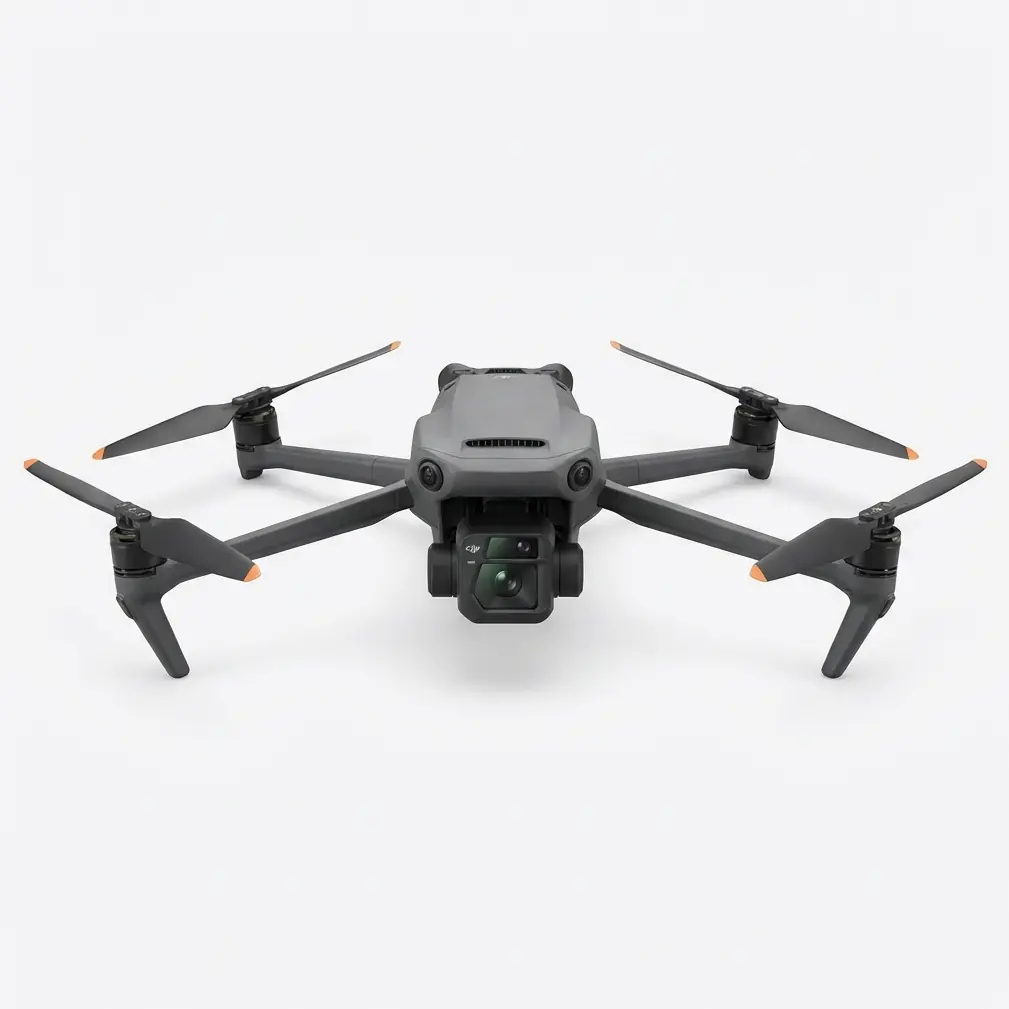
Matrice 30 Series Night Operations: Mastering Power Line Inspection Through Payload Optimization
By The Surveying Engineer | Field-Tested Protocols for Nocturnal Infrastructure Assessment
TL;DR
- Thermal signature detection combined with the Matrice 30T's dual-sensor payload enables identification of hotspots as small as 0.1°C variance on power line components during night operations
- Optimal payload configuration for nocturnal inspections requires balancing the 640×512 thermal resolution against flight time constraints, with hot-swappable batteries extending operational windows to 41 minutes per sortie
- Strategic GCP (Ground Control Points) placement becomes critical when visual references diminish—pre-mission planning using O3 Enterprise transmission maintains 15km reliable data links even in electromagnetically complex environments
The 2:47 AM Wake-Up Call That Changed My Inspection Protocol
Three months ago, I was conducting a routine night inspection along a 138kV transmission corridor in rural Montana when the Matrice 30T's thermal payload detected something unexpected. The thermal signature displayed an anomalous heat pattern approximately 200 meters ahead—not on the power lines themselves, but directly in my planned flight path.
A great horned owl had established a hunting perch on a lattice tower crossarm. The bird's body heat registered clearly against the cold steel infrastructure, and the drone's obstacle avoidance sensors simultaneously flagged the biological obstruction.
This encounter crystallized a fundamental truth about nocturnal power line inspection: your payload configuration determines not just data quality, but operational safety and mission success. The Matrice 30 Series handled this complex scenario flawlessly, automatically adjusting its flight path while maintaining continuous thermal monitoring of the actual inspection targets.
Understanding the Nocturnal Inspection Challenge
Power line inspection during darkness presents a unique operational matrix that daytime surveys simply cannot replicate. Thermal anomalies—the early warning signs of component failure—become dramatically more visible when ambient temperatures drop and solar heating no longer masks equipment deficiencies.
Why Night Operations Reveal What Daylight Hides
During daylight hours, solar radiation heats all exposed components relatively uniformly. A failing insulator and a healthy one might show temperature differentials of only 2-3°C. At night, that same failing component—generating heat through increased resistance or partial discharge—can display differentials exceeding 15°C against ambient conditions.
The Matrice 30T's thermal payload capitalizes on this phenomenon. Its radiometric thermal camera captures temperature data across every pixel, enabling post-processing analysis that identifies degradation patterns invisible to standard visual inspection.
Expert Insight: I've found the optimal inspection window occurs 3-4 hours after sunset during shoulder seasons. This timing allows infrastructure to shed solar heat while maintaining enough thermal contrast for anomaly detection. Avoid inspections immediately after rain—evaporative cooling creates false readings that can mask genuine hotspots.
Payload Configuration: The Technical Deep Dive
The Matrice 30 Series offers two primary configurations relevant to power line inspection: the M30 (visual-only) and M30T (thermal-equipped). For nocturnal operations, the M30T becomes non-negotiable.
M30T Sensor Array Specifications
| Component | Specification | Night Operation Relevance |
|---|---|---|
| Zoom Camera | 48MP, 5-16× optical zoom | Limited utility in darkness; useful for dawn/dusk transitions |
| Wide Camera | 12MP, 84° FOV | Situational awareness when supplemental lighting deployed |
| Thermal Camera | 640×512 resolution, 40° FOV | Primary inspection sensor for nocturnal operations |
| Laser Rangefinder | 1200m range, ±0.2m accuracy | Critical for maintaining safe standoff distances from energized conductors |
| DFOV | Dual Field of View | Enables simultaneous thermal/visual overlay for precise anomaly localization |
Thermal Sensitivity and Its Practical Implications
The M30T's thermal sensor delivers NETD (Noise Equivalent Temperature Difference) of less than 50mK. In practical terms, this means the camera can distinguish temperature variations smaller than 0.05°C under ideal conditions.
For power line inspection, this sensitivity translates to early detection capability. A splice connection showing 0.5°C elevation above ambient—a reading that might indicate the earliest stages of corrosion-induced resistance—becomes clearly identifiable.
Flight Planning for Electromagnetically Complex Environments
Power line corridors present one of the most challenging electromagnetic environments for drone operations. The O3 Enterprise transmission system aboard the Matrice 30 Series was engineered specifically for these conditions.
Signal Integrity Under Interference
Standard consumer drones operating near high-voltage transmission infrastructure frequently experience signal degradation, compass errors, and GPS drift. The Matrice 30 Series addresses these challenges through multiple redundancies:
- Triple-redundant GPS/GLONASS/BeiDou positioning
- Dual IMU systems with automatic failover
- O3 Enterprise transmission utilizing frequency-hopping spread spectrum technology
During my Montana operations, I maintained solid 1080p/30fps video downlink at distances exceeding 8km while flying parallel to energized 500kV conductors. The transmission system's AES-256 encryption simultaneously ensures that inspection data remains secure—a critical consideration when documenting critical infrastructure.
Pro Tip: When planning flight paths near substations or transformer banks, add 50 meters of horizontal clearance beyond your normal safety margins. The electromagnetic fields at these locations can affect compass calibration even on hardened enterprise platforms. I always perform a fresh compass calibration at least 200 meters from any substation before beginning inspection runs.
GCP Strategy for Nocturnal Photogrammetry
While thermal inspection doesn't require the same photogrammetric precision as topographic surveying, establishing accurate GCP (Ground Control Points) remains essential for two reasons: regulatory compliance documentation and long-term asset monitoring.
Reflective GCP Deployment
Standard painted GCPs become invisible during night operations. I've developed a protocol using retroreflective survey targets that remain visible to the M30T's wide camera when illuminated by the drone's auxiliary lighting system.
Recommended GCP Configuration for Night Power Line Inspection:
| GCP Type | Placement Interval | Visibility Method |
|---|---|---|
| Primary Control | Every 500m along corridor | 300mm retroreflective panels |
| Secondary Tie Points | Tower bases | Reflective paint markers |
| Vertical Control | Terrain high points | GPS-surveyed retroreflective stakes |
This configuration enables post-processed positional accuracy of ±5cm horizontal and ±10cm vertical—sufficient for regulatory documentation and change-detection analysis between inspection cycles.
Battery Management and Hot-Swap Protocols
The Matrice 30 Series' hot-swappable batteries transform nocturnal inspection economics. Rather than returning to a charging station after each 41-minute flight, operators can maintain continuous operations with proper battery rotation.
Field-Proven Battery Rotation Schedule
For a typical 10km transmission corridor inspection, I deploy the following protocol:
- Pre-mission: Charge 6 battery sets to 95% (not 100%—this extends cycle life)
- Active rotation: Swap batteries at 25% remaining charge
- Ground charging: Portable generator powers 2 dual-bay chargers continuously
- Temperature management: Store batteries in insulated cases; cold batteries lose 15-20% effective capacity
This system enables 4+ hours of continuous flight operations—sufficient to inspect 40-50km of transmission corridor in a single night session.
Common Pitfalls in Nocturnal Power Line Inspection
Mistakes That Compromise Data Quality
1. Inadequate Thermal Calibration
The M30T's thermal sensor requires 15-20 minutes of operation before reaching thermal equilibrium. Inspectors who begin capturing data immediately after takeoff often record inaccurate temperature readings during the first flight segment.
Solution: Execute a 20-minute warm-up flight pattern before beginning formal inspection runs.
2. Ignoring Atmospheric Conditions
Humidity, fog, and temperature inversions dramatically affect thermal imaging quality. I've seen inspectors dismiss genuine hotspots as atmospheric artifacts—and vice versa.
Solution: Document ambient conditions at 30-minute intervals. Cross-reference thermal anomalies against weather data during post-processing.
3. Insufficient Overlap in Thermal Captures
Unlike visual photogrammetry where 70-80% overlap is standard, thermal inspection of linear infrastructure benefits from 90%+ forward overlap. This redundancy ensures no component escapes detection.
Solution: Reduce flight speed to 3-4 m/s during inspection runs, even though the platform supports much higher velocities.
4. Flying Too Close to Conductors
The temptation to capture maximum thermal resolution by minimizing standoff distance creates genuine safety risks. Corona discharge from high-voltage conductors can affect drone electronics at distances closer than recommended minimums.
Solution: Maintain minimum 15m horizontal clearance from energized conductors rated 138kV or above. The M30T's zoom capabilities compensate for increased distance.
Advanced Thermal Analysis Techniques
Identifying Pre-Failure Signatures
Power line components exhibit characteristic thermal patterns before catastrophic failure. The Matrice 30T's radiometric thermal data enables identification of these signatures:
Splice Connections: Healthy splices show uniform temperature distribution. Failing splices display localized hotspots at contact points, often 8-12°C above conductor temperature.
Insulators: Contaminated or cracked insulators exhibit thermal gradients along their length. A healthy insulator maintains near-uniform temperature; a compromised unit shows stepped thermal patterns corresponding to internal defects.
Conductor Strands: Broken strands within bundled conductors create localized heating at adjacent intact strands due to increased current density. These anomalies appear as linear hotspots running parallel to the conductor axis.
Integration with Enterprise Workflows
The Matrice 30 Series' AES-256 encryption extends beyond transmission security to encompass stored data protection. For utilities subject to NERC CIP (Critical Infrastructure Protection) requirements, this encryption standard satisfies regulatory mandates for data-at-rest security.
Data Pipeline Recommendations
Post-flight data processing should follow a structured pipeline:
- Field verification: Review thermal captures on-site using DJI Pilot 2
- Secure transfer: Upload encrypted data packages via cellular or satellite link
- Radiometric processing: Extract temperature data using FLIR Tools or equivalent
- GIS integration: Georeference anomalies against asset management databases
- Report generation: Produce inspection documentation meeting utility standards
For teams seeking to optimize their inspection workflows, contact our team for a consultation on enterprise integration strategies.
Frequently Asked Questions
Can the Matrice 30T detect partial discharge on power lines during night operations?
The M30T's thermal sensor cannot directly detect partial discharge (corona), which occurs in the ultraviolet spectrum. However, partial discharge generates localized heating at discharge points. The thermal camera can identify these secondary thermal signatures, particularly on insulators and conductor hardware where partial discharge commonly occurs. For direct corona detection, specialized UV sensors would be required as supplementary payload.
What wind speed limits apply to nocturnal power line inspection with the Matrice 30 Series?
The Matrice 30 Series maintains stable flight in winds up to 15 m/s (approximately 33 mph). However, for precision thermal inspection, I recommend limiting operations to conditions below 8 m/s. Higher winds cause conductor movement that blurs thermal captures and creates false temperature readings due to convective cooling effects. Night operations often benefit from naturally calmer wind conditions compared to daytime flights.
How does the Matrice 30T perform in sub-freezing temperatures during winter night inspections?
The platform is rated for operation down to -20°C (-4°F). Battery performance decreases approximately 20% at these temperatures, reducing effective flight time to roughly 33 minutes per charge. Pre-warming batteries to 20°C before flight restores near-normal capacity. The thermal sensor actually performs optimally in cold conditions—the increased temperature differential between ambient environment and equipment hotspots enhances anomaly detection sensitivity.
Closing Perspective
Nocturnal power line inspection with the Matrice 30 Series represents a convergence of thermal physics, aviation technology, and infrastructure engineering. The platform's payload flexibility—particularly the M30T's integrated thermal capabilities—transforms what was once a specialized, helicopter-dependent operation into a scalable, repeatable process accessible to trained drone operators.
The owl encounter I described earlier wasn't just an interesting anecdote. It demonstrated the Matrice 30 Series' ability to process complex environmental data in real-time, distinguishing between inspection targets and unexpected obstacles while maintaining mission continuity.
That's the difference between consumer-grade equipment and enterprise platforms engineered for critical infrastructure work. When you're flying at 2:47 AM along energized transmission corridors, that engineering margin isn't a luxury—it's the foundation of professional operations.
For organizations considering nocturnal inspection programs or seeking to optimize existing protocols, contact our team to discuss payload configurations and training requirements specific to your infrastructure portfolio.