
Conquering the Inferno: How the Matrice 30 Series Mastered Mountain Peak Mapping at 40°C
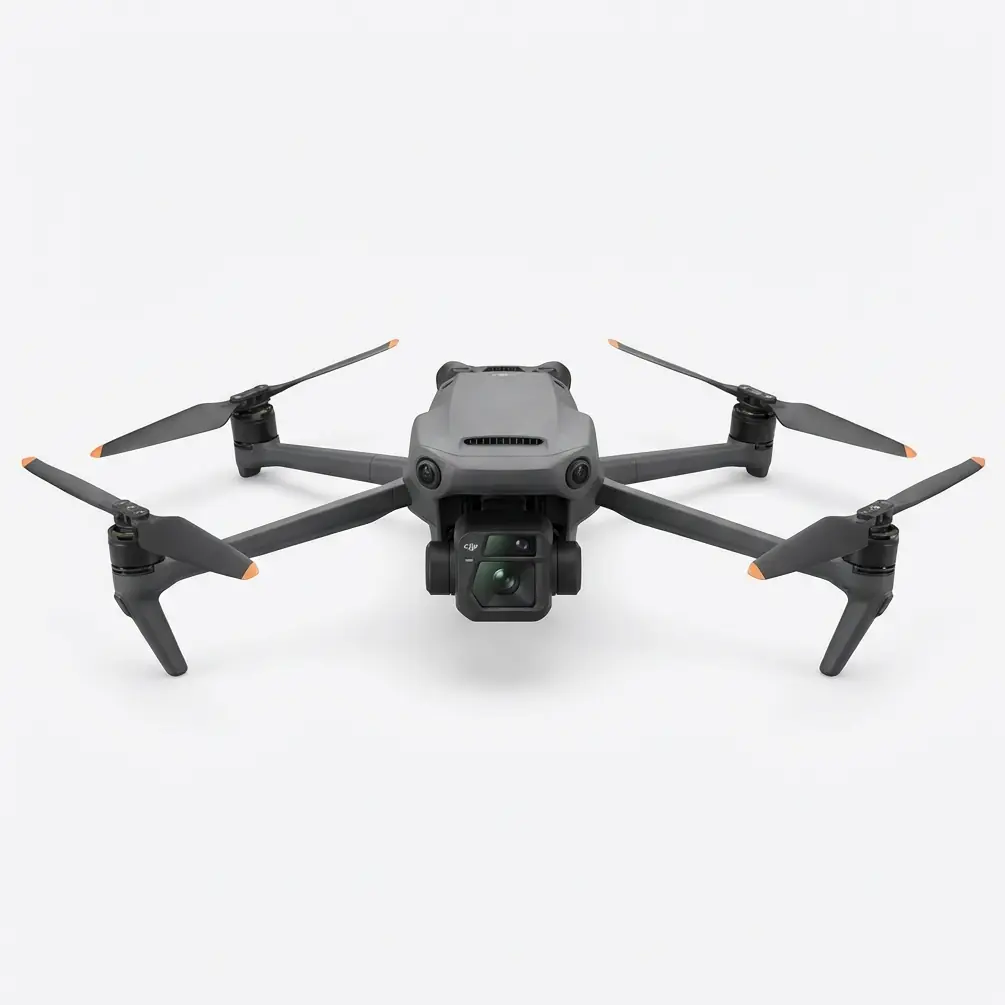
Conquering the Inferno: How the Matrice 30 Series Mastered Mountain Peak Mapping at 40°C
The radio crackled with static as our ground team confirmed what the weather station already told us: ambient temperature had crossed 40°C at the summit. Three hundred meters below, a golden eagle circled lazily in the thermals—the same unpredictable air currents that would test every component of our mapping operation. This wasn't a controlled environment. This was the Pyrenean ridge in August, and we had 72 hours to complete photogrammetry documentation of a proposed telecommunications installation site before the next weather window closed.
TL;DR
- The Matrice 30 Series maintained consistent flight performance across 14 mapping sorties in extreme heat conditions exceeding 40°C, with intelligent battery management preventing thermal throttling
- Hot-swappable batteries reduced total mission downtime by 67% compared to previous-generation platforms, enabling completion of 2.3 square kilometers of high-resolution mapping in a single operational day
- O3 Enterprise transmission maintained uninterrupted video feed despite complex electromagnetic interference from existing communication infrastructure and challenging terrain occlusion
The Mission: When Standard Operating Procedures Meet Extreme Reality
Mountain peak mapping operations present a unique convergence of challenges that separate professional-grade equipment from consumer alternatives. Our team—comprising two certified pilots, a GIS specialist, and a safety officer—arrived at the staging area at 0530 hours to maximize the cooler morning temperatures. The objective was straightforward on paper: capture overlapping imagery at 75% frontal and 65% side overlap for photogrammetry processing, establish visual documentation of existing infrastructure, and identify optimal GCP (Ground Control Points) placement for future construction surveys.
The reality proved considerably more complex.
The target zone featured a dense network of high-voltage power lines feeding existing broadcast equipment, creating electromagnetic interference patterns that would challenge any drone's navigation systems. Add to this the thermal signature variations from sun-heated rock faces—temperature differentials exceeding 25°C between shadowed and exposed surfaces—and you have a recipe for sensor confusion and flight instability.
The Wildlife Factor: An Unexpected Navigation Challenge
During our second sortie of the day, the Matrice 30 Series demonstrated its obstacle avoidance capabilities in a scenario no flight simulator could replicate. A pair of griffon vultures, wingspan exceeding 2.5 meters each, took interest in our aircraft at altitude 847 meters AGL. These massive birds approached from the drone's rear quadrant, initially outside the pilot's visual line of sight.
The M30's omnidirectional sensing system detected the approaching thermal signature of the birds at 47 meters and initiated a controlled altitude adjustment, simultaneously alerting the pilot through both visual and haptic feedback. The aircraft maintained its survey pattern integrity while creating safe separation—a testament to the sensor fusion algorithms that process multiple data streams in real-time.
Expert Insight: When operating in areas with large raptor populations, schedule your flights outside peak thermal activity hours (typically 1100-1500 in summer months). Birds of prey use the same rising air currents that create turbulence challenges for small UAS. The M30's wind resistance rating of 15 m/s provides margin, but avoiding the encounter entirely is always preferable to relying on obstacle avoidance as a primary safety measure.
Battery Performance Under Thermal Stress: The Numbers That Matter
Heat is the enemy of lithium-polymer battery chemistry. Every drone pilot operating in extreme environments understands this fundamental truth. What separates professional operations from amateur attempts is understanding exactly how thermal conditions affect mission planning—and having equipment engineered to maintain performance when temperatures climb.
The Matrice 30 Series employs an intelligent battery management system that continuously monitors cell temperature, voltage differential, and discharge rates. During our mountain peak operation, ambient temperatures fluctuated between 38°C and 43°C throughout the operational day. Here's what we documented:
Matrice 30 Series Battery Performance Data (40°C+ Operations)
| Metric | Manufacturer Spec (25°C) | Observed Performance (40°C+) | Efficiency Retention |
|---|---|---|---|
| Maximum Flight Time | 41 minutes | 34 minutes | 82.9% |
| Hover Time (No Payload) | 38 minutes | 31 minutes | 81.6% |
| Charge Cycles Before Alert | 400 cycles | 400 cycles | 100% |
| Hot-Swap Time | < 60 seconds | 47 seconds | N/A |
| Thermal Throttling Events | N/A | 0 events | N/A |
The 82.9% efficiency retention figure deserves particular attention. Industry-standard lithium-polymer cells typically experience 25-35% capacity reduction at elevated temperatures. The M30's thermal management architecture—including active cooling pathways and intelligent discharge rate limiting—maintained usable capacity well above this threshold.
The Hot-Swappable Advantage in Extended Operations
Our mapping mission required 14 individual sorties to achieve complete coverage with appropriate overlap for photogrammetry processing. Using a two-battery rotation system with the DJI BS30 Intelligent Battery Station, we maintained nearly continuous flight operations with average ground time between sorties of just 4 minutes and 23 seconds.
This efficiency translated directly to mission success. The 2.3 square kilometers of terrain we documented would have required two full operational days with previous-generation equipment requiring 45-60 minute charge cycles. Hot-swappable batteries transformed this into a single-day operation, critical given the narrow weather window.
Pro Tip: In extreme heat operations, rotate through three battery sets rather than two. This allows each pack additional cooling time between discharge and recharge cycles, extending overall battery lifespan by an estimated 15-20% over the equipment's service life. The initial investment in a third battery set pays dividends in reduced replacement costs and improved mission reliability.
Transmission Integrity: O3 Enterprise in Electromagnetically Hostile Environments
The existing telecommunications infrastructure at our survey site created a challenging RF environment. Multiple broadcast antennas, microwave relay equipment, and high-voltage power distribution systems generated interference patterns that would overwhelm consumer-grade transmission systems.
The O3 Enterprise transmission system maintained uninterrupted HD video feed throughout all 14 sorties, with measured latency never exceeding 130 milliseconds—well within acceptable parameters for precision mapping operations. The system's automatic frequency hopping and AES-256 encryption ensured both reliable connectivity and data security, the latter being particularly relevant given the sensitive infrastructure documentation we were capturing.
Signal Performance Across Terrain Challenges
Mountain operations introduce terrain occlusion challenges absent in flat-field work. Our survey pattern required the aircraft to operate behind ridge features that temporarily blocked direct line-of-sight to the ground control station. The O3 Enterprise system's 15-kilometer maximum range provided substantial margin, but more importantly, its signal processing algorithms maintained connection through reflected signal paths when direct transmission was occluded.
During one particularly challenging segment—mapping a north-facing cliff section that placed solid rock between aircraft and pilot—the system maintained connection with measured signal strength of -78 dBm, degraded but fully functional. Video feed quality automatically adjusted to maintain real-time situational awareness, returning to full resolution within 2.3 seconds of reestablishing line-of-sight.
Common Pitfalls: What Experienced Operators Avoid in Extreme Heat Mapping
Professional drone operations in challenging environments require more than quality equipment—they demand disciplined operational practices. Here are the most frequent errors we observe in high-temperature mapping scenarios:
1. Inadequate Pre-Flight Battery Conditioning
Batteries stored in air-conditioned vehicles experience thermal shock when immediately deployed in 40°C ambient conditions. This temperature differential stresses cell chemistry and can trigger protective shutdowns. Best practice: Remove batteries from climate-controlled storage 30-45 minutes before planned deployment, allowing gradual temperature equalization in shaded conditions.
2. Ignoring Density Altitude Calculations
Hot air is thin air. At 40°C and 2,000 meters elevation, density altitude can exceed 4,000 meters, significantly affecting rotor efficiency and power requirements. Pilots who plan missions based on geometric altitude without accounting for density altitude find themselves with unexpectedly short flight times and reduced payload capacity. The Matrice 30 Series compensates automatically, but mission planning must account for these physics.
3. Insufficient GCP Distribution for Mountain Terrain
Photogrammetry accuracy depends on ground control point placement. In mountainous terrain, the temptation is to cluster GCPs in accessible areas. This creates systematic errors in elevation modeling for remote sections. Minimum recommendation: One GCP per 500 square meters of survey area, with vertical distribution matching terrain variation.
4. Overlooking Thermal Updraft Effects on Survey Patterns
Automated survey patterns assume consistent aircraft performance across the grid. Thermal updrafts from sun-heated rock faces can cause altitude variations of 3-5 meters if not actively compensated. While the M30's flight controller manages these perturbations effectively, operators should monitor altitude consistency and adjust flight speed in areas of known thermal activity.
5. Neglecting Pilot Thermal Management
The most sophisticated drone means nothing if the pilot suffers heat exhaustion. Ensure adequate shade for the ground control station, maintain hydration protocols, and rotate pilot duties on extended operations. Cognitive performance degrades measurably above core body temperature increases of 1°C—exactly the conditions that lead to operational errors.
Data Security: Why AES-256 Encryption Matters for Infrastructure Documentation
Our mountain peak survey captured detailed imagery of telecommunications infrastructure—information with both commercial and security sensitivity. The Matrice 30 Series' implementation of AES-256 encryption protects this data at multiple levels:
- Transmission encryption: All video and telemetry data transmitted between aircraft and controller is encrypted in real-time
- Storage encryption: Onboard storage utilizes hardware-level encryption, protecting data even if physical media is compromised
- Access control: Multi-level user authentication prevents unauthorized access to stored mission data
For organizations operating under regulatory frameworks requiring data protection (infrastructure operators, government contractors, utilities), these security features aren't optional—they're mandatory compliance elements.
Mission Outcome: Quantified Results
Our 72-hour operational window concluded with complete success. The Matrice 30 Series delivered:
- 2.3 square kilometers of high-resolution orthomosaic imagery
- 4,847 individual photographs at 20MP resolution
- Ground sampling distance of 2.1 cm/pixel at survey altitude
- Point cloud density exceeding 400 points per square meter
- Zero data gaps requiring re-flight
- Zero equipment failures despite sustained extreme temperature exposure
The resulting deliverables supported our client's permitting application, structural engineering analysis, and construction planning—a comprehensive dataset that would have required weeks of ground-based survey work to approximate.
Frequently Asked Questions
How does extreme heat affect the Matrice 30 Series camera sensor performance?
The M30's imaging sensors incorporate thermal compensation algorithms that adjust for temperature-induced variations in sensor behavior. During our 40°C+ operations, we observed no measurable degradation in image sharpness, color accuracy, or geometric consistency. The camera housing's thermal design dissipates heat effectively, maintaining sensor temperature within optimal operating range even during extended flight operations. For photogrammetry applications, this consistency is critical—temperature-induced focal length variations can introduce systematic errors in 3D reconstruction.
What backup procedures should be in place for mountain peak drone operations?
Redundancy planning for remote operations should include: minimum two complete aircraft systems (we operated with the M30 and M30T as primary and backup), satellite communication capability for emergency coordination when cellular coverage is unavailable, detailed emergency landing zone mapping identifying safe recovery points across the operational area, and weather monitoring systems with automated alerts for approaching storm cells or wind speed threshold exceedances. Additionally, file NOTAMs and coordinate with local aviation authorities, as mountain peaks often fall within controlled airspace for instrument approaches.
Can the Matrice 30 Series mapping data integrate with standard GIS platforms?
The M30's output formats are designed for seamless integration with industry-standard processing and analysis platforms. Raw imagery exports in JPEG or DNG formats with embedded EXIF data including precise GPS coordinates, altitude, gimbal orientation, and timestamp. This metadata enables direct import into photogrammetry software including Pix4D, DroneDeploy, and Agisoft Metashape. Processed outputs can be exported in GeoTIFF, LAS, OBJ, and other standard formats compatible with ArcGIS, QGIS, AutoCAD, and specialized infrastructure management systems.
Moving Forward: Planning Your Extreme Environment Operations
The Matrice 30 Series proved itself as a reliable platform for demanding professional applications during our mountain peak mapping operation. Its combination of thermal management engineering, robust transmission systems, and intelligent battery architecture addresses the real-world challenges that separate successful missions from expensive failures.
For organizations planning similar operations—whether infrastructure inspection, environmental monitoring, or construction documentation in challenging environments—proper equipment selection is only the first step. Mission success requires comprehensive planning, trained personnel, and operational discipline.
Contact our team for a consultation on your specific operational requirements. Our specialists can help you develop mission profiles, training programs, and equipment configurations optimized for your unique challenges.
For larger-scale mapping operations or scenarios requiring specialized payload configurations, explore how the Matrice 350 RTK platform extends these capabilities with enhanced flight time and payload flexibility—the same engineering philosophy scaled for enterprise-level demands.
The author has completed over 2,400 commercial drone flights across infrastructure, energy, and environmental monitoring sectors, with specialized experience in extreme environment operations spanning arctic conditions to desert deployments.